J. David Legan, PhD
Director of Science
David earned his Ph.D. in Food Technology from the University of Reading in the UK by modeling the ecology of mixed microbial populations, and then moved to Campden BRI in a variety of microbiological food safety research and client service roles. During that time, he was project lead for the Bacillus component of the UK’s pathogen modeling program. He moved again to Nabisco Research in New Jersey where he ran the corporate microbiology lab and developed a program of preservation technology development and microbial modeling. After the Kraft Foods acquisition, he moved to Chicago to work on Food Safety and Preservation research, and through modeling and validation studies:
- Optimized Oscar Mayer’s use of lactate and diacetate and their naturally cultured alternatives as Listeria-control agents in Ready to Eat meats
- Specified process conditions central to Oscar Mayer’s commercial launch of High Pressure Pasteurization of naturally cured RTE meats
David had responsibility for the Kraft cultures R&D group, developed a partnership to explore microwave sterilization leading to several patents, and led a program that developed an internal proprietary natural antimicrobial commercialized in several Kraft products. Technologies from his group supported approximately $4 billion in annual sales.
After years as a microbiology "client", he is now back in the "provider" role as Director of Science at Eurofins Microbiology Laboratories, Inc., by way of the Covance Food Solutions group based in Madison, WI, which he joined in 2016. In this role, he ensures appropriate method validation, explores new testing technologies, and fields multiple complicated food microbiology questions.
Products that his team has evaluated or developed and launched include:
- The 3M MDS platform in the Madison microbiology laboratory
- Flow cytometry for enumeration of probiotics
- Strain-level confirmation of probiotic identification using the polymerase chain reaction (PCR)
- Next-generation sequencing using the Oxford Nanopore Technologies GridION sequencing platform for microbial identification and microbiome analysis
Below are resources from David:
Important upcoming updates to USP Chapters <2021> and <2022 went into effect on April 1, 2026. These changes modify several microbiological testing requirements, including incubation times, suitability testing, and enrichment steps for specific organisms. Check out our answers to frequently asked questions about the updates.
Why do food companies wait for recalls instead of investing in advanced foreign object detection? A candid take on proactive food safety and ROI.
Consumers rely on sunscreen to provide dependable protection against UV radiation, one of the leading causes of skin damage, premature aging, and skin cancer. Because of this, sunscreen manufacturers face a unique responsibility: to ensure every product consistently delivers the level of protection stated on the label. Read more to why sunscreen testing matters.
With innovation comes complexity and with complexity comes risk. This is why laboratory testing isn’t just a box to check. For longevity products, it’s one of the most challenging and essential parts of responsible product development.
California’s SB 646 represents a major advancement in prenatal supplement safety. By mandating rigorous testing and transparent reporting of heavy metal levels, the state is setting a new benchmark for protecting pregnant individuals and their developing babies.
There are several challenges to testing Vitamin B12 (cobalamins) that create issues for analytical laboratories to accurately measure these compounds. Eurofins Supplement Testing in Madison, WI understands these challenges and has consistently strived to develop updated methodologies utilizing state-of-the-art technology to improve overall method performance.
For years, protein has dominated food and beverage innovation. But as the market matures and consumers become more nutrition-savvy, a new question is emerging in product development conversations: Is fiber the next protein?
In today’s food and dietary supplement marketplace, trust is no longer assumed. Third-party testing and certification have become essential tools for demonstrating product safety, quality, and compliance in a credible way.
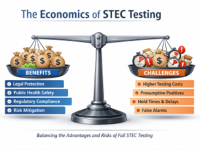
Explore how expanded STEC testing impacts risk management, regulatory readiness, and economics in the beef industry. Brian McFarlane breaks down why food safety decisions—especially around the Big 6 STECs—are both scientific and financial.
Explore the leading causes of childhood and adolescent obesity—from ultra-processed foods and excessive sugar to sedentary lifestyles, parental influence, mental health, and governmental policy—and learn evidence-based guidance to support healthier nutrition and habits for kids.