JavaScript is disabled. Please enable to continue!

Mobile search icon
More Resources >> Our People >> J. David Legan

J. David Legan

Sidebar Image
J. David Legan, PhD

J. David Legan, PhD

Director of Science

David earned his Ph.D. in Food Technology from the University of Reading in the UK by modeling the ecology of mixed microbial populations, and then moved to Campden BRI in a variety of microbiological food safety research and client service roles. During that time, he was project lead for the Bacillus component of the UK’s pathogen modeling program.  He moved again to Nabisco Research in New Jersey where he ran the corporate microbiology lab and developed a program of preservation technology development and microbial modeling.  After the Kraft Foods acquisition, he moved to Chicago to work on Food Safety and Preservation research, and through modeling and validation studies:

  • Optimized Oscar Mayer’s use of lactate and diacetate and their naturally cultured alternatives as Listeria-control agents in Ready to Eat meats
  • Specified process conditions central to Oscar Mayer’s commercial launch of High Pressure Pasteurization of naturally cured RTE meats

David had responsibility for the Kraft cultures R&D group, developed a partnership to explore microwave sterilization leading to several patents, and led a program that developed an internal proprietary natural antimicrobial commercialized in several Kraft products. Technologies from his group supported approximately $4 billion in annual sales.

After years as a microbiology "client", he is now back in the "provider" role as Director of Science at Eurofins Microbiology Laboratories, Inc., by way of the Covance Food Solutions group based in Madison, WI, which he joined in 2016.  In this role, he ensures appropriate method validation, explores new testing technologies, and fields multiple complicated food microbiology questions.

Products that his team has evaluated or developed and launched include:

  • The 3M MDS platform in the Madison microbiology laboratory
  • Flow cytometry for enumeration of probiotics
  • Strain-level confirmation of probiotic identification using the polymerase chain reaction (PCR)
  • Next-generation sequencing using the Oxford Nanopore Technologies GridION sequencing platform for microbial identification and microbiome analysis


Below are resources from David:



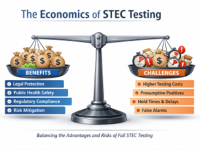
Explore how expanded STEC testing impacts risk management, regulatory readiness, and economics in the beef industry. Brian McFarlane breaks down why food safety decisions—especially around the Big 6 STECs—are both scientific and financial.
Keywords: Blog Meat Produce


Eurofins Rapid Microbiology Laboratories introduces the Advanced Learning Institute, offering accredited food safety training programs from HACCP, SQF, BRCGS, and FSPCA to practical courses on sanitation, Listeria management, auditing, and more for food manufacturers and professionals.


Explore why “food safety culture” is often overcomplicated and how CEO leadership, clear expectations, and accountability truly drive food safety success.
Keywords: Blog Meat Produce


Navigate pesticide MRLs with confidence. This guide explains pesticide maximum residue limits, key Maximum Residue Limits regulations, and how pesticide residue testing supports global compliance. Learn what food export MRL requirements mean for suppliers, brands, and QA teams to protect products and ensure market access.


Learn how mycotoxins like aflatoxin and ochratoxin impact food safety, and why effective mycotoxin testing and monitoring are essential for reducing contamination risks.


Eurofins announces the formation of Eurofins Rapid Microbiology Laboratories, LLC, enhancing rapid testing speed, accuracy, and service for U.S. perishable markets.


This research poster demonstrates how BACGene real-time PCR enables accurate STEC detection in frozen vegetable matrices.


This research poster demonstrates how BACGene real-time PCR enables accurate Salmonella detection in frozen vegetable matrices.


This research poster demonstrates how BACGene real-time PCR enables accurate Listeria monocytogenes and Listeria species detection in frozen vegetable matrices.


Discover why CFIA mandates 1500g lettuce testing for romaine imports from U.S. regions, how larger sample sizes improve detection of E. coli O157:H7, and the differences between pooling subsamples and direct 1500g testing methods. Learn key compliance, validation, and risk management considerations for growers, shippers, and buyers to ensure food safety and maintain market access.


<< < 1 2 3 4 > >>

https://www.eurofinsus.com/food-testing