
JavaScript is disabled. Please enable to continue!

Mobile search icon
More Resources >> Our People >> John Scanga

John Scanga

Sidebar Image
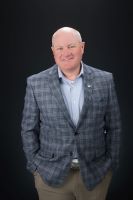
John Scanga, PhD

John Scanga, PhD

Chief Scientific Officer for North American Meat Division

John received his B.S. degree in Animal Sciences, his M.S. degree in Meat Science in 1997, and his Ph.D. in Animal Sciences in 1999, all from Colorado State University in Fort Collins, CO.

He developed a connection to agriculture at an early age; through work on his family’s ranching operation in central Colorado. He enrolled at Colorado State University in the fall of 1992 majoring in Animal Sciences; he competed on the CSU Meat Judging Team in 1994 and worked as an employee in the meat laboratory where his interest in meat processing and the meat industry began to grow.

Following the completion of his M.S (1997) and Ph.D. (1999), John joined the faculty at Colorado State University as an Assistant Professor and Extension Meat Specialist. He managed the day-to-day operations of the Meat Science Teaching and Research Laboratory and was promoted to Associate Professor in 2005.  He then left the university and joined IEH Laboratories and Consulting Group in January of 2008 as Vice President of Technical Services, where he continued to merge scientific concepts with industrial applications for managing and improving the safety of meat and non-meat foods, and improving food processing plant operational efficiencies.  In addition, he provided clients with regulatory, crisis event, and HACCP training and support.

John joined Elanco Animal Health in November of 2009 as an Associate Senior Technical Consultant where he brought a consumer focus and an emphasis on balancing animal productivity and performance with consumer acceptability. His work there focused on red meat safety, red meat quality and international trade.

John has been an author or co-author on over 70 refereed scientific publications on red meat quality and safety and has presented the findings of his work through numerous invited in presentations both the U.S and internationally.  

John also has a passion for service.  He currently is the chair of the Colorado Beef Council and has served as President of the Weld RE-9 school board, Weld County Fair Board and is a member of the Highland High School FFA Advisory Committee. 

John and his wife Chauna live on a diversified farming operation in Ault, Colorado.  Their family time is consumed with agriculture, farming, riding reigning horses and traveling.  His hobbies include backcountry snowmobiling and bird hunting. He  also works as a visiting professor in the Department of Animal Sciences at Colorado State University, where he first started his academic career. 

Below are resources from Dr. Scanga:


During this webinar, Tim Lombardo of Eurofins Food Assurance discussed the differences between food security, food safety, food fraud, and food defense. He provided a short history of FSMA and reviewed regulations for food defense and intentional adulteration protection.


It’s no secret that hemp is a fast-growing market with applications in a wide range of products from supplements to clothing. Watch this comprehensive webinar in which Eurofins experts discuss hemp testing considerations for hemp farmers and processors including genetic, microbiological, and analytical testing.


Are you a food safety, quality, design, packaging production, or risk mitigation professional? Learn the top reasons for packaged food, beverage, and ingredient failures—and what to do when faced with a crisis scenario.


With a more wellness-conscious consumer market, virgin olive oil has an opportunity to attract customers with its health-boosting properties tied to polyphenols. In our webinar, John Reuther discuses pros and cons of testing methods for polyphenol determination and introduces a new quantitative method. Then, Mary Mori of California Olive Ranch discusses California agriculture regulations regarding discharge of waste streams and effect in field.


The suspected toxicity risks of microplastics as contaminants in drinking water sources have been known for years. However, public concerns recently thrust microplastics to the forefront of the health and safety conversation. In our webinar, Dr. Mike Dziewatkoski of Eurofins SF Analytical covers the current status of microplastics testing.


Air, gas, water, and ice used in manufacturing processes must be properly maintained and regularly tested in order to ensure compliance with regulations and safety for consumers. Our webinar aims to clear the mystery surrounding these standards and regulations. Viewers will learn how to navigate the appropriate requirements while protecting their customers.


FAMI-QS is the only global Quality and Feed Safety Management System for the sector of Specialty Feed Ingredients. Our webinar aims to provide participants with the information they need regarding the requirements of the FAMI-QS Version 6.


Join our webinar speakers as they tackle one of the leading causes of recalls – the presence of undeclared food allergens!


Whether it’s a finished food item or a component of pharmaceuticals, identifying suspect batches of any product is an important part of the quality control process. In this webinar, Michael Dziewatkoski of Eurofins gives you the inside look into analysis of foreign materials along with actual case studies.


In this webinar, Doug Marshall, Chief Science Officer at Eurofins Microbiology discusses an approach to zone 1 testing that recommends non-direct-contact surfaces simultaneously for pathogens and indicators, then building a correlation between quantitative indicator count and Salmonella or Listeria prevalence. Dr. Marshall will share insights on how companies are employing this approach, including exploration of the various philosophical and scientific rationales for zone 1 pathogen testing.


<< < 1 2 3 4 5 6 7 8 9 10 11 12 > >>

https://www.eurofinsus.com/food-testing