
JavaScript is disabled. Please enable to continue!

Mobile search icon
More Resources >> Our People >> John Scanga

John Scanga

Sidebar Image
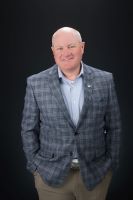
John Scanga, PhD

John Scanga, PhD

Chief Scientific Officer for North American Meat Division

John received his B.S. degree in Animal Sciences, his M.S. degree in Meat Science in 1997, and his Ph.D. in Animal Sciences in 1999, all from Colorado State University in Fort Collins, CO.

He developed a connection to agriculture at an early age; through work on his family’s ranching operation in central Colorado. He enrolled at Colorado State University in the fall of 1992 majoring in Animal Sciences; he competed on the CSU Meat Judging Team in 1994 and worked as an employee in the meat laboratory where his interest in meat processing and the meat industry began to grow.

Following the completion of his M.S (1997) and Ph.D. (1999), John joined the faculty at Colorado State University as an Assistant Professor and Extension Meat Specialist. He managed the day-to-day operations of the Meat Science Teaching and Research Laboratory and was promoted to Associate Professor in 2005.  He then left the university and joined IEH Laboratories and Consulting Group in January of 2008 as Vice President of Technical Services, where he continued to merge scientific concepts with industrial applications for managing and improving the safety of meat and non-meat foods, and improving food processing plant operational efficiencies.  In addition, he provided clients with regulatory, crisis event, and HACCP training and support.

John joined Elanco Animal Health in November of 2009 as an Associate Senior Technical Consultant where he brought a consumer focus and an emphasis on balancing animal productivity and performance with consumer acceptability. His work there focused on red meat safety, red meat quality and international trade.

John has been an author or co-author on over 70 refereed scientific publications on red meat quality and safety and has presented the findings of his work through numerous invited in presentations both the U.S and internationally.  

John also has a passion for service.  He currently is the chair of the Colorado Beef Council and has served as President of the Weld RE-9 school board, Weld County Fair Board and is a member of the Highland High School FFA Advisory Committee. 

John and his wife Chauna live on a diversified farming operation in Ault, Colorado.  Their family time is consumed with agriculture, farming, riding reigning horses and traveling.  His hobbies include backcountry snowmobiling and bird hunting. He  also works as a visiting professor in the Department of Animal Sciences at Colorado State University, where he first started his academic career. 

Below are resources from Dr. Scanga:


As the popularity of the natural mood-enhancing properties of sceletium alkaloids increases, the volume of products containing these compounds will increase, and therefore also the need for robust and selective methods for determining the concentration of alkaloids within these products. Watch our webinar about an innovative HPLC-DAD method for the determination of sceletium alkaloids in powders, capsule fills, and tablets. Originally Aired May 15, 2025


Join us for an informative session focused on understanding and solving common food packaging failures. Whether you're dealing with leaking, corrosion, or unexpected damage during distribution, identifying the root cause is essential to maintaining product quality, safety, and brand trust. Originally Aired on May 14, 2025


As the global food industry continues to evolve, understanding and mitigating the risks associated with mycotoxins is more critical than ever. This session will provide a comprehensive overview of mycotoxins, exploring their sources, types, and the severe health and economic impacts they can have. We will discuss advanced detection methods and monitoring strategies that are essential for maintaining food safety standards. Originally Aired on May 6, 2025


Listen to our webinar covering general and specific methods for protein measurement, especially for protein claims in foods, beverages, and dietary supplements. Dan Berg, Senior Analytical Services Manager for Eurofins Food Chemistry Testing, share how to use analytical data to establish and verify label claims, protein quality, % Daily Value from PDCAAS, and protein characterization. Originally Aired on April 30, 2025


Our "Behind the Science" series looks at food testing from the perspective of the testers and industry experts who devote their careers to it. In this episode, Eurofins Chief Scientific Officer, Dr. Doug Marshall speaks with Senior Analytical Services Manager, Mollie Van Alst about "healthy" labeling claims. Originally recorded on April 23, 2025


Ensuring high-quality ingredients and finished botanical products requires a precise and reliable analytical method. This webinar introduces a fundamental approach to botanical analysis: High Performance Thin Layer Chromatography (HPTLC), a powerful tool for maintaining accuracy and consistency in botanical raw materials and final formulations. Originally Aired on April 21, 2025


Watch this webinar for a discussion on the background behind AAFCO’s recommended method and other commonly used methods, with a focus on which dietary fiber component each method quantifies, and scenarios where it is appropriate to use an alternate method. Original Air Date: April 16, 2025


Analytical chemistry and materials science play pivotal roles in the solution of complex issues over a wide array of sectors ranging from accident investigations to contaminated food products. Only with reliable and timely data can investigators begin to elucidate what occurred and why. Typically, this involves close collaboration between a client and the scientists who will translate the client’s goals into actionable test plans that will ultimately generate the information necessary to understand the root cause of an issue. Watch this webinar for an explanation and examples of this collaborative process with case studies.


When it comes to food safety and regulatory compliance, acidified foods stand out as a unique category that demands careful attention. These shelf-stable products, ranging from pickled vegetables to tangy condiments, rely on precise pH control and proper processing to ensure they remain safe and stable for consumers. In this webinar, we’ll simplify the complexities of acid and acidified foods, breaking down key factors regarding microbiological safety, stability, and regulatory compliance. 


Join experts from two leading Eurofins labs in this in-depth webinar as they break down the latest preservative testing methodologies, covering both natural and synthetic preservatives.


<< < 1 2 3 4 5 6 7 8 9 10 11 12 13 > >>

https://www.eurofinsus.com/food-testing