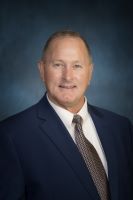
Keith Belk, PhD
Dr. Keith Belk is the Director of Eurofins’ Advanced Learning Institute and Professor and Holder of the Monfort Endowed Chair, Center for Meat Safety & Quality, Colorado State University (CSU), and as an Adjunct Professor in the Colorado School of Public Health. Previously, he served as Professor and Head of the Department of Animal Sciences at CSU. He earned B.S. and M.S. degrees from CSU, and a Ph.D. from Texas A&M University. He currently serves in a consulting role as the Director of Education for Eurofins Rapid Microbiology Laboratories, LLC. Dr. Belk is also a member of the International Committee for the National Western Stock Show, the Board of Directors for the International Stockmen’s Educational Foundation, on the Academic Advisory Committee for the Meat Institute Protein PACT, and on the technical advisory committees for Sustainable Beef, JBS, Colorado Premium Foods, and Hawkins.
Below are resources from Dr. Keith Belk:
Method validation, method verification and fitness for purpose all seem similar, but each requires a distinct level of evaluation and different considerations. Learn more about their similarities and differences in this article.
Whole-Genome Sequencing aids in tracking foodborne illnesses and drug resistance in food pathogens. Read on to learn how WGS ensures food safety and quality.
Read about the function of probiotics in the body, the different varieties and benefits, and how they’re consumed in the diet, from common to new sources. See what to consider when choosing a third party lab for testing and how Eurofins is one of the most trusted labs in the industry.
In this presentation, USP and Eurofins Microbiology provided an overview of USP microbiology methods tests for microbial contamination in dietary supplements, CBD/hemp products, and probiotics. The session included an in-depth discussion regarding the importance of suitability testing, and a comparison of USP methodology to AOAC/FDA BAM methodology. USP also provided an update on new USP chapters and shared insight on what is on the horizon for USP methods.
DNA sequencing is an important tool to identify all Probiotic organisms in a sample all in one assay. In this Scientific Poster, Eurofins scientists investigate a long-read sequencing method that accurately identifies probiotic organisms in complex samples recently presented at SHIFT 20.
In this poster, Eurofins describes how the utility of flow cytometry was expanded further by applying modifications to ISO 19344(B) in order to accurately quantify the yeast in the sample.
This scientific poster demonstrates how flow cytometry can be used to accurately and precisely enumerate B. coagulans and B. subtilis in a gummy matrix.
Enumeration provides the most basic required information with methodologies evolving to provide improved accuracy, precision, and turnaround times. Acoustic-assisted hydrodynamic flow cytometry incorporates the advance of using sound waves to align the particles in the fluid stream for counting, reducing the time to result.
As probiotic consumption rates continue to grow, stakeholders are demanding more information about the quantity, quality, and identity of organisms in probiotic products. Increasingly, flow cytometry is being used to address manufacturers’ and consumers’ demands, and has shown promise in rapidly providing precise quantitative and qualitative probiotic information.
Salmonella depends on an effective food safety program supported by robust Salmonella detection methods. Our objective is to explore recovery of Salmonella from a background of probiotic cultures and demonstrate and validate as effective, sensitive method for detecting Salmonella in probiotic cultures to protect public health.