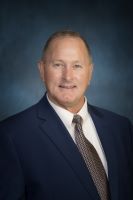
Keith Belk, PhD
Dr. Keith Belk is the Director of Eurofins’ Advanced Learning Institute and Professor and Holder of the Monfort Endowed Chair, Center for Meat Safety & Quality, Colorado State University (CSU), and as an Adjunct Professor in the Colorado School of Public Health. Previously, he served as Professor and Head of the Department of Animal Sciences at CSU. He earned B.S. and M.S. degrees from CSU, and a Ph.D. from Texas A&M University. He currently serves in a consulting role as the Director of Education for Eurofins Rapid Microbiology Laboratories, LLC. Dr. Belk is also a member of the International Committee for the National Western Stock Show, the Board of Directors for the International Stockmen’s Educational Foundation, on the Academic Advisory Committee for the Meat Institute Protein PACT, and on the technical advisory committees for Sustainable Beef, JBS, Colorado Premium Foods, and Hawkins.
Below are resources from Dr. Keith Belk:
This article outlines what ISO 17025:2017 is, and why it is important to choose an accredited lab for testing. An FAQ section details the process and technicalities of ISO accreditations and emphasizes the role of accreditations in providing reliable results.
The Stakeholder Program on Infant Formula and Adult Nutrition is an AOAC group dedicated to approving methods for testing the formulation and purity of infant formulas and nutritional products. Eurofins has always played a large role in SPIFAN, and continues to contribute new methods and expertise. Infant formula manufacturers can turn to Eurofins for all SPIFAN testing needs.
Pyrrolizidine alkaloids are a wide group of natural toxins that present a potential risk to consumers. Find out more if your dietary supplements or herbal supplements are at risk and how to test and verify your product's safety for consumers.
The U.S. Department of Agriculture (USDA) implemented the National Bioengineered Food Disclosure Standard (NBFDS) in 2022. This regulation mandates clear labeling for retail food products containing bioengineered (BE) or 'GMO' ingredients, giving consumers more insight into what they are eating. In this guide, we will explore what qualifies as a bioengineered food, which products are subject to labeling, and how businesses can comply with the regulations outlined in NBFDS.
Which food labeling rule applies to your food product? Learn more about USDA and FDA Food Labeling guidelines, coverage, and differences.
Watch this webinar to gain an understanding of the difference between the USDA and FDA labeling regulations. Also, learn which products fall into which regulation.
Analytical method development and validation is a complex topic; in this webinar, Josh Rhein and Leo Schilling attempt to break it down for you and discuss some best practices.
What are the labeling standards for gluten-free foods? Gain insights on the FDA's definition of gluten-free products and foods and how to meet voluntary labeling standards.
Learn more about global food security, why it is important, and how food science and technology play an important role in mitigating global food insecurity and reducing food waste.
When developing a new food ingredient or product does it mean to be FDA-compliant? Food grade vs. food-safe, what's the difference? And how is a product generally recognized as safe? Learn more about these FDA terms and if they apply to you.