Keith Belk, PhD
Dr. Keith Belk is the Director of Eurofins’ Advanced Learning Institute and Professor and Holder of the Monfort Endowed Chair, Center for Meat Safety & Quality, Colorado State University (CSU), and as an Adjunct Professor in the Colorado School of Public Health. Previously, he served as Professor and Head of the Department of Animal Sciences at CSU. He earned B.S. and M.S. degrees from CSU, and a Ph.D. from Texas A&M University. He currently serves in a consulting role as the Director of Education for Eurofins Rapid Microbiology Laboratories, LLC. Dr. Belk is also a member of the International Committee for the National Western Stock Show, the Board of Directors for the International Stockmen’s Educational Foundation, on the Academic Advisory Committee for the Meat Institute Protein PACT, and on the technical advisory committees for Sustainable Beef, JBS, Colorado Premium Foods, and Hawkins.
Below are resources from Dr. Keith Belk:
The United States Pharmacopeia (USP) is rolling out important updates to General Chapters <2021> and <2022> and, taking effect on April 1, 2026. For manufacturers who rely on microbiological testing to ensure product quality and regulatory compliance, understanding what’s changing and what actions are required is essential.
Important upcoming updates to USP Chapters <2021> and <2022 went into effect on April 1, 2026. These changes modify several microbiological testing requirements, including incubation times, suitability testing, and enrichment steps for specific organisms. Check out our answers to frequently asked questions about the updates.
Why do food companies wait for recalls instead of investing in advanced foreign object detection? A candid take on proactive food safety and ROI.
Consumers rely on sunscreen to provide dependable protection against UV radiation, one of the leading causes of skin damage, premature aging, and skin cancer. Because of this, sunscreen manufacturers face a unique responsibility: to ensure every product consistently delivers the level of protection stated on the label. Read more to why sunscreen testing matters.
With innovation comes complexity and with complexity comes risk. This is why laboratory testing isn’t just a box to check. For longevity products, it’s one of the most challenging and essential parts of responsible product development.
California’s SB 646 represents a major advancement in prenatal supplement safety. By mandating rigorous testing and transparent reporting of heavy metal levels, the state is setting a new benchmark for protecting pregnant individuals and their developing babies.
There are several challenges to testing Vitamin B12 (cobalamins) that create issues for analytical laboratories to accurately measure these compounds. Eurofins Supplement Testing in Madison, WI understands these challenges and has consistently strived to develop updated methodologies utilizing state-of-the-art technology to improve overall method performance.
For years, protein has dominated food and beverage innovation. But as the market matures and consumers become more nutrition-savvy, a new question is emerging in product development conversations: Is fiber the next protein?
In today’s food and dietary supplement marketplace, trust is no longer assumed. Third-party testing and certification have become essential tools for demonstrating product safety, quality, and compliance in a credible way.
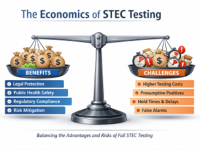
Explore how expanded STEC testing impacts risk management, regulatory readiness, and economics in the beef industry. Brian McFarlane breaks down why food safety decisions—especially around the Big 6 STECs—are both scientific and financial.