Keith Belk, PhD
Dr. Keith Belk is the Director of Eurofins’ Advanced Learning Institute and Professor and Holder of the Monfort Endowed Chair, Center for Meat Safety & Quality, Colorado State University (CSU), and as an Adjunct Professor in the Colorado School of Public Health. Previously, he served as Professor and Head of the Department of Animal Sciences at CSU. He earned B.S. and M.S. degrees from CSU, and a Ph.D. from Texas A&M University. He currently serves in a consulting role as the Director of Education for Eurofins Rapid Microbiology Laboratories, LLC. Dr. Belk is also a member of the International Committee for the National Western Stock Show, the Board of Directors for the International Stockmen’s Educational Foundation, on the Academic Advisory Committee for the Meat Institute Protein PACT, and on the technical advisory committees for Sustainable Beef, JBS, Colorado Premium Foods, and Hawkins.
Below are resources from Dr. Keith Belk:
Explore the leading causes of childhood and adolescent obesity—from ultra-processed foods and excessive sugar to sedentary lifestyles, parental influence, mental health, and governmental policy—and learn evidence-based guidance to support healthier nutrition and habits for kids.
Over the past decade, non-alcoholic and alcohol-free beverages have experienced a steady rise in popularity. As this trend continues to gain momentum, it is essential for both producers and consumers to understand the relevant analytical requirements and labeling terminology. Read more for a simple explanation of labeling terms and the agencies that oversee alcoholic and non-alcoholic beverage labeling.
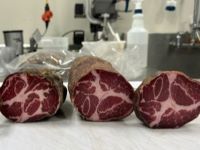
Explore how to comply with FSIS guidance for ready-to-eat fermented, salt-cured, and dried products with an effective validation study balancing scientific rigor, processing expertise, and craftsmanship. This article outlines how to achieve the right balance in your validation approach and how strong, data‑driven studies ultimately enhance the safety, consistency, and reliability of dried and fermented meat products.
There has been a lot of talk about the Dietary Guidelines for Americans (DGA) that have been recently published. Despite being promoted as a major departure, the updated guidelines mix a few foundational changes with many recurring themes from earlier publications.
For manufacturers and brand owners, dietary fiber is more than a buzzword, it’s a key driver of product positioning, consumer trust, and regulatory compliance. But not every ingredient marketed as “fiber” qualifies under FDA standards. Keep reading to learn more about why understanding fiber is so important.
The U.S. Departments of Health and Human Services (HHS) and Agriculture (USDA) have released the 2025–2030 Dietary Guidelines for Americans (DGAs), signaling what many observers see as a notable shift in federal nutrition messaging. Read our overview on the new guidelines.
Choosing safe, high-quality food and dietary supplement products has become increasingly complex. Product labels are filled with claims, ingredient lists can be difficult to interpret, and rumors about lack of regulatory oversight run rampant across social media and elsewhere. Third-party product certification is the answer.
In today’s supplement marketplace, contract manufacturers play a pivotal role. As retailer expectations evolve and third‑party verification becomes increasingly important, product certification is no longer just a valued add, it’s becoming a strategic advantage. Click to learn more about the benefits of product certifications.
Infrared spectroscopy is a powerful analytical tool for rapid, nondestructive measurement. But despite its advantages, IR often develops a reputation for being unreliable or not accurate as primary methods. Keep reading to learn more about how to build and validate a reliable model.
Explore why “food safety culture” is often overcomplicated and how CEO leadership, clear expectations, and accountability truly drive food safety success.