

Resource Library

Welcome to the Eurofins US Food, Feed, and Supplement testing laboratories resource library.
Here you will find blogs, webinars, scientific articles, videos, case studies, white papers, and more about the services we offer for your industry. If you are looking for something in particular please use the search bar to search our whole library.
Search >>
Resources for you:

It’s no secret that hemp is a fast-growing market with applications in a wide range of products from supplements to clothing. Watch this comprehensive webinar in which Eurofins experts discuss hemp testing considerations for hemp farmers and processors including genetic, microbiological, and analytical testing.

In this document, you will see the list of chemicals on the Proposition 65 list and learn how Eurofins is prepared to help you develop your products, qualify your supply chain, and conduct ongoing quality control to minimize the risk of incomplete labeling.

This document describes the nutrition and supplement facts labels changes.

In this three-part series Dan Berg, Food Scientist, Analytical Services Manager at Eurofins talks through some of the more complicated issues and some related manners to consider for manufacturers in their efforts to meet the current regulations for Nutrition Facts and Supplement Facts panels. In this first part of the 3 part series, he discusses RACCs (Reference Amounts Customarily Consumed), Dietary Fiber, and Added Sugars.
In this three-part series Dan Berg, Food Scientist, Analytical Services Manager at Eurofins talks through some of the more complicated issues and some related manners to consider for manufacturers in their efforts to meet the current regulations for Nutrition Facts and Supplement Facts panels. In this second part of the three part series, he discusses vitamins (A, D, E, and Folic Acid/Folates).
In this three-part series Dan Berg, Food Scientist, Analytical Services Manager at Eurofins talks through some of the more complicated issues and some related manners to consider for manufacturers in their efforts to meet the current regulations for Nutrition Facts and Supplement Facts panels. In this the final part of the three part series, he discusses other related rules.

In this blog post Andrew Ward discusses using a 3rd party inspection partner to ensure that quality of the products that a buyer is purchasing. Do you have a 3rd party inspection partner?
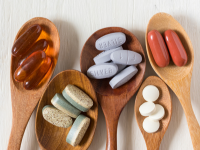
In the world of dietary supplements, ingredient authenticity is directly linked to quality, compliance, safety, and consumer trust. With the complexity of botanical materials and the limitations of individual testing techniques, relying on a single method for identity verification can be risky. That’s where orthogonal methods come in. Read to learn more.

A client submitted a batch of Turmeric Powder (Curcuma longa rhizome) for routine identity and quality verification. The samples were were expected to match the fingerprint of authentic turmeric reference materials. Learn how Eurofins detected detected adulteration in the client's submitted sample.

Photostability testing is crucial for ensuring the safety, efficacy, and quality of products. While there are not specific requirements, the FDA makes it clear it is recommended for all products susceptible to light. Check out our infographic about the importance of photostability testing in OTC products.