


Case Study: Identity Verification and Adulteration Detection in an Astragalus Finished Product and Raw Materials

Client Challenge
A dietary supplement manufacturer submitted a finished capsule product and associated raw materials for identity verification testing. The materials were labeled and supplied as Astragalus membranaceus root. The client requested HPTLC (High-Performance Thin-Layer Chromatography) analysis to confirm botanical identity in support of quality and compliance requirements.
The HPTLC analysis was completed for the capsule and raw material, yielding out-of-specification results. During review of the initial results, the client requested additional scientific context after their raw material supplier indicated that previous HPTLC testing performed at another laboratory had verified the ingredient as compliant Astragalus.
Eurofins Testing Strategy
At the client’s request, HPTLC was utilized as the primary identification method and compared against appropriate certified reference materials, including botanical reference material and USP Astragalus Root Extract Reference Standard.
Multiple analytical conditions and visualizations were evaluated, including:
- Developed plate analysis under UV 366 nm
- Post-derivatization evaluation under visible light
- Post-derivatization evaluation under UV 366 nm
This multi-pronged approach ensured a comprehensive assessment of botanical identity and potential non-conformities
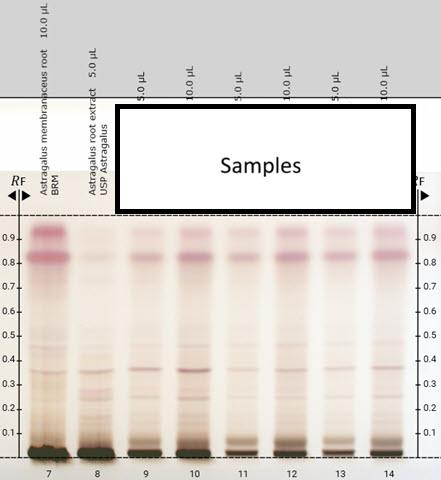
Image showing bands not matching Astragalus:- Developed, UV 366 nm
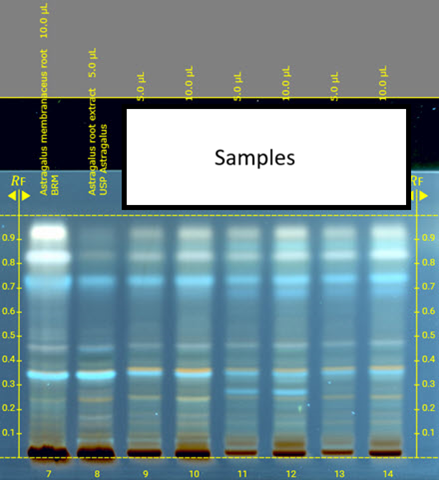
Images showing bands matching Astragalus:
-
-
- - Derivatized – Visible Light
- - Derivatized – UV 366 nm
-
Key Findings
HPTLC analysis demonstrated the presence of Astragalus root based on banding patterns that aligned with certified reference materials under several viewing conditions.
However, during evaluation of the Developed – UV 366 nm image, Eurofins scientists observed extraneous, bright red bands in the upper third of the chromatogram. These bands:
- Were not present in the botanical reference material
- Were not present in the USP reference standard
- Suggested the presence of additional, non-Astragalus material
These findings resulted in an out-of-specification (OOS) result for identity, prompting further investigation.
Follow-Up Investigation
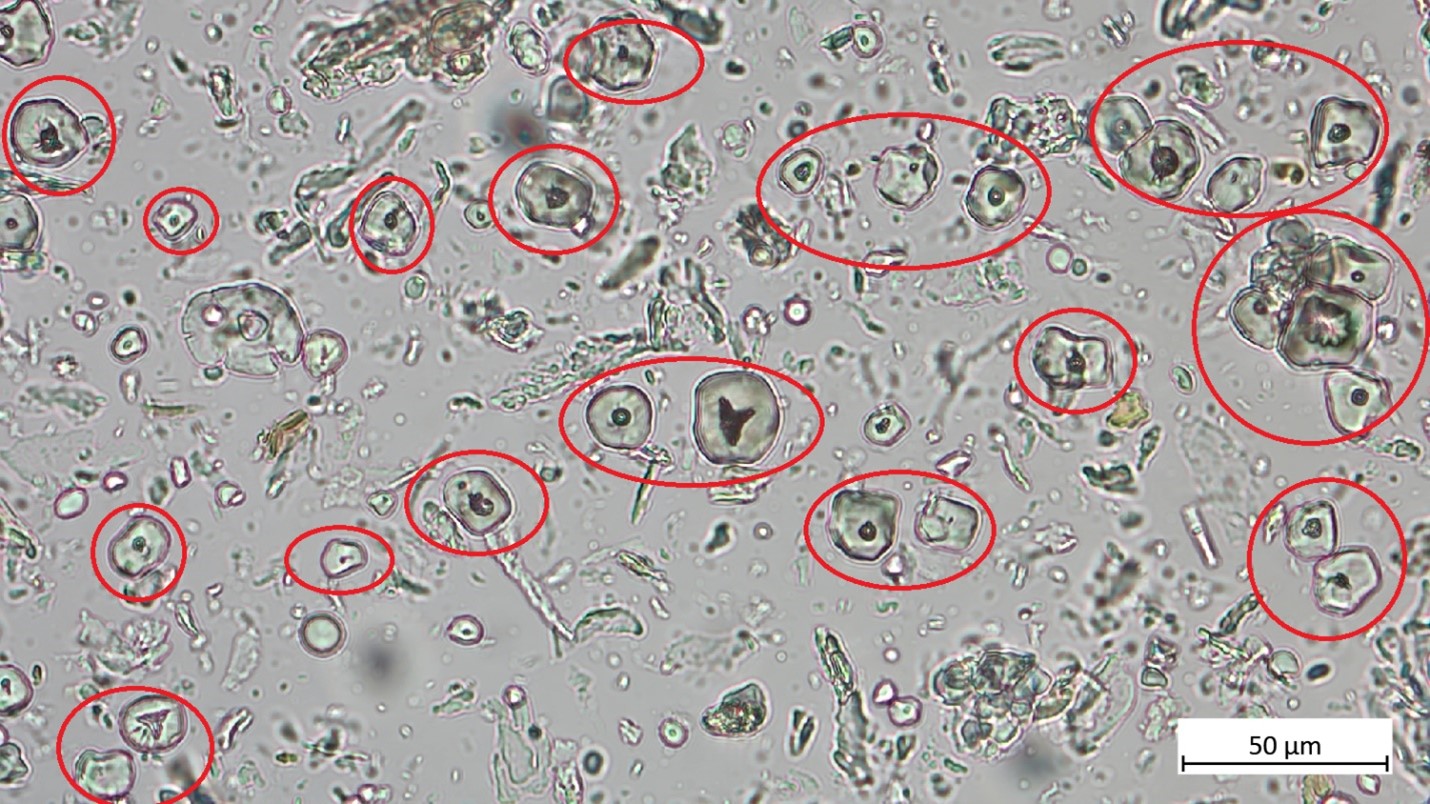
To better understand the source of the non-conforming HPTLC bands, Eurofins engaged a client-focused OOS investigation. As part of this effort, a microscopy evaluation was added to characterize the material further and screen for potential adulterants.
Microscopic analysis revealed an abundance of corn starch, easily identified by the distinctive size and morphology of starch granules characteristic of Zea mays seed.
Final Determination
Based on the combined analytical evidence:
- Astragalus membranaceus root was present in the material
- The presence of corn starch constituted adulteration, rendering the sample non-conforming for identity when evaluated as a pure Astragalus ingredient
Start the Conversation
Have additional questions? Ready to get started? We can help.


