JavaScript is disabled. Please enable to continue!

Mobile search icon
Food Testing >> Resources >> Dried and Fermented Validation Studies – Pilot Plant Photo Gallery

Dried and Fermented Validation Studies – Pilot Plant Photo Gallery

Sidebar Image

By Stevie Thate

Dried and fermented meat validation laboratory

As you step into Eurofins Rapid Microbiological Laboratories (ERML) in Lafayette, CO, there is one unique space that stands out immediately from a typical, routine microbiology testing lab.  Nestled in the back with restrictive signage and a select personnel access badge scanner lies the custom-equipped biosafety laboratory level 2 (BSL-2) laboratory space. 

The BSL-2 lab is configured as a pilot plant to fully support the manufacturing, fermenting, and drying of various artisanal meat products. The facility features seven independent chambers dedicated to fermentation, drying, and maturation, complemented by advanced grinding, mixing, stuffing, and tumbling capabilities. Additionally, for processes requiring enhanced pathogen lethality, the laboratory has access to a high-pressure pasteurization (HPP) unit that can be integrated into the process to validate against exceeded USDA-FSIS guidelines.   

Paired with the resources of the ERML laboratory and the greater Eurofins network, the team of seasoned Meat Scientists and Microbiologists perform validation studies that closely replicate your manufacturing process, ensuring optimal quality and safety for your specialty, not fully cooked, shelf-stable, ready-to-eat products. 

We take pride in our comprehensive validation work supporting food safety across the meat industry.  See for yourself!
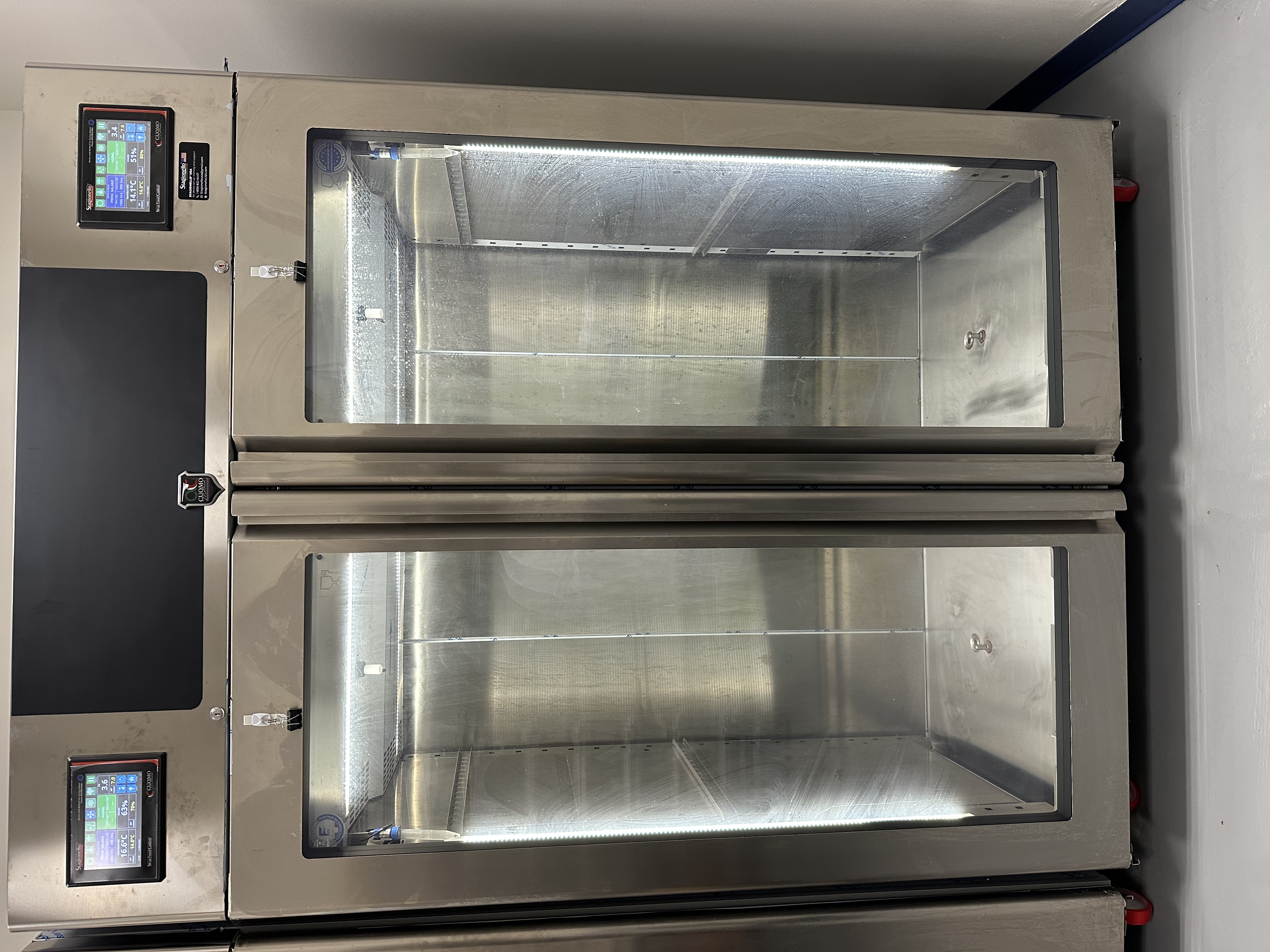
 

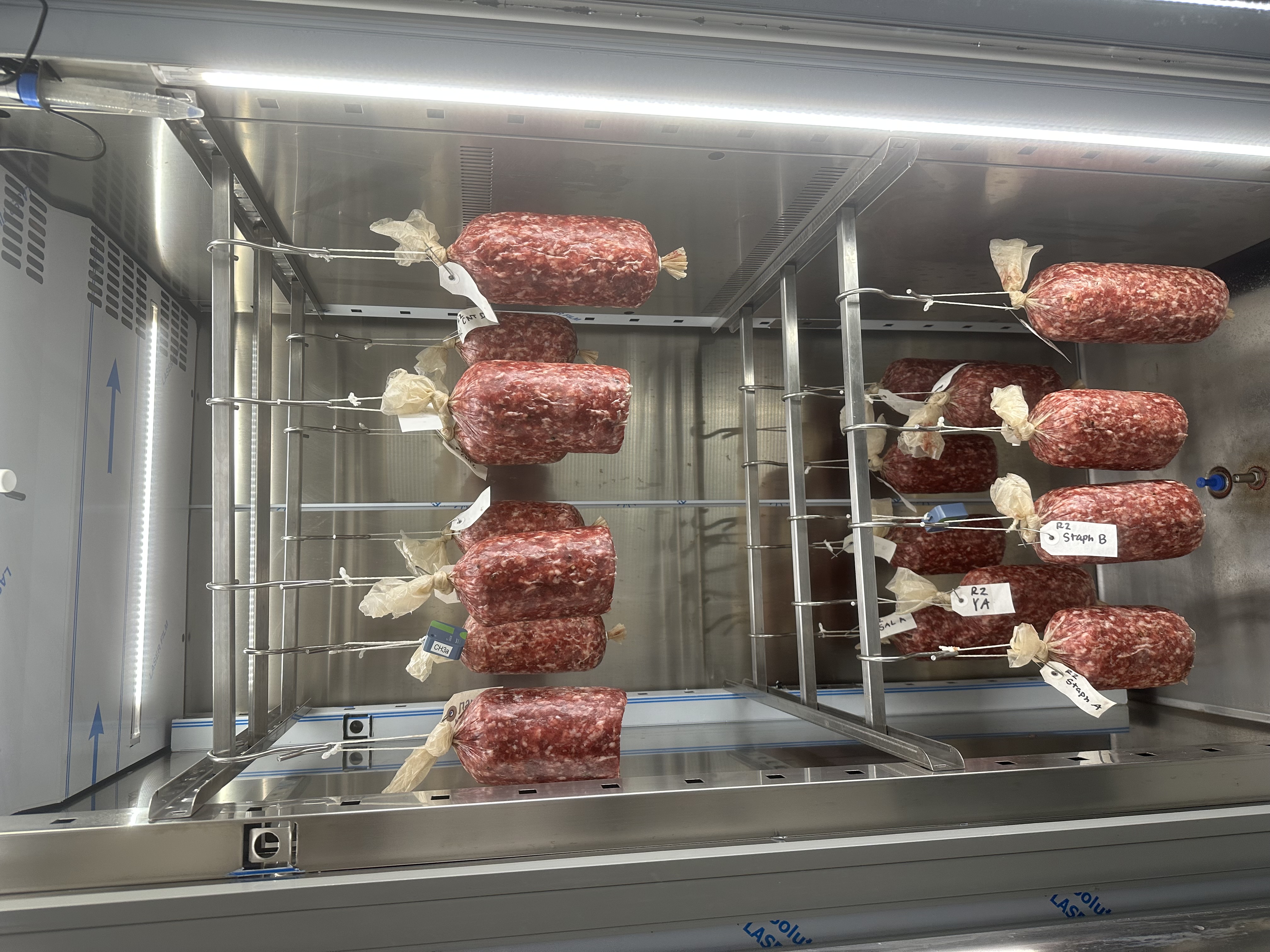
Fermented meat fermentation chamber
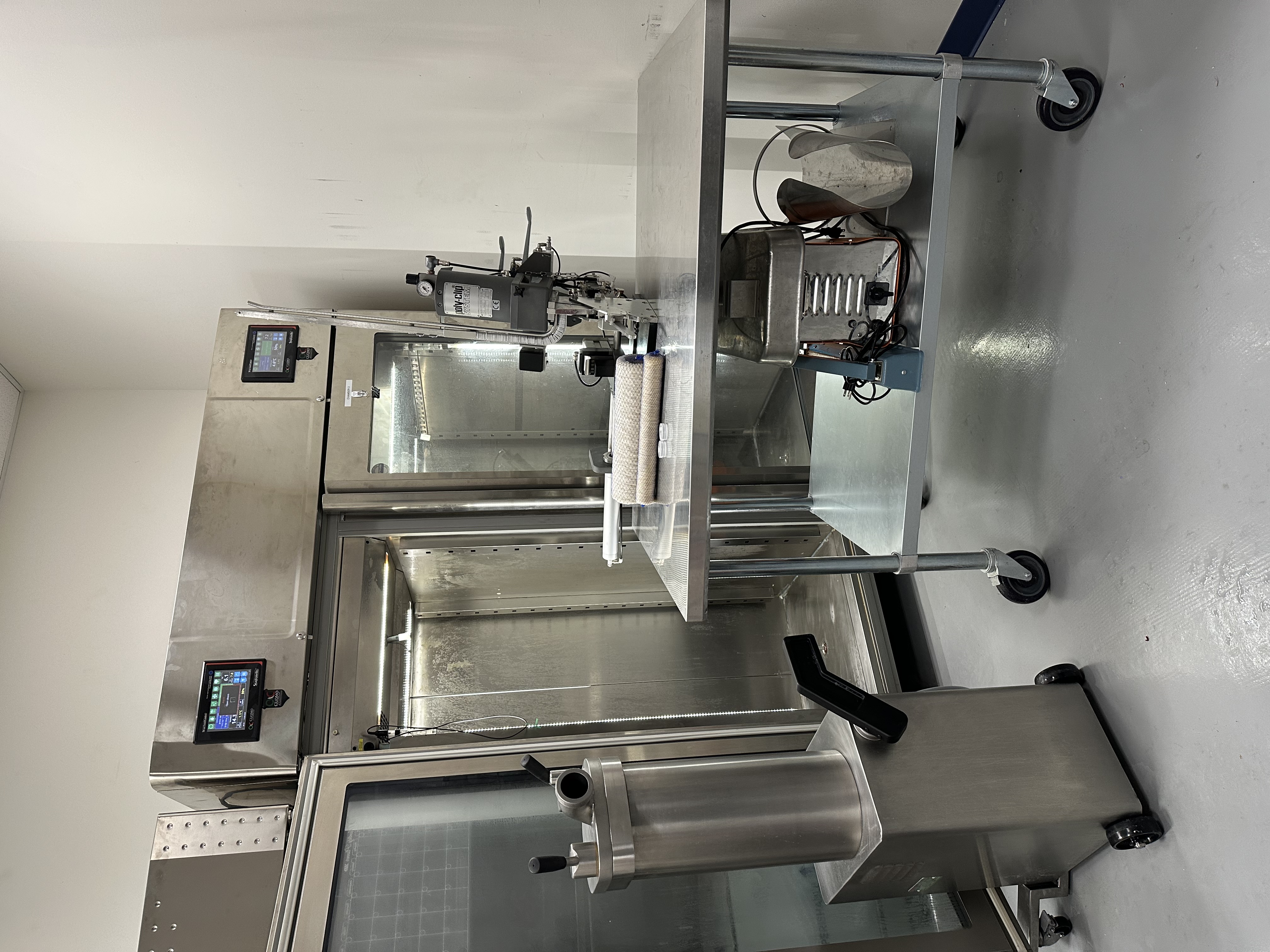
One of seven fermentation chambers within the lab space, with a maximum capacity of 100kg.
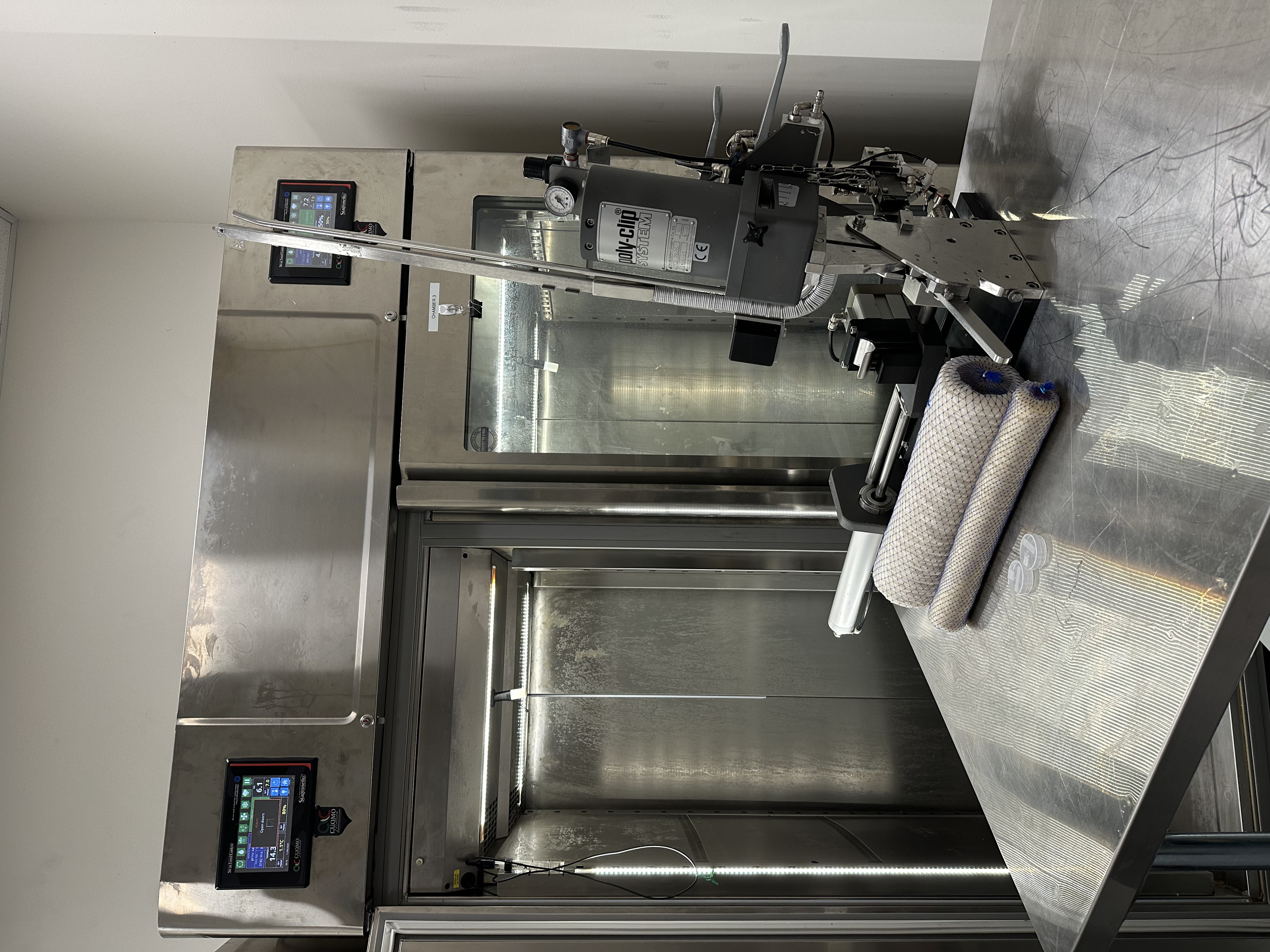
Meat processing casing clippers
Metal clippers are used to secure the casings of each fermented meat product. This manual tabletop size clipper is used in the pilot plant while a larger machine would do this on a commercial scale.
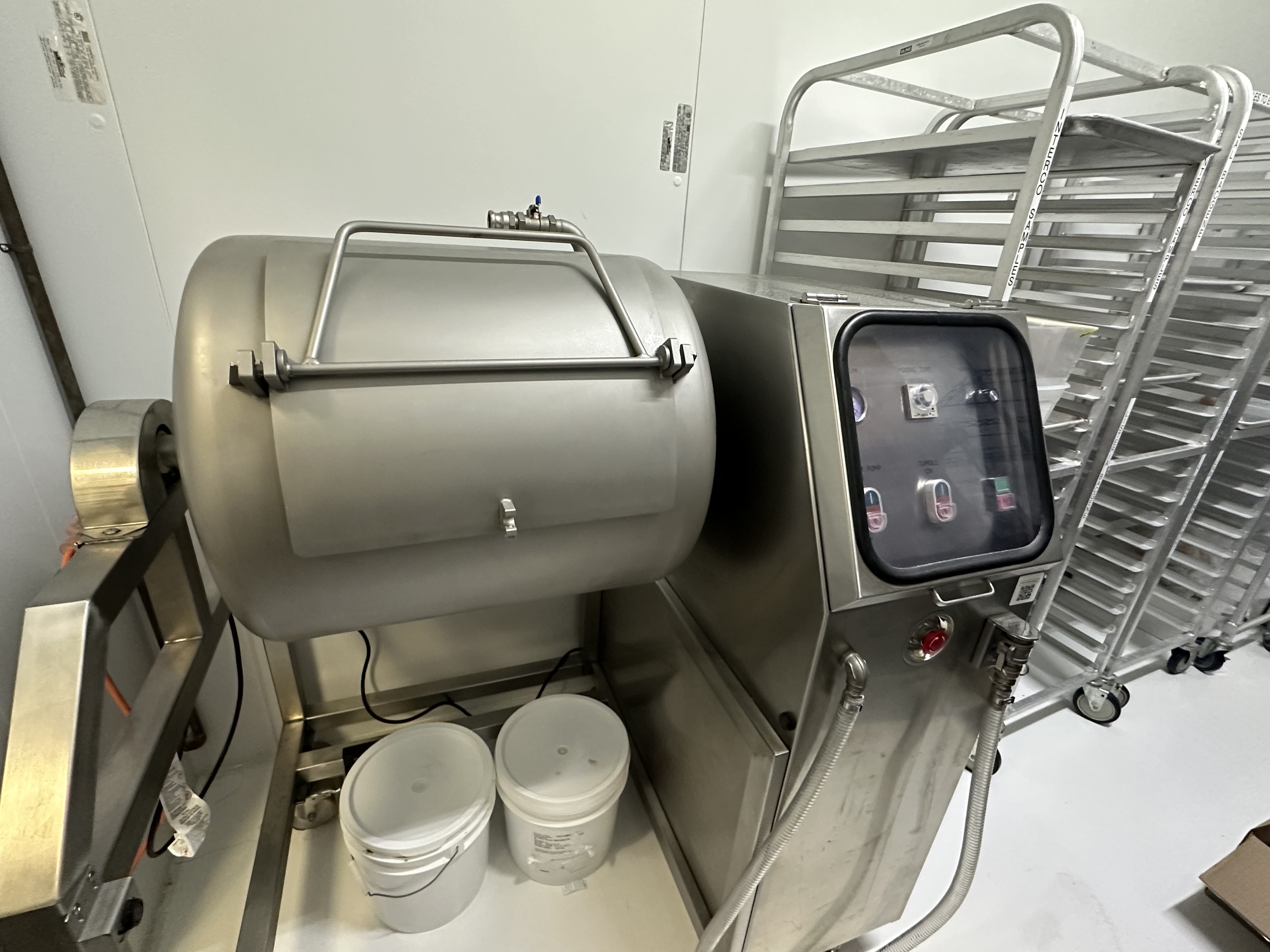
Fermented meat tumbler
The tumbler is used to provide a uniform texture, enhance color and flavor, and increase protein extraction. When adapting a commercial scale process (100+kg capacity) to our smaller lab tumbler (80kg capacity), we either run separate replicates or process smaller batches. This helps ensure the product we produce closely matches the product our customers produce at the commercial scale.
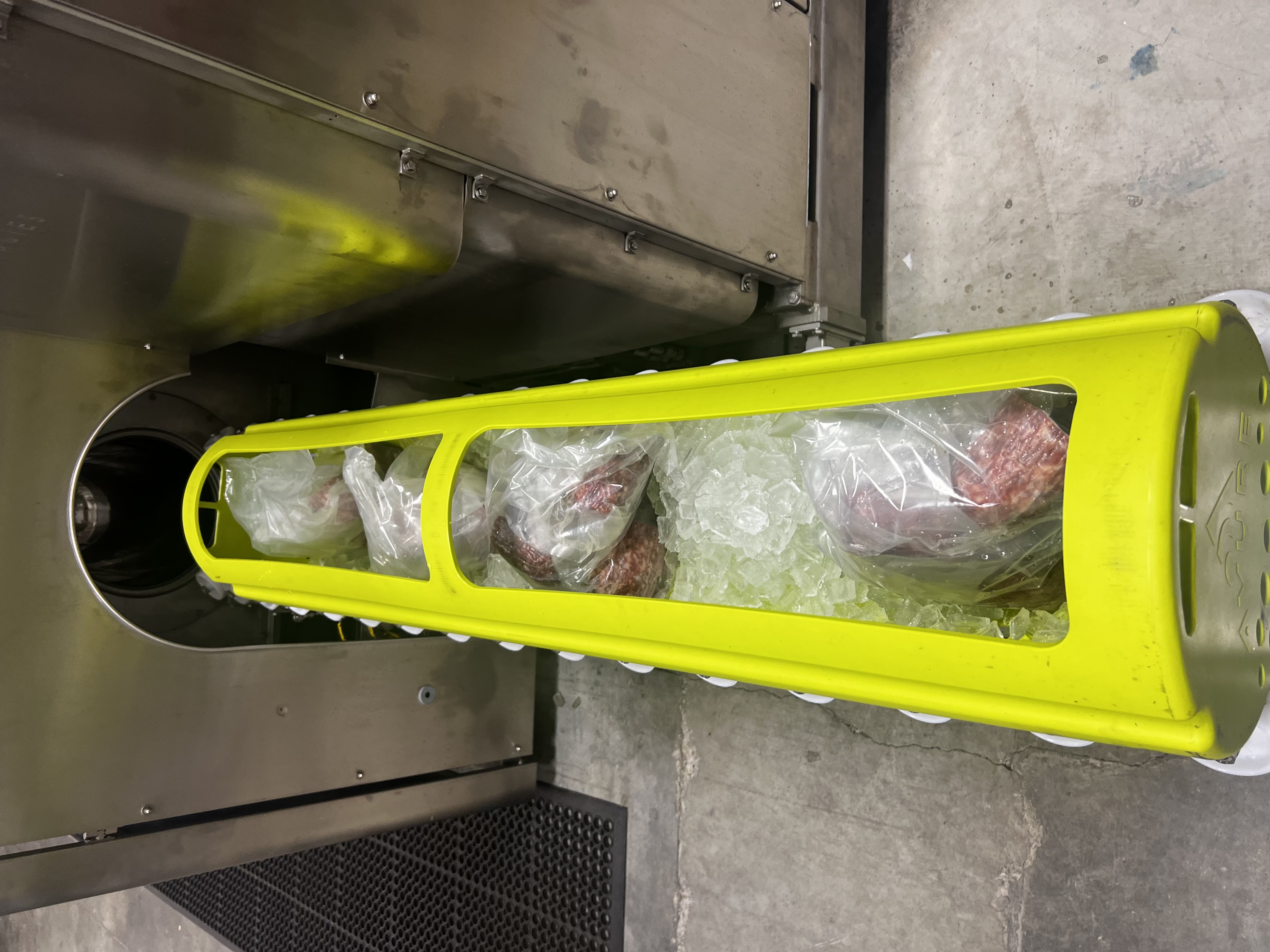
HPP Unit for meat validation
High-pressure processing (HPP) may be used and/or added, ending on the specification of the validation study, to reduce and or eliminate the microbial load of the finished product.
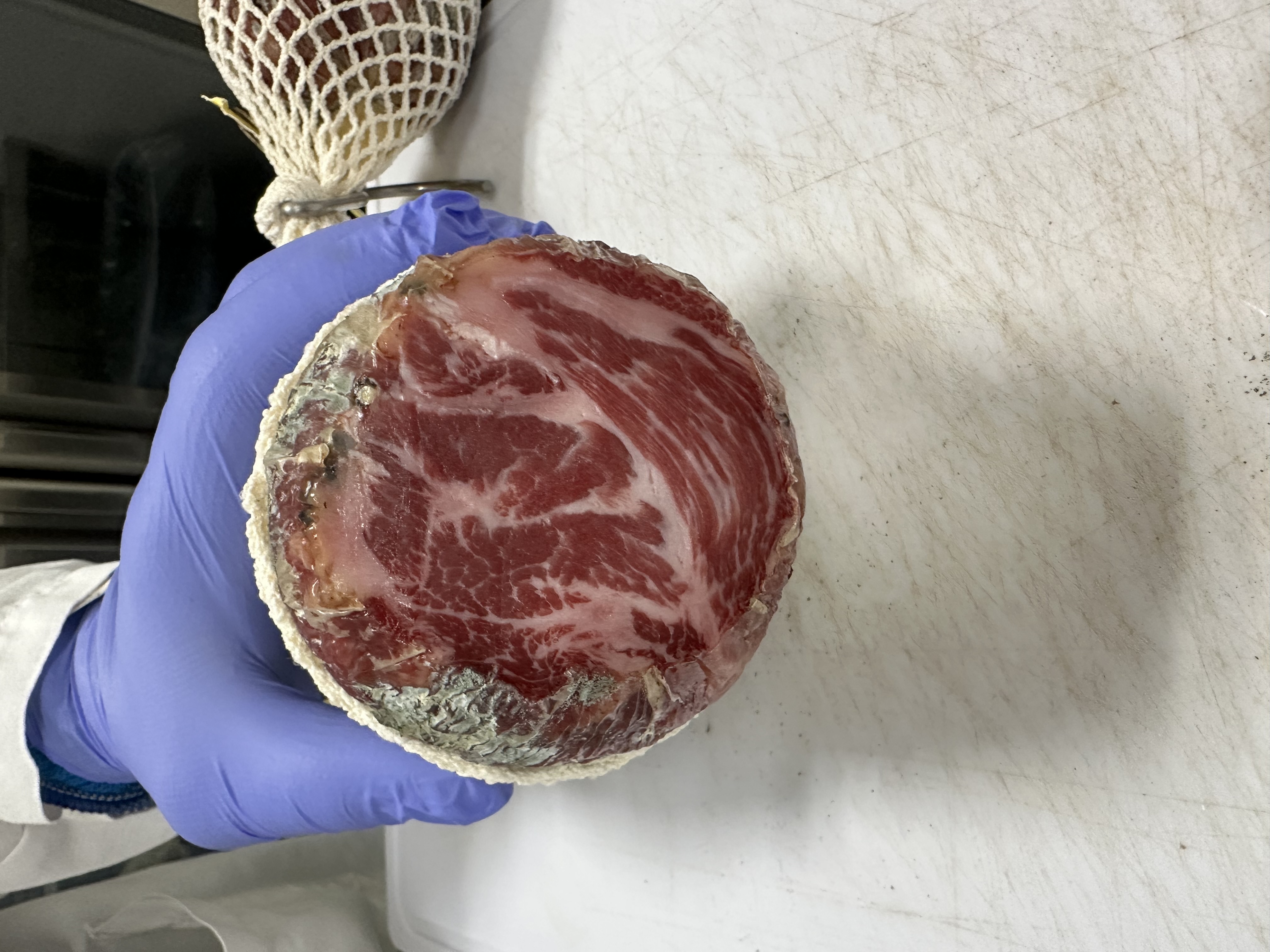
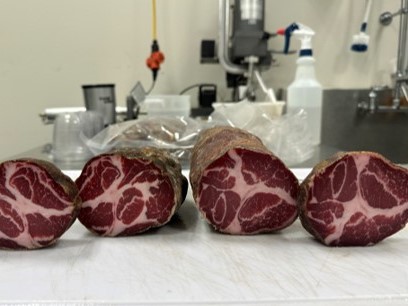
Coppa
Netting is used in the production of Coppa, which allows the product to retain heat, distribute evenly to keep the external surface of the meat firm, and support the absorption of natural juices.
Fermenting Meat
As the meat hangs in the fermentation chamber, sample portions are from the product to evaluate each timestamp in the study.
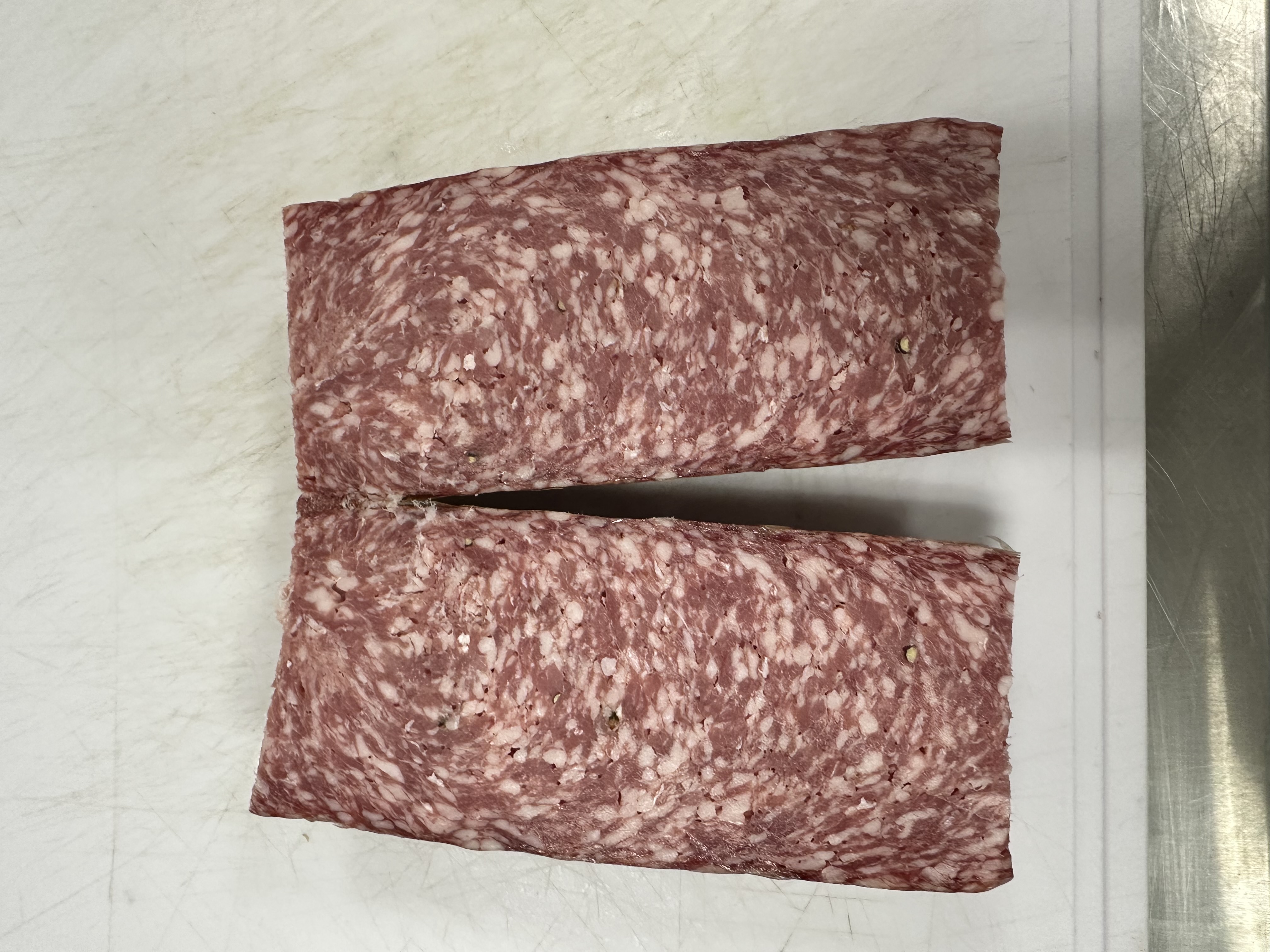
Cut salami
Cut salami demonstrates the desired product consistency for any fermented meat: evenly distributed fat particles, great bind (texture) that shows the meat and fat are held together with no air pockets, and good color contrast demonstrates high quality product (reddish or deep pink).

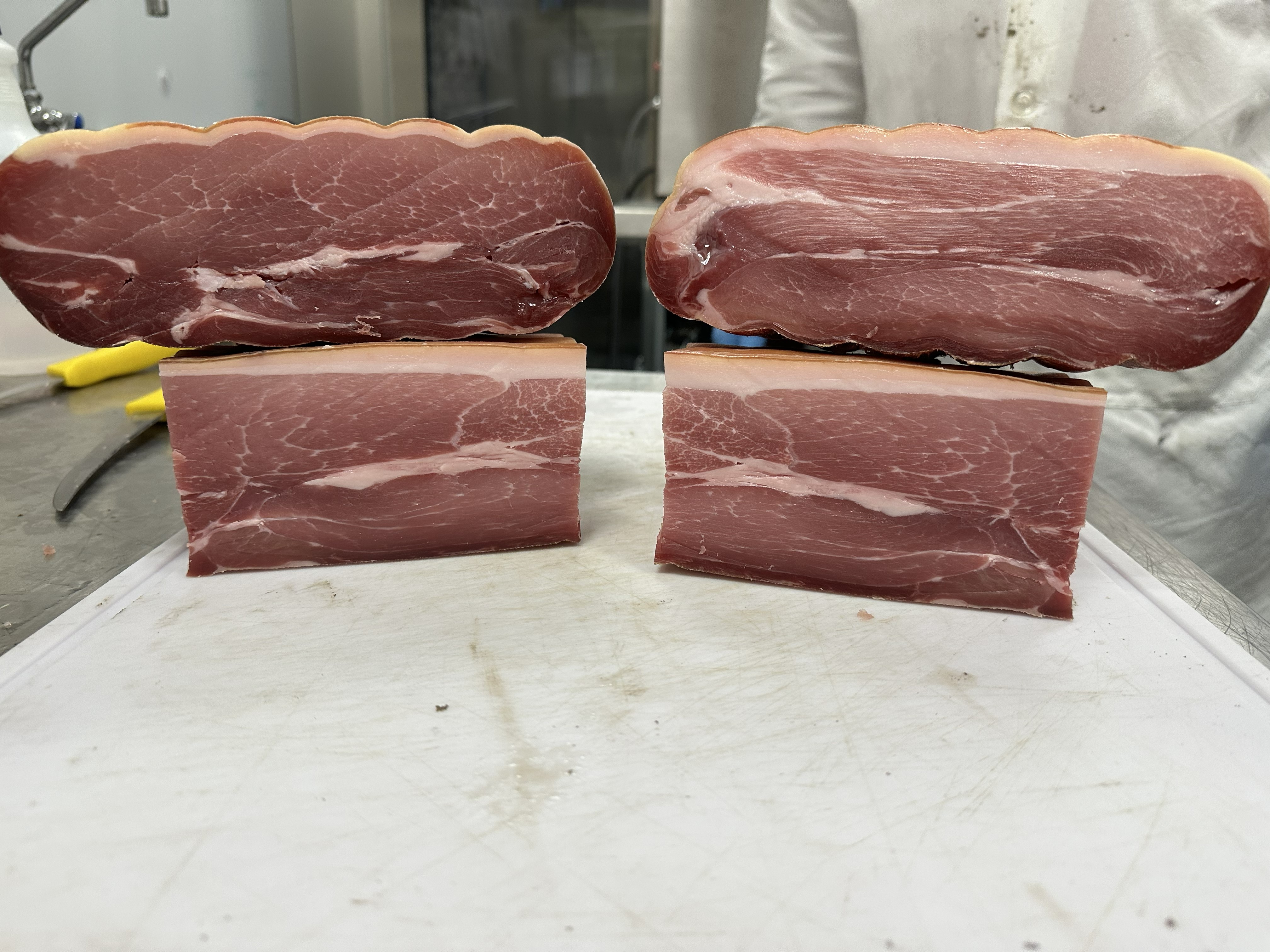
At the completion of a validation study, pictures are taken to showcase the end product in the final report. The following are examples from recent studies. 
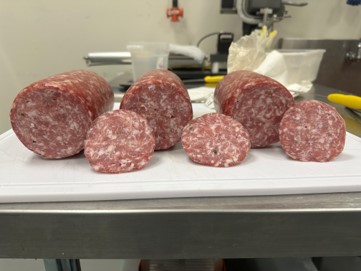
Salami
Salami
Rolled Pancetta
Rolled Pancetta
Coppa
Coppa
Whole Muscle Prosciutto


Questions on how this information is applicable to your food process?

Connect with an expert.


Additional Resources

Designing Effective Validation Studies for Dried and Fermented Meat Products

Interventions to Achieve Pathogen Lethality Targets and Improve the Safety of Traditional Dried and Fermented Salami

Meat and Poultry Testing Services

https://www.eurofinsus.com/food-testing