
JavaScript is disabled. Please enable to continue!

Mobile search icon
More Resources >> Our People >> John Scanga

John Scanga

Sidebar Image
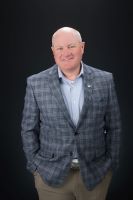
John Scanga, PhD

John Scanga, PhD

Chief Scientific Officer for North American Meat Division

John received his B.S. degree in Animal Sciences, his M.S. degree in Meat Science in 1997, and his Ph.D. in Animal Sciences in 1999, all from Colorado State University in Fort Collins, CO.

He developed a connection to agriculture at an early age; through work on his family’s ranching operation in central Colorado. He enrolled at Colorado State University in the fall of 1992 majoring in Animal Sciences; he competed on the CSU Meat Judging Team in 1994 and worked as an employee in the meat laboratory where his interest in meat processing and the meat industry began to grow.

Following the completion of his M.S (1997) and Ph.D. (1999), John joined the faculty at Colorado State University as an Assistant Professor and Extension Meat Specialist. He managed the day-to-day operations of the Meat Science Teaching and Research Laboratory and was promoted to Associate Professor in 2005.  He then left the university and joined IEH Laboratories and Consulting Group in January of 2008 as Vice President of Technical Services, where he continued to merge scientific concepts with industrial applications for managing and improving the safety of meat and non-meat foods, and improving food processing plant operational efficiencies.  In addition, he provided clients with regulatory, crisis event, and HACCP training and support.

John joined Elanco Animal Health in November of 2009 as an Associate Senior Technical Consultant where he brought a consumer focus and an emphasis on balancing animal productivity and performance with consumer acceptability. His work there focused on red meat safety, red meat quality and international trade.

John has been an author or co-author on over 70 refereed scientific publications on red meat quality and safety and has presented the findings of his work through numerous invited in presentations both the U.S and internationally.  

John also has a passion for service.  He currently is the chair of the Colorado Beef Council and has served as President of the Weld RE-9 school board, Weld County Fair Board and is a member of the Highland High School FFA Advisory Committee. 

John and his wife Chauna live on a diversified farming operation in Ault, Colorado.  Their family time is consumed with agriculture, farming, riding reigning horses and traveling.  His hobbies include backcountry snowmobiling and bird hunting. He  also works as a visiting professor in the Department of Animal Sciences at Colorado State University, where he first started his academic career. 

Below are resources from Dr. Scanga:


This method tests for all of the specific illegal adulterants that Amazon requires of its sellers of Sports Nutrition (Body Building) supplements.


Food fraud can result in serious public health consequences and damage to your brand's reputation. Learn about products at risk for food fraud and steps you can take to protect your company.


As popularity of dietary supplements continues to grow, recent challenges in supply chain have shown an emergent growth in adulteration. Find out more on what the problem with adulteration is, and how is it being addressed.


Botanical reference materials play a critical role in herbal product testing. Learn about the importance of botanical reference materials, and how choosing a lab with a large reference material library impacts analytical outputs.


The COVID-19 pandemic created a favorable environment for increased economically motivated adulteration of ingredients and finished products. Adulterated ingredients entering your product can result in serious risk for your company. How can you reduce your company's risk?


Turmeric has faced authenticity issues as instances of economic-adulterations to reduce the cost. We used carbon-14 and HPLC analyses as complementary methods to verify “all-natural” label claims of commercial dietary supplements containing turmeric ingredients.


This presentation discusses further on adulteration risks in botanicals, reviews various quality control analytical strategies and research advances in analytical sciences for dietary supplements and ingredients.


Food fraud, also known as economically motivated adulteration, is widespread worldwide.  Food fraud involves deliberate and intentional substitution, addition, tampering or misrepresentation of food, food ingredients or food packaging, labeling, product information or false or misleading statements made about a product for economic gain.  Food fraud can adversely impact consumer health, product quality, and brand reputation.


Learn more about the similarities and differences between the terms: fraud, defense, authenticity, and adulteration when it comes to foods, ingredients, and supplements.


We are proud to share the publication of a new scientific article from our team overseas.  This article details the optimization of the NMR method, and the validation of the enhancements made.  This unique analysis can differentiate agave inulin/syrup/alcohol from cane or corn adulterants.


<< < 1 2 3 4 > >>

https://www.eurofinsus.com/food-testing