JavaScript is disabled. Please enable to continue!

Mobile search icon
More Resources >> Our People >> John Scanga

John Scanga

Sidebar Image
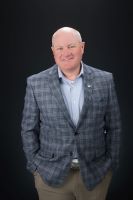
John Scanga, PhD

John Scanga, PhD

Chief Scientific Officer for North American Meat Division

John received his B.S. degree in Animal Sciences, his M.S. degree in Meat Science in 1997, and his Ph.D. in Animal Sciences in 1999, all from Colorado State University in Fort Collins, CO.

He developed a connection to agriculture at an early age; through work on his family’s ranching operation in central Colorado. He enrolled at Colorado State University in the fall of 1992 majoring in Animal Sciences; he competed on the CSU Meat Judging Team in 1994 and worked as an employee in the meat laboratory where his interest in meat processing and the meat industry began to grow.

Following the completion of his M.S (1997) and Ph.D. (1999), John joined the faculty at Colorado State University as an Assistant Professor and Extension Meat Specialist. He managed the day-to-day operations of the Meat Science Teaching and Research Laboratory and was promoted to Associate Professor in 2005.  He then left the university and joined IEH Laboratories and Consulting Group in January of 2008 as Vice President of Technical Services, where he continued to merge scientific concepts with industrial applications for managing and improving the safety of meat and non-meat foods, and improving food processing plant operational efficiencies.  In addition, he provided clients with regulatory, crisis event, and HACCP training and support.

John joined Elanco Animal Health in November of 2009 as an Associate Senior Technical Consultant where he brought a consumer focus and an emphasis on balancing animal productivity and performance with consumer acceptability. His work there focused on red meat safety, red meat quality and international trade.

John has been an author or co-author on over 70 refereed scientific publications on red meat quality and safety and has presented the findings of his work through numerous invited in presentations both the U.S and internationally.  

John also has a passion for service.  He currently is the chair of the Colorado Beef Council and has served as President of the Weld RE-9 school board, Weld County Fair Board and is a member of the Highland High School FFA Advisory Committee. 

John and his wife Chauna live on a diversified farming operation in Ault, Colorado.  Their family time is consumed with agriculture, farming, riding reigning horses and traveling.  His hobbies include backcountry snowmobiling and bird hunting. He  also works as a visiting professor in the Department of Animal Sciences at Colorado State University, where he first started his academic career. 

Below are resources from Dr. Scanga:


Explore how rapid testing—from culture methods to PCR and droplet digital PCR—is transforming STEC detection and speeding food safety decisions.


As the U.S. moves toward record biofuel integration, producers face growing pressure to validate biobased fuel quality, strengthen their testing programs, and stay ahead of new regulatory expectations. Learn how Eurofins QTA is adjusting to new requirements.
Keywords: Blog On-Site


Have questions about the Eurofins’ Infant Formula Contaminant Certification or Eurofins Protocol 102? Check out our guide for the answers to frequently asked questions regarding this type of certification.


The United States Pharmacopeia (USP) is rolling out important updates to General Chapters <2021> and <2022> and, taking effect on April 1, 2026. For manufacturers who rely on microbiological testing to ensure product quality and regulatory compliance, understanding what’s changing and what actions are required is essential.


Important upcoming updates to USP Chapters <2021> and <2022 went into effect on April 1, 2026. These changes modify several microbiological testing requirements, including incubation times, suitability testing, and enrichment steps for specific organisms. Check out our answers to frequently asked questions about the updates.


Why do food companies wait for recalls instead of investing in advanced foreign object detection? A candid take on proactive food safety and ROI.
Keywords: Blog Meat


Consumers rely on sunscreen to provide dependable protection against UV radiation, one of the leading causes of skin damage, premature aging, and skin cancer. Because of this, sunscreen manufacturers face a unique responsibility: to ensure every product consistently delivers the level of protection stated on the label. Read more to why sunscreen testing matters.


With innovation comes complexity and with complexity comes risk. This is why laboratory testing isn’t just a box to check. For longevity products, it’s one of the most challenging and essential parts of responsible product development.


California’s SB 646 represents a major advancement in prenatal supplement safety. By mandating rigorous testing and transparent reporting of heavy metal levels, the state is setting a new benchmark for protecting pregnant individuals and their developing babies.


There are several challenges to testing Vitamin B12 (cobalamins) that create issues for analytical laboratories to accurately measure these compounds. Eurofins Supplement Testing in Madison, WI understands these challenges and has consistently strived to develop updated methodologies utilizing state-of-the-art technology to improve overall method performance.


<< < 1 2 3 4 5 6 7 8 9 10 11 12 13 14 15 16 17 18 19 20 21 22 23 24 25 26 27 > >>

https://www.eurofinsus.com/food-testing