
JavaScript is disabled. Please enable to continue!

Mobile search icon
More Resources >> Our People >> John Scanga

John Scanga

Sidebar Image
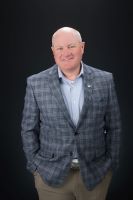
John Scanga, PhD

John Scanga, PhD

Chief Scientific Officer for North American Meat Division

John received his B.S. degree in Animal Sciences, his M.S. degree in Meat Science in 1997, and his Ph.D. in Animal Sciences in 1999, all from Colorado State University in Fort Collins, CO.

He developed a connection to agriculture at an early age; through work on his family’s ranching operation in central Colorado. He enrolled at Colorado State University in the fall of 1992 majoring in Animal Sciences; he competed on the CSU Meat Judging Team in 1994 and worked as an employee in the meat laboratory where his interest in meat processing and the meat industry began to grow.

Following the completion of his M.S (1997) and Ph.D. (1999), John joined the faculty at Colorado State University as an Assistant Professor and Extension Meat Specialist. He managed the day-to-day operations of the Meat Science Teaching and Research Laboratory and was promoted to Associate Professor in 2005.  He then left the university and joined IEH Laboratories and Consulting Group in January of 2008 as Vice President of Technical Services, where he continued to merge scientific concepts with industrial applications for managing and improving the safety of meat and non-meat foods, and improving food processing plant operational efficiencies.  In addition, he provided clients with regulatory, crisis event, and HACCP training and support.

John joined Elanco Animal Health in November of 2009 as an Associate Senior Technical Consultant where he brought a consumer focus and an emphasis on balancing animal productivity and performance with consumer acceptability. His work there focused on red meat safety, red meat quality and international trade.

John has been an author or co-author on over 70 refereed scientific publications on red meat quality and safety and has presented the findings of his work through numerous invited in presentations both the U.S and internationally.  

John also has a passion for service.  He currently is the chair of the Colorado Beef Council and has served as President of the Weld RE-9 school board, Weld County Fair Board and is a member of the Highland High School FFA Advisory Committee. 

John and his wife Chauna live on a diversified farming operation in Ault, Colorado.  Their family time is consumed with agriculture, farming, riding reigning horses and traveling.  His hobbies include backcountry snowmobiling and bird hunting. He  also works as a visiting professor in the Department of Animal Sciences at Colorado State University, where he first started his academic career. 

Below are resources from Dr. Scanga:


Compendial methods used for detecting sulfur dioxide and sulfites are prone to challenges, including false positives in sulfur-rich matrices. Eurofins Food Chemistry Testing Madison, Inc. offers a solution. Click to read about the innovative LC-MS method for determining sulfur dioxide and sulfites in food products.


Innovative ideas are common. Successfully launched products are not. Bringing a food or beverage concept to market involves far more than creativity. Our roadmap outlines the seven key stages required to take a product from initial idea to successful commercial launch—along with the risks, requirements, and technical checkpoints involved at each step. Click to read our guide for food startup and growth-stage brands.


The demand for shelf-stable beverages continues to grow across categories, from juices and ready-to-drink teas to dairy-based and plant-based protein drinks. However, ensuring both safety and product integrity requires a clear understanding of processing methods, particularly as they relate to high-acid vs. low-acid beverages. This white paper outlines best practices for processing high-acid and low-acid beverages, common formulation challenges, and key factors for ensuring a safe, high-quality final product.


Pilot-scale and small-batch production play a critical role in food, beverage, and dietary supplement development. These early stage runs allow companies to fine-tune formulations, troubleshoot production challenges, and test market viability before full-scale commercialization. However, without proper planning, pilot production can lead to costly setbacks. This paper outlines key considerations—including food safety, quality control, production troubleshooting, and packaging—to ensure your pilot runs set the stage for a successful market launch.


The demand for low- and non-alcoholic beverages is booming, driven by evolving consumer preferences for healthier, more mindful drinking options. But behind this innovation lies a complex challenge: without alcohol’s natural antimicrobial properties, these beverages face a higher risk of spoilage and contamination. Ensuring product safety, shelf stability, and regulatory compliance requires more than careful brewing—it calls for the expertise of a qualified process authority. Here is a look at the key risks, essential testing protocols, and proven strategies to keep your low- and no-alcohol products safe, high-quality, and market-ready.


The FDA’s guidance to control the amount of lactose in food and supplements states lactose must not be present, so manufacturers are dependent upon the level of detection for analytical methods. Eurofins Food Chemistry Testing Madison, Inc. has recently optimized our High-Performance Anion Exchange Chromatography method for low lactose determination to improve upon the accuracy and specificity obtained across a variety of different product types when quantifying at low concentrations.


The effectiveness of a preservative or antimicrobial product is critical in ensuring the safety of a food product and extending its shelf life. This article helps you to understand the basic considerations of preservative and antimicrobial efficacy testing, including determining a minimum inhibitory concentration (MIC), giving you the background needed to select the best test methods for your food product evaluation.


This poster evaluates the microbiological safety of immersion method concentrated coffee, and single strength cold brew coffee processed by UHT. The results were used to determine if temperature controls for safety (TCS) should be required for these products during retail.


Eurofins Microbiology Laboratories, Inc. of Milwaukee, WI is proud to announce the development of a new test method for acetic acid bacteria enumeration, intended for utilization by clients in the beverage industry.


Watch this on-demand webinar featuring industry experts, as they explore the analytical considerations for non-routine investigations of failures and losses in the wine, spirits, and beverage industry. Original airdate May 22, 2024.


<< < 1 2 3 4 5 6 7 8 9 10 11 12 13 > >>

https://www.eurofinsus.com/food-testing