JavaScript is disabled. Please enable to continue!

Mobile search icon
More Resources >> Our People >> John Scanga

John Scanga

Sidebar Image
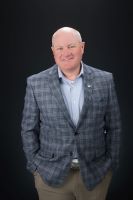
John Scanga, PhD

John Scanga, PhD

Chief Scientific Officer for North American Meat Division

John received his B.S. degree in Animal Sciences, his M.S. degree in Meat Science in 1997, and his Ph.D. in Animal Sciences in 1999, all from Colorado State University in Fort Collins, CO.

He developed a connection to agriculture at an early age; through work on his family’s ranching operation in central Colorado. He enrolled at Colorado State University in the fall of 1992 majoring in Animal Sciences; he competed on the CSU Meat Judging Team in 1994 and worked as an employee in the meat laboratory where his interest in meat processing and the meat industry began to grow.

Following the completion of his M.S (1997) and Ph.D. (1999), John joined the faculty at Colorado State University as an Assistant Professor and Extension Meat Specialist. He managed the day-to-day operations of the Meat Science Teaching and Research Laboratory and was promoted to Associate Professor in 2005.  He then left the university and joined IEH Laboratories and Consulting Group in January of 2008 as Vice President of Technical Services, where he continued to merge scientific concepts with industrial applications for managing and improving the safety of meat and non-meat foods, and improving food processing plant operational efficiencies.  In addition, he provided clients with regulatory, crisis event, and HACCP training and support.

John joined Elanco Animal Health in November of 2009 as an Associate Senior Technical Consultant where he brought a consumer focus and an emphasis on balancing animal productivity and performance with consumer acceptability. His work there focused on red meat safety, red meat quality and international trade.

John has been an author or co-author on over 70 refereed scientific publications on red meat quality and safety and has presented the findings of his work through numerous invited in presentations both the U.S and internationally.  

John also has a passion for service.  He currently is the chair of the Colorado Beef Council and has served as President of the Weld RE-9 school board, Weld County Fair Board and is a member of the Highland High School FFA Advisory Committee. 

John and his wife Chauna live on a diversified farming operation in Ault, Colorado.  Their family time is consumed with agriculture, farming, riding reigning horses and traveling.  His hobbies include backcountry snowmobiling and bird hunting. He  also works as a visiting professor in the Department of Animal Sciences at Colorado State University, where he first started his academic career. 

Below are resources from Dr. Scanga:



There are many ways to sell and distribute authorized food packaging materials on the US market. One pathway for introducing new food contact substances to the U.S. market is by submitting a Food Contact Notification (FCN) to the FDA for premarket approval. Watch our webinar exploring the FDA’s authorization process for new food contact substances, focusing on migration testing and safety evaluation. Originally Aired on June 4, 2025


Regulatory agencies such as the FDA and the Alcohol and Tobacco Tax and Trade Bureau (TTB) have recently proposed and/or finalized several regulations pertaining to the labeling of food & beverages. Read our blog for a straight-forward explanation of the latest updates.


Discover how The National Food Lab, Eurofins Product Development Center of Excellence, helped an entrepreneur turn an idea into a successful wellness brand, developing and commercializing functional herbal teas in just 10 months.


With rising demand for A2-type dairy, precise A1/A2 testing is essential. Eurofins' advanced LCMS technology ensures product integrity and consumer confidence in a transparent food supply chain. Learn about the structure of A1/A2 and the importance of testing.


Join us for an informative session focused on understanding and solving common food packaging failures. Whether you're dealing with leaking, corrosion, or unexpected damage during distribution, identifying the root cause is essential to maintaining product quality, safety, and brand trust. Originally Aired on May 14, 2025


Two Notices of Proposed Rulemaking (NPRMs) were published on January 17th, 2025 regarding labeling of alcoholic beverages regulated by the federal Alcohol and Tobacco Tax and Trade Bureau (TTB) under the Federal Alcohol Administration Act. Check out our infographic to learn about the proposed rules' components and exemptions.


Compendial methods used for detecting sulfur dioxide and sulfites are prone to challenges, including false positives in sulfur-rich matrices. Eurofins Food Chemistry Testing Madison, Inc. offers a solution. Click to read about the innovative LC-MS method for determining sulfur dioxide and sulfites in food products.


The demand for shelf-stable beverages continues to grow across categories, from juices and ready-to-drink teas to dairy-based and plant-based protein drinks. However, ensuring both safety and product integrity requires a clear understanding of processing methods, particularly as they relate to high-acid vs. low-acid beverages. This white paper outlines best practices for processing high-acid and low-acid beverages, common formulation challenges, and key factors for ensuring a safe, high-quality final product.


The demand for low- and non-alcoholic beverages is booming, driven by evolving consumer preferences for healthier, more mindful drinking options. But behind this innovation lies a complex challenge: without alcohol’s natural antimicrobial properties, these beverages face a higher risk of spoilage and contamination. Ensuring product safety, shelf stability, and regulatory compliance requires more than careful brewing—it calls for the expertise of a qualified process authority. Here is a look at the key risks, essential testing protocols, and proven strategies to keep your low- and no-alcohol products safe, high-quality, and market-ready.


The FDA’s guidance to control the amount of lactose in food and supplements states lactose must not be present, so manufacturers are dependent upon the level of detection for analytical methods. Eurofins Food Chemistry Testing Madison, Inc. has recently optimized our High-Performance Anion Exchange Chromatography method for low lactose determination to improve upon the accuracy and specificity obtained across a variety of different product types when quantifying at low concentrations.


<< < 1 2 3 4 5 6 7 8 9 10 11 12 > >>

https://www.eurofinsus.com/food-testing