
JavaScript is disabled. Please enable to continue!

Mobile search icon
More Resources >> Our People >> John Scanga

John Scanga

Sidebar Image
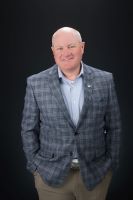
John Scanga, PhD

John Scanga, PhD

Chief Scientific Officer for North American Meat Division

John received his B.S. degree in Animal Sciences, his M.S. degree in Meat Science in 1997, and his Ph.D. in Animal Sciences in 1999, all from Colorado State University in Fort Collins, CO.

He developed a connection to agriculture at an early age; through work on his family’s ranching operation in central Colorado. He enrolled at Colorado State University in the fall of 1992 majoring in Animal Sciences; he competed on the CSU Meat Judging Team in 1994 and worked as an employee in the meat laboratory where his interest in meat processing and the meat industry began to grow.

Following the completion of his M.S (1997) and Ph.D. (1999), John joined the faculty at Colorado State University as an Assistant Professor and Extension Meat Specialist. He managed the day-to-day operations of the Meat Science Teaching and Research Laboratory and was promoted to Associate Professor in 2005.  He then left the university and joined IEH Laboratories and Consulting Group in January of 2008 as Vice President of Technical Services, where he continued to merge scientific concepts with industrial applications for managing and improving the safety of meat and non-meat foods, and improving food processing plant operational efficiencies.  In addition, he provided clients with regulatory, crisis event, and HACCP training and support.

John joined Elanco Animal Health in November of 2009 as an Associate Senior Technical Consultant where he brought a consumer focus and an emphasis on balancing animal productivity and performance with consumer acceptability. His work there focused on red meat safety, red meat quality and international trade.

John has been an author or co-author on over 70 refereed scientific publications on red meat quality and safety and has presented the findings of his work through numerous invited in presentations both the U.S and internationally.  

John also has a passion for service.  He currently is the chair of the Colorado Beef Council and has served as President of the Weld RE-9 school board, Weld County Fair Board and is a member of the Highland High School FFA Advisory Committee. 

John and his wife Chauna live on a diversified farming operation in Ault, Colorado.  Their family time is consumed with agriculture, farming, riding reigning horses and traveling.  His hobbies include backcountry snowmobiling and bird hunting. He  also works as a visiting professor in the Department of Animal Sciences at Colorado State University, where he first started his academic career. 

Below are resources from Dr. Scanga:


Eurofins Central Analytical Laboratories (CAL) offers unrivaled expertise and an ISO 17025:2017 accreditation for all aspects of tea testing, including dried and fresh tea analysis, brewed service testing, and pesticide analysis. This flyer provides an overview of ECAL's tea offerings and the benefits of testing with Eurofins.


Eurofins' Lafayette, Colorado pilot plant, operated by The National Food Lab, is excited to announce a significant upgrade to its beverage canning capabilities, providing three times the daily production of high-quality beverages at an affordable price. This upgrade will take effect immediately, allowing businesses to take advantage of the expanded canning services and their benefits.


What is spectroscopy? What is the difference between NIR vs. Mid IR? What are the benefits of NIR vs traditional wet chemistry? The team at Eurofins QTA answers these questions and more in this blog about infrared spectroscopy.


Alicyclobacillus is a non-pathogenic spoilage bacteria that silently sours fruit juice products. With the ability to survive commercial pasteurization, Alicyclobacillus causes unpleasant odors in food products that make the products undesirable to consumers. Is your product at risk?


Foreign materials in products can be dangerous to consumers and damage a brand's reputation. At Eurofins, our team of experts is equipped to identify the cause of contamination and help come up with the ideal solution for you. The case study outlines our approach to identifying the source of microbial contamination in bottled juice, and how we work with clients to prevent future issues.


Foreign materials and off-odor or off-flavors in a product may result in loss of consumer trust or a damaged brand reputation. In the worst cases, these issues can be dangerous. The first step in eliminating foreign material and off-odor or off-flavor risk is understanding the sources of contamination, including packaging and production issues and chemical and microbial contamination. This blog explains the benefits of foreign material, off-odor, and off-flavor analysis, the sources of contamination, and the tests available for testing.


Food fraud is a widespread and worldwide problem. Watch this video to learn more about which products are most frequently impacted, and how it can impact your business.


We recently hosted a webinar titled "GC-MS Techniques for Troubleshooting Off-Flavor, Off-Odor, and Flavor Scalping in Foods and Beverages Webinar." This Q&A with Dr. Jamie Willems provides a deeper look in to common questions associated with GC-MS, contaminant detection, and out capabilities at Eurofins.


Natural and synthetic food dyes are used in almost all industries. Understanding the potential for dye adulteration is critical to knowing how and why products are affected. Furthermore, testing with a third-party lab can lead to standardized product coloration and reliable ingredient claims. This White Paper introduces the types of food dyes, the benefits of testing, types of tests, and considerations for choosing a third-party lab.


When a product doesn't taste or smell right, it is a good indicator of contamination or packaging and processing issues. GCMS analysis is reliable method for finding the cause of off-odor or flavor and getting your products back to normal! This infographic provides an overview and a case study of how GCMS is used for off-odor and flavor analysis.


<< < 1 2 3 4 5 6 7 8 9 10 11 12 > >>

https://www.eurofinsus.com/food-testing