JavaScript is disabled. Please enable to continue!

Mobile search icon
More Resources >> Our People >> John Scanga

John Scanga

Sidebar Image
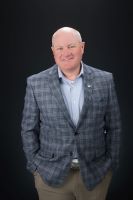
John Scanga, PhD

John Scanga, PhD

Chief Scientific Officer for North American Meat Division

John received his B.S. degree in Animal Sciences, his M.S. degree in Meat Science in 1997, and his Ph.D. in Animal Sciences in 1999, all from Colorado State University in Fort Collins, CO.

He developed a connection to agriculture at an early age; through work on his family’s ranching operation in central Colorado. He enrolled at Colorado State University in the fall of 1992 majoring in Animal Sciences; he competed on the CSU Meat Judging Team in 1994 and worked as an employee in the meat laboratory where his interest in meat processing and the meat industry began to grow.

Following the completion of his M.S (1997) and Ph.D. (1999), John joined the faculty at Colorado State University as an Assistant Professor and Extension Meat Specialist. He managed the day-to-day operations of the Meat Science Teaching and Research Laboratory and was promoted to Associate Professor in 2005.  He then left the university and joined IEH Laboratories and Consulting Group in January of 2008 as Vice President of Technical Services, where he continued to merge scientific concepts with industrial applications for managing and improving the safety of meat and non-meat foods, and improving food processing plant operational efficiencies.  In addition, he provided clients with regulatory, crisis event, and HACCP training and support.

John joined Elanco Animal Health in November of 2009 as an Associate Senior Technical Consultant where he brought a consumer focus and an emphasis on balancing animal productivity and performance with consumer acceptability. His work there focused on red meat safety, red meat quality and international trade.

John has been an author or co-author on over 70 refereed scientific publications on red meat quality and safety and has presented the findings of his work through numerous invited in presentations both the U.S and internationally.  

John also has a passion for service.  He currently is the chair of the Colorado Beef Council and has served as President of the Weld RE-9 school board, Weld County Fair Board and is a member of the Highland High School FFA Advisory Committee. 

John and his wife Chauna live on a diversified farming operation in Ault, Colorado.  Their family time is consumed with agriculture, farming, riding reigning horses and traveling.  His hobbies include backcountry snowmobiling and bird hunting. He  also works as a visiting professor in the Department of Animal Sciences at Colorado State University, where he first started his academic career. 

Below are resources from Dr. Scanga:
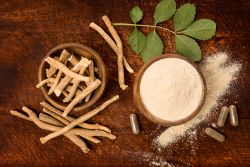


With innovation comes complexity and with complexity comes risk. This is why laboratory testing isn’t just a box to check. For longevity products, it’s one of the most challenging and essential parts of responsible product development.


Botanical Reference Materials (BRMs) are the foundation of reliable High Performance Thin- Layer Chromatography (HPTLC) identity testing. They provide the verified chromatographic fingerprint against which botanical samples are compared. Learn how to safeguarding both industry integrity and consumer confidence.


In the world of dietary supplements, ingredient authenticity is directly linked to quality, compliance, safety, and consumer trust. With the complexity of botanical materials and the limitations of individual testing techniques, relying on a single method for identity verification can be risky. That’s where orthogonal methods come in. Read to learn more.


A client submitted a batch of Turmeric Powder (Curcuma longa rhizome) for routine identity and quality verification. The samples were were expected to match the fingerprint of authentic turmeric reference materials. Learn how Eurofins detected detected adulteration in the client's submitted sample.


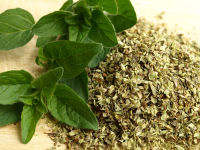
As a widely used culinary and medicinal herb, oregano is expected to meet strict botanical specifications. Read our case study to learn how Eurofins analysts used HPTLC and microscopy to uncover botanical adulteration in an oregano sample submitted for identity verification and quality assessment.


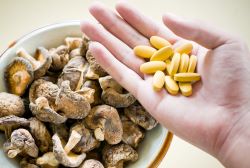
Discover how the Eurofins Botanicals and LeafWorks partnership are advancing transparency in the booming functional mushroom market with species-specific DNA ID testing. Ensure product authenticity, support label claims, and meet regulatory standards with cutting-edge qPCR assays and comprehensive analytical solutions.


In the world of dietary supplements, where natural ingredients are marketed for health and wellness, the quality and identity of botanicals are non-negotiable. Consumers rely on accurate labeling, consistent formulation, and, most importantly, safe and authentic ingredients. Continue reading to learn more about ensuring safety in botanical supplement products.


In an industry rooted in nature but constantly evolving with science, botanical supplements are experiencing a quiet revolution. Innovation isn't just about discovering exotic new plants—it's about precision, purpose, and progress at every step of product development. Check out our infographic on your botanical product's steps, from seed to shelf.


Certain seasonal botanicals may play a vital role in supporting women's health and overall wellness. Shatavari, dong quai, and milky oats are known for their deeply nurturing qualities, fostering balance, resilience, and gentle strength within the body. Click the link to continue exploring the benefits of these plants and their contributions to health and well-being.


In the world of dietary supplements and botanical materials, accurate identity testing is essential for product safety, regulatory compliance, and consumer confidence. One of the most effective tools in this area is Thin Layer Chromatography (TLC), particularly in its high-performance form (HPTLC). Continue reading to find an overview of HPTLC, compendial HPTLC methods, selecting a fit-for-purpose method, the acceptance criteria, and the advantages and limitations of compendial methods.


<< < 1 2 3 4 5 > >>

https://www.eurofinsus.com/food-testing