JavaScript is disabled. Please enable to continue!

Mobile search icon
More Resources >> Our People >> John Scanga

John Scanga

Sidebar Image
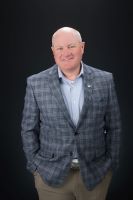
John Scanga, PhD

John Scanga, PhD

Chief Scientific Officer for North American Meat Division

John received his B.S. degree in Animal Sciences, his M.S. degree in Meat Science in 1997, and his Ph.D. in Animal Sciences in 1999, all from Colorado State University in Fort Collins, CO.

He developed a connection to agriculture at an early age; through work on his family’s ranching operation in central Colorado. He enrolled at Colorado State University in the fall of 1992 majoring in Animal Sciences; he competed on the CSU Meat Judging Team in 1994 and worked as an employee in the meat laboratory where his interest in meat processing and the meat industry began to grow.

Following the completion of his M.S (1997) and Ph.D. (1999), John joined the faculty at Colorado State University as an Assistant Professor and Extension Meat Specialist. He managed the day-to-day operations of the Meat Science Teaching and Research Laboratory and was promoted to Associate Professor in 2005.  He then left the university and joined IEH Laboratories and Consulting Group in January of 2008 as Vice President of Technical Services, where he continued to merge scientific concepts with industrial applications for managing and improving the safety of meat and non-meat foods, and improving food processing plant operational efficiencies.  In addition, he provided clients with regulatory, crisis event, and HACCP training and support.

John joined Elanco Animal Health in November of 2009 as an Associate Senior Technical Consultant where he brought a consumer focus and an emphasis on balancing animal productivity and performance with consumer acceptability. His work there focused on red meat safety, red meat quality and international trade.

John has been an author or co-author on over 70 refereed scientific publications on red meat quality and safety and has presented the findings of his work through numerous invited in presentations both the U.S and internationally.  

John also has a passion for service.  He currently is the chair of the Colorado Beef Council and has served as President of the Weld RE-9 school board, Weld County Fair Board and is a member of the Highland High School FFA Advisory Committee. 

John and his wife Chauna live on a diversified farming operation in Ault, Colorado.  Their family time is consumed with agriculture, farming, riding reigning horses and traveling.  His hobbies include backcountry snowmobiling and bird hunting. He  also works as a visiting professor in the Department of Animal Sciences at Colorado State University, where he first started his academic career. 

Below are resources from Dr. Scanga:


Contaminants like ochratoxin A in botanicals and aflatoxins in raw materials pose serious risks to product quality and consumer health. Targeted mycotoxin testing for supplements is critical to meet global compliance standards and protect your brand from costly recalls or regulatory action. Click to learn more.


Testing complex botanical matrices using HPTLC goes beyond simply running a sample through a machine—it requires a deep understanding of both the plant material’s unique properties and the strengths and limitations of HPTLC. In this article, we’ll explore the intricacies of testing complex botanical samples using HPTLC, highlighting the challenges involved and how this technique can effectively overcome them—even in the most complex matrices.


(HPTLC) has established itself as the preferred analytical tool for identification of botanical samples. As with any analytical method, validating the HPTLC method is crucial to ensure that it produces reliable, accurate, and reproducible results. In this article, we will explore the process of HPTLC method validation, why it is necessary, and the critical parameters to consider.


As winter melts away and the promise of spring invites renewal, it's the perfect time to think about new beginnings, especially when it comes to nurturing our bodies. Join us as we embark on a journey exploring plants that promote women’s health and well-being.


October 2024 - Eurofins Botanicals is proud to announce the first-of-its-kind partnership with LeafWorks to launch the industry’s first Mushroom DNA Species Identification Tests. The first DNA ID tests will focus on Shiitake and Cordyceps species, with additional mushroom tests being released in 2025.


In this on-demand webinar Cris Amarillas will guide you through the essentials of botanical identity testing. Original Air Date October 16, 2024.


HPTLC is a popular method for botanical identification. Click the image below to open a video and learn the basics of HPTLC and how it can benefit your products.


Eurofins Central Analytical Laboratories (CAL) offers unrivaled expertise and an ISO 17025:2017 accreditation for all aspects of tea testing, including dried and fresh tea analysis, brewed service testing, and pesticide analysis. This flyer provides an overview of ECAL's tea offerings and the benefits of testing with Eurofins.


This blog explores botanical fraud, differences between fraud and adulteration, and the use of mitigation plans to prevent fraudulent ingredients and products. Learn about the common types of fraud and steps to take to ensure safe and accurately labeled products.


Botanical supplement contamination can be dangerous, and preventing contamination starts with understanding its sources. This infographic explains different sources of contamination in a botanical supplement's life cycle - from growing in the soil to packaging and storage.


<< < 1 2 3 4 5 > >>

https://www.eurofinsus.com/food-testing