JavaScript is disabled. Please enable to continue!

Mobile search icon
More Resources >> Our People >> John Scanga

John Scanga

Sidebar Image
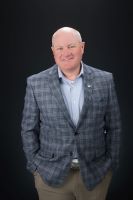
John Scanga, PhD

John Scanga, PhD

Chief Scientific Officer for North American Meat Division

John received his B.S. degree in Animal Sciences, his M.S. degree in Meat Science in 1997, and his Ph.D. in Animal Sciences in 1999, all from Colorado State University in Fort Collins, CO.

He developed a connection to agriculture at an early age; through work on his family’s ranching operation in central Colorado. He enrolled at Colorado State University in the fall of 1992 majoring in Animal Sciences; he competed on the CSU Meat Judging Team in 1994 and worked as an employee in the meat laboratory where his interest in meat processing and the meat industry began to grow.

Following the completion of his M.S (1997) and Ph.D. (1999), John joined the faculty at Colorado State University as an Assistant Professor and Extension Meat Specialist. He managed the day-to-day operations of the Meat Science Teaching and Research Laboratory and was promoted to Associate Professor in 2005.  He then left the university and joined IEH Laboratories and Consulting Group in January of 2008 as Vice President of Technical Services, where he continued to merge scientific concepts with industrial applications for managing and improving the safety of meat and non-meat foods, and improving food processing plant operational efficiencies.  In addition, he provided clients with regulatory, crisis event, and HACCP training and support.

John joined Elanco Animal Health in November of 2009 as an Associate Senior Technical Consultant where he brought a consumer focus and an emphasis on balancing animal productivity and performance with consumer acceptability. His work there focused on red meat safety, red meat quality and international trade.

John has been an author or co-author on over 70 refereed scientific publications on red meat quality and safety and has presented the findings of his work through numerous invited in presentations both the U.S and internationally.  

John also has a passion for service.  He currently is the chair of the Colorado Beef Council and has served as President of the Weld RE-9 school board, Weld County Fair Board and is a member of the Highland High School FFA Advisory Committee. 

John and his wife Chauna live on a diversified farming operation in Ault, Colorado.  Their family time is consumed with agriculture, farming, riding reigning horses and traveling.  His hobbies include backcountry snowmobiling and bird hunting. He  also works as a visiting professor in the Department of Animal Sciences at Colorado State University, where he first started his academic career. 

Below are resources from Dr. Scanga:


Discover how innovative ingredient science and data-driven formulation can reduce dairy use in bakery and snack products, cutting carbon footprints without compromising taste or texture.


There are many ways to sell and distribute authorized food packaging materials on the US market. One pathway for introducing new food contact substances to the U.S. market is by submitting a Food Contact Notification (FCN) to the FDA for premarket approval. Watch our webinar exploring the FDA’s authorization process for new food contact substances, focusing on migration testing and safety evaluation. Originally Aired on June 4, 2025


With rising demand for A2-type dairy, precise A1/A2 testing is essential. Eurofins' advanced LCMS technology ensures product integrity and consumer confidence in a transparent food supply chain. Learn about the structure of A1/A2 and the importance of testing.


Discover how a leading brand overcame protein precipitation and visual separation issues in their dairy-based RTD coffee. Explore the innovative solutions implemented to stabilize the coffee-dairy matrix and ensure product consistency.


The demand for shelf-stable beverages continues to grow across categories, from juices and ready-to-drink teas to dairy-based and plant-based protein drinks. However, ensuring both safety and product integrity requires a clear understanding of processing methods, particularly as they relate to high-acid vs. low-acid beverages. This white paper outlines best practices for processing high-acid and low-acid beverages, common formulation challenges, and key factors for ensuring a safe, high-quality final product.


Precise instrument calibration is critical for maintaining accurate mass balance in dairy plants. As highlighted in this Eurofins Case Study, inconsistent calibration practices can disrupt the accuracy of milk-to-butterfat ratios, leading to substantial revenue losses during production.


In the product development process, scaling dairy-based systems takes more than a good formula—it takes a deep understanding of how everything works together.


November 2024 - Eurofins DQCI and Eurofins Microbiology Laboratories, Inc. are excited to announce the launch of an innovative new test for Avian Influenza A in raw milk, designed to safeguard dairy herds and ensure the health and safety of milk production. This test offers dairy farmers and processors a crucial tool to detect and manage avian flu outbreaks efficiently.
Keywords: News Dairy


In this on-demand webinar discover the strategies to address chemical contamination in Clean in Place (CIP) processes effectively. Original airdate April 17, 2024.


We are excited to announce the promotion of Dr. Dino Holmquist as the Chief Science Officer for the US Dairy industry. He brings over a decade of experience in dairy analytical testing and a strong commitment to food safety and quality assurance.
Keywords: News Dairy


<< < 1 2 3 4 > >>

https://www.eurofinsus.com/food-testing