
JavaScript is disabled. Please enable to continue!

Mobile search icon
More Resources >> Our People >> John Scanga

John Scanga

Sidebar Image
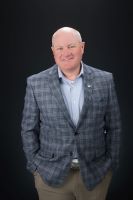
John Scanga, PhD

John Scanga, PhD

Chief Scientific Officer for North American Meat Division

John received his B.S. degree in Animal Sciences, his M.S. degree in Meat Science in 1997, and his Ph.D. in Animal Sciences in 1999, all from Colorado State University in Fort Collins, CO.

He developed a connection to agriculture at an early age; through work on his family’s ranching operation in central Colorado. He enrolled at Colorado State University in the fall of 1992 majoring in Animal Sciences; he competed on the CSU Meat Judging Team in 1994 and worked as an employee in the meat laboratory where his interest in meat processing and the meat industry began to grow.

Following the completion of his M.S (1997) and Ph.D. (1999), John joined the faculty at Colorado State University as an Assistant Professor and Extension Meat Specialist. He managed the day-to-day operations of the Meat Science Teaching and Research Laboratory and was promoted to Associate Professor in 2005.  He then left the university and joined IEH Laboratories and Consulting Group in January of 2008 as Vice President of Technical Services, where he continued to merge scientific concepts with industrial applications for managing and improving the safety of meat and non-meat foods, and improving food processing plant operational efficiencies.  In addition, he provided clients with regulatory, crisis event, and HACCP training and support.

John joined Elanco Animal Health in November of 2009 as an Associate Senior Technical Consultant where he brought a consumer focus and an emphasis on balancing animal productivity and performance with consumer acceptability. His work there focused on red meat safety, red meat quality and international trade.

John has been an author or co-author on over 70 refereed scientific publications on red meat quality and safety and has presented the findings of his work through numerous invited in presentations both the U.S and internationally.  

John also has a passion for service.  He currently is the chair of the Colorado Beef Council and has served as President of the Weld RE-9 school board, Weld County Fair Board and is a member of the Highland High School FFA Advisory Committee. 

John and his wife Chauna live on a diversified farming operation in Ault, Colorado.  Their family time is consumed with agriculture, farming, riding reigning horses and traveling.  His hobbies include backcountry snowmobiling and bird hunting. He  also works as a visiting professor in the Department of Animal Sciences at Colorado State University, where he first started his academic career. 

Below are resources from Dr. Scanga:


With rising demand for A2-type dairy, precise A1/A2 testing is essential. Eurofins' advanced LCMS technology ensures product integrity and consumer confidence in a transparent food supply chain. Learn about the structure of A1/A2 and the importance of testing.


Discover how we helped a client reformulate their restaurant-crafted simmer sauces for retail success—reducing sodium from 2,000 mg to 200 mg per serving while preserving the bold, authentic flavors that made them a customer favorite.


Discover how to reduce sodium without sacrificing taste or functionality in food and beverage products. This white paper explores formulation strategies, technical insights, and best practices for achieving sodium reduction while maintaining consumer appeal.


Join us for an informative session focused on understanding and solving common food packaging failures. Whether you're dealing with leaking, corrosion, or unexpected damage during distribution, identifying the root cause is essential to maintaining product quality, safety, and brand trust. Originally Aired on May 14, 2025


Bringing food and beverage ideas to market takes more than creativity—it demands technical expertise, strategic planning, and cross-functional collaboration. This roadmap infographic highlights the seven stages from idea to product launch.


California Bill 899 aims to safeguard public health by strengthening regulations around product safety. Its potential impact on baby food testing is particularly critical, as it addresses the need for heightened scrutiny in this vital industry. Check out our infographic to learn about the new requirements and why they matter.


As the global food industry continues to evolve, understanding and mitigating the risks associated with mycotoxins is more critical than ever. This session will provide a comprehensive overview of mycotoxins, exploring their sources, types, and the severe health and economic impacts they can have. We will discuss advanced detection methods and monitoring strategies that are essential for maintaining food safety standards. Originally Aired on May 6, 2025


Listen to our webinar covering general and specific methods for protein measurement, especially for protein claims in foods, beverages, and dietary supplements. Dan Berg, Senior Analytical Services Manager for Eurofins Food Chemistry Testing, share how to use analytical data to establish and verify label claims, protein quality, % Daily Value from PDCAAS, and protein characterization. Originally Aired on April 30, 2025


In the dietary supplement and ingredient industry, guaranteeing the safety and quality of products is essential. One important part of quality control is the testing for residual solvents—volatile chemicals used during manufacturing that can pose health risks if not adequately removed. Click to read our blog on considerations in testing for residual solvents.


Compendial methods used for detecting sulfur dioxide and sulfites are prone to challenges, including false positives in sulfur-rich matrices. Eurofins Food Chemistry Testing Madison, Inc. offers a solution. Click to read about the innovative LC-MS method for determining sulfur dioxide and sulfites in food products.


https://www.eurofinsus.com/food-testing