
JavaScript is disabled. Please enable to continue!

Mobile search icon
More Resources >> Our People >> John Scanga

John Scanga

Sidebar Image
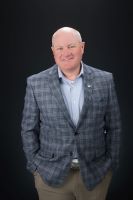
John Scanga, PhD

John Scanga, PhD

Chief Scientific Officer for North American Meat Division

John received his B.S. degree in Animal Sciences, his M.S. degree in Meat Science in 1997, and his Ph.D. in Animal Sciences in 1999, all from Colorado State University in Fort Collins, CO.

He developed a connection to agriculture at an early age; through work on his family’s ranching operation in central Colorado. He enrolled at Colorado State University in the fall of 1992 majoring in Animal Sciences; he competed on the CSU Meat Judging Team in 1994 and worked as an employee in the meat laboratory where his interest in meat processing and the meat industry began to grow.

Following the completion of his M.S (1997) and Ph.D. (1999), John joined the faculty at Colorado State University as an Assistant Professor and Extension Meat Specialist. He managed the day-to-day operations of the Meat Science Teaching and Research Laboratory and was promoted to Associate Professor in 2005.  He then left the university and joined IEH Laboratories and Consulting Group in January of 2008 as Vice President of Technical Services, where he continued to merge scientific concepts with industrial applications for managing and improving the safety of meat and non-meat foods, and improving food processing plant operational efficiencies.  In addition, he provided clients with regulatory, crisis event, and HACCP training and support.

John joined Elanco Animal Health in November of 2009 as an Associate Senior Technical Consultant where he brought a consumer focus and an emphasis on balancing animal productivity and performance with consumer acceptability. His work there focused on red meat safety, red meat quality and international trade.

John has been an author or co-author on over 70 refereed scientific publications on red meat quality and safety and has presented the findings of his work through numerous invited in presentations both the U.S and internationally.  

John also has a passion for service.  He currently is the chair of the Colorado Beef Council and has served as President of the Weld RE-9 school board, Weld County Fair Board and is a member of the Highland High School FFA Advisory Committee. 

John and his wife Chauna live on a diversified farming operation in Ault, Colorado.  Their family time is consumed with agriculture, farming, riding reigning horses and traveling.  His hobbies include backcountry snowmobiling and bird hunting. He  also works as a visiting professor in the Department of Animal Sciences at Colorado State University, where he first started his academic career. 

Below are resources from Dr. Scanga:



Discover why analytical testing is essential for dietary supplement and confectionery brands reformulating with natural colors—ensuring compliance, quality, and consumer trust.


Discover how SDS-PAGE, a powerful protein analysis method, supports ingredient quality, transparency, and innovation in the food industry—from meat and dairy to plant-based products.


Discover how a leading plant-based food company partnered with Eurofins DQCI to implement a precise calibration strategy, ensuring consistent and accurate protein testing across multiple production sites.


With growing scrutiny from lawmakers and public health advocates, the once-standard GRAS (Generally Recognized as Safe) process may be on the verge of a major overhaul. In this blog, we break down what GRAS really means, why the self-affirmed process has sparked concern, and how the proposed legislation could redefine the future of ingredient approval in the U.S. food system.


Long before the MAHA Report hits the public in May 2025, lawmakers across the country aren’t waiting around. At both the state and federal levels, a wave of action is already underway driven by rare bipartisan agreement on one urgent issue: cleaning up the food supply chain. With a spotlight on protecting younger populations, the momentum is unmistakable.


Eurofins Food Chemistry Testing, Madison and Eurofins Assurance are pleased to announce the launch of product certification designed to safeguard the quality of dietary supplements, ingredients and food. Brands, retailers, and facilities in the dietary supplements industry can leverage these new schemes to demonstrate their commitment to regulatory compliance and quality. Click to learn more about this new certification.


Product certification plays a vital role in minimizing the potential risks of adulteration, contamination, and other quality issues in your product. This infographic outlines the steps to earning the Eurofins Assurance Mark for your dietary supplement, ingredient, or food product.


With the release of the Make America Healthy Again (MAHA) report, the food and supplement industries are facing a pivotal moment. Join two of our leading experts as they unpack the report’s findings and explore what they could mean for consumer-packaged goods (CPG) companies. From reformulation strategies to enhanced ingredient scrutiny, this session will help industry professionals prepare for a wave of potential changes. Originally Recorded on August 21, 2025


In May, the Trump Administration released the Make Our Children Healthy Again report—commonly referred to as the MAHA Report. As a new conversation unfolds, let Eurofins help you dive into its implications for the food industry through a series of weekly posts. While the report spans a broad range of topics, our lens will remain focused on the food, beverage, and consumer goods sectors—where we continue to support companies navigating change and driving innovation. Keep reading to find out more on MAHA Report.


The demand for speed in food production and distribution continues to increase, driven by consumer expectations for freshness, short product shelf lives, and regulatory compliance requirements. In this environment, rapid pathogen detection methods have become essential tools for timely decision-making and effective food safety management. This webinar will provide a technical overview of commercially available rapid methods for detecting key foodborne pathogens, including Salmonella, Listeria spp., and L. monocytogenes. Originally Recorded on August 20, 2025.


https://www.eurofinsus.com/food-testing