JavaScript is disabled. Please enable to continue!

Mobile search icon
More Resources >> Our People >> John Scanga

John Scanga

Sidebar Image
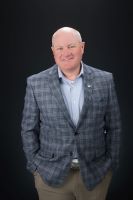
John Scanga, PhD

John Scanga, PhD

Chief Scientific Officer for North American Meat Division

John received his B.S. degree in Animal Sciences, his M.S. degree in Meat Science in 1997, and his Ph.D. in Animal Sciences in 1999, all from Colorado State University in Fort Collins, CO.

He developed a connection to agriculture at an early age; through work on his family’s ranching operation in central Colorado. He enrolled at Colorado State University in the fall of 1992 majoring in Animal Sciences; he competed on the CSU Meat Judging Team in 1994 and worked as an employee in the meat laboratory where his interest in meat processing and the meat industry began to grow.

Following the completion of his M.S (1997) and Ph.D. (1999), John joined the faculty at Colorado State University as an Assistant Professor and Extension Meat Specialist. He managed the day-to-day operations of the Meat Science Teaching and Research Laboratory and was promoted to Associate Professor in 2005.  He then left the university and joined IEH Laboratories and Consulting Group in January of 2008 as Vice President of Technical Services, where he continued to merge scientific concepts with industrial applications for managing and improving the safety of meat and non-meat foods, and improving food processing plant operational efficiencies.  In addition, he provided clients with regulatory, crisis event, and HACCP training and support.

John joined Elanco Animal Health in November of 2009 as an Associate Senior Technical Consultant where he brought a consumer focus and an emphasis on balancing animal productivity and performance with consumer acceptability. His work there focused on red meat safety, red meat quality and international trade.

John has been an author or co-author on over 70 refereed scientific publications on red meat quality and safety and has presented the findings of his work through numerous invited in presentations both the U.S and internationally.  

John also has a passion for service.  He currently is the chair of the Colorado Beef Council and has served as President of the Weld RE-9 school board, Weld County Fair Board and is a member of the Highland High School FFA Advisory Committee. 

John and his wife Chauna live on a diversified farming operation in Ault, Colorado.  Their family time is consumed with agriculture, farming, riding reigning horses and traveling.  His hobbies include backcountry snowmobiling and bird hunting. He  also works as a visiting professor in the Department of Animal Sciences at Colorado State University, where he first started his academic career. 

Below are resources from Dr. Scanga:



In this webinar, we cover our approach to custom method development with a focus on chromatographic techniques, such as GC-FID, GC-MS(MS), HPLC, UPLC, and HPLC-MS(MS). From the initial steps of deciding on an approach, to actual lab development and method validation for routine or regulatory use will be explained using actual case studies and examples. Originally Recorded on August 12, 2025


Issues during the Clean-In-Place (CIP) process, such as insufficient rinsing, can lead to the contamination of products, resulting in quality and/or safety concerns. This on-demand webinar covers various strategies for the detection of CIP chemicals in foods, beverages, and related products. Originally Recorded on June 25, 2025


Creating shelf-stable nutritional bars and other natural food products is about understanding the science behind food preservation, taste and appearance. One of the most critical factors in the formulation of long-lasting, safe and appealing products is water activity. Water activity plays a major role in maintaining texture, reducing the rate of fats oxidation preventing spoilage and ensuring safety from microbial growth. Keep reading to learn what is being done to create a longer shelf life.


In today’s competitive marketplace, success hinges on more than just product formulation. You must create a product experience that consistently delights consumers. Continue reading to learn how Eurofins Nutrition Analysis Center can help you understand how your product is perceived in the real world.


As the global appetite for high-protein and plant-based protein products continues to grow, food developers face a critical challenge: choosing the right protein ingredients that meet nutritional needs and perform well in real-world applications. Protein functionality testing is the backbone of successful innovation in this evolving space. Read more about protein testing by clicking the link.


Chlorates and perchlorates are chlorine-based oxyanions that have emerged as contaminants of concern in the food and dietary supplement industries. These compounds are highly soluble in water and persistent in the environment, making them difficult to eliminate once introduced into the supply chain. Continue reading to learn what you can do to test for these contaminants.


Low water activity foods (LWAFs) have historically been considered low-risk for microbiological hazards because their limited “free” (unbound) water in the formulation prevents bacterial growth. However, foodborne illness outbreaks revealed that pathogens can survive for extended periods in LWAFs, even in the absence of growth. Watch now to learn what is required to validate control measures to reduce microbial risks in LWAFs. Originally Aired on June 18, 2025.


In this video, Business Unit Manager, Mallory Bolander, discusses what trends Eurofins Food Chemistry Testing Madison, Inc. is seeing across the food and dietary supplement industries and how they adapt to changing client needs.


Are you finding inconsistencies with your protein and amino acids testing across suppliers? By collaborating with the Eurofins Food Chemistry Testing Madison, Inc protein experts you can gain greater control over your supply chain and restore confidence in your labeling claims. Continue reading to find out how we handle these situations.


From ancient remedies to modern lab techniques, the science of vitamins has come a long way. Vitamin analysis plays a key role in making sure we get the right nutrients, whether through supplements, food, or baby formula. Keep reading to find out how testing is becoming more precise and efficient.


https://www.eurofinsus.com/food-testing