JavaScript is disabled. Please enable to continue!

Mobile search icon
More Resources >> Our People >> John Scanga

John Scanga

Sidebar Image
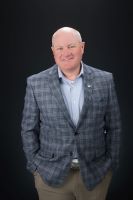
John Scanga, PhD

John Scanga, PhD

Chief Scientific Officer for North American Meat Division

John received his B.S. degree in Animal Sciences, his M.S. degree in Meat Science in 1997, and his Ph.D. in Animal Sciences in 1999, all from Colorado State University in Fort Collins, CO.

He developed a connection to agriculture at an early age; through work on his family’s ranching operation in central Colorado. He enrolled at Colorado State University in the fall of 1992 majoring in Animal Sciences; he competed on the CSU Meat Judging Team in 1994 and worked as an employee in the meat laboratory where his interest in meat processing and the meat industry began to grow.

Following the completion of his M.S (1997) and Ph.D. (1999), John joined the faculty at Colorado State University as an Assistant Professor and Extension Meat Specialist. He managed the day-to-day operations of the Meat Science Teaching and Research Laboratory and was promoted to Associate Professor in 2005.  He then left the university and joined IEH Laboratories and Consulting Group in January of 2008 as Vice President of Technical Services, where he continued to merge scientific concepts with industrial applications for managing and improving the safety of meat and non-meat foods, and improving food processing plant operational efficiencies.  In addition, he provided clients with regulatory, crisis event, and HACCP training and support.

John joined Elanco Animal Health in November of 2009 as an Associate Senior Technical Consultant where he brought a consumer focus and an emphasis on balancing animal productivity and performance with consumer acceptability. His work there focused on red meat safety, red meat quality and international trade.

John has been an author or co-author on over 70 refereed scientific publications on red meat quality and safety and has presented the findings of his work through numerous invited in presentations both the U.S and internationally.  

John also has a passion for service.  He currently is the chair of the Colorado Beef Council and has served as President of the Weld RE-9 school board, Weld County Fair Board and is a member of the Highland High School FFA Advisory Committee. 

John and his wife Chauna live on a diversified farming operation in Ault, Colorado.  Their family time is consumed with agriculture, farming, riding reigning horses and traveling.  His hobbies include backcountry snowmobiling and bird hunting. He  also works as a visiting professor in the Department of Animal Sciences at Colorado State University, where he first started his academic career. 

Below are resources from Dr. Scanga:



Accurate determination of creatine and its degradation product, creatinine, in raw materials and finished products is essential for quality control and regulatory compliance. This webinar will provide an overview of best practices in HPLC creatine and creatinine testing in diverse range of products, including protein powders, pre-workout formulations, beverages, and gummies. Originally Recorded on August 8, 2025


In an industry rooted in nature but constantly evolving with science, botanical supplements are experiencing a quiet revolution. Innovation isn't just about discovering exotic new plants—it's about precision, purpose, and progress at every step of product development. Check out our infographic on your botanical product's steps, from seed to shelf.


When you're dealing with a complex matrix, the real question isn’t “Can it be tested?”—it's “What are you hoping to uncover?” Many things can be tested, but the answers depend on asking the right questions. Learn more about testing complex botanical matrices by clicking the link.


In the world of dietary supplements and botanical materials, accurate identity testing is essential for product safety, regulatory compliance, and consumer confidence. One of the most effective tools in this area is Thin Layer Chromatography (TLC), particularly in its high-performance form (HPTLC). Continue reading to find an overview of HPTLC, compendial HPTLC methods, selecting a fit-for-purpose method, the acceptance criteria, and the advantages and limitations of compendial methods.


Whether you're formulating a botanical powder, validating a nutrient claim, or verifying supplier specifications, reporting on a dry matter basis ensures that decisions are grounded in reliable, standardized data. Click to read a simple explanation of dry matter basis reporting, when it matters, and why.


Fortifying foods and dietary supplements with vitamins, minerals, and bioactives has become a key strategy for innovation and value. Understanding and planning around the LOQ is vital to protecting both your product integrity and your brand credibility. Continue reading to learn how to proactively evaluate your nutrient levels against assay capabilities.


As major retailers implement stricter testing requirements and regulatory expectations, ensuring compliance and quality in dietary supplements is more critical than ever. Join us as we navigate the latest advancements in testing and compliance for dietary supplements, helping brands and suppliers maintain regulatory integrity and consumer trust in a rapidly changing market. Originally Aired on June 11, 2025.


High-value edible oils like olive oil and avocado oil command premium prices for their flavor and health benefits. However, their value also makes them targets for degradation and food fraud. Read our blog about two complimentary testing approaches essential to protecting your customers and brand: quality testing and authenticity testing.


Discover the crucial role of botanical reference materials (BRMs) in supplement quality and regulatory compliance. Learn how BRMs help ensure product integrity and support industry standards.


The Food and Drug Administration (FDA) monitors drug manufacturers' compliance with its current Good Manufacturing Practice (cGMP) regulations in order to ensure the quality of drug products. These regulations are designed to assure products are safe for use and contain the ingredients, strengths, and efficacies of claims made by the product. Learn what tests your OTC products need to be compliant.


<< < 1 2 3 4 5 6 > >>

https://www.eurofinsus.com/food-testing