JavaScript is disabled. Please enable to continue!

Mobile search icon
More Resources >> Our People >> John Scanga

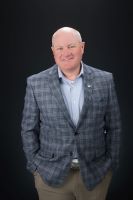
John Scanga

Sidebar Image
John Scanga, PhD

John Scanga, PhD

Chief Scientific Officer for North American Meat Division

John received his B.S. degree in Animal Sciences, his M.S. degree in Meat Science in 1997, and his Ph.D. in Animal Sciences in 1999, all from Colorado State University in Fort Collins, CO.

He developed a connection to agriculture at an early age; through work on his family’s ranching operation in central Colorado. He enrolled at Colorado State University in the fall of 1992 majoring in Animal Sciences; he competed on the CSU Meat Judging Team in 1994 and worked as an employee in the meat laboratory where his interest in meat processing and the meat industry began to grow.

Following the completion of his M.S (1997) and Ph.D. (1999), John joined the faculty at Colorado State University as an Assistant Professor and Extension Meat Specialist. He managed the day-to-day operations of the Meat Science Teaching and Research Laboratory and was promoted to Associate Professor in 2005.  He then left the university and joined IEH Laboratories and Consulting Group in January of 2008 as Vice President of Technical Services, where he continued to merge scientific concepts with industrial applications for managing and improving the safety of meat and non-meat foods, and improving food processing plant operational efficiencies.  In addition, he provided clients with regulatory, crisis event, and HACCP training and support.

John joined Elanco Animal Health in November of 2009 as an Associate Senior Technical Consultant where he brought a consumer focus and an emphasis on balancing animal productivity and performance with consumer acceptability. His work there focused on red meat safety, red meat quality and international trade.

John has been an author or co-author on over 70 refereed scientific publications on red meat quality and safety and has presented the findings of his work through numerous invited in presentations both the U.S and internationally.  

John also has a passion for service.  He currently is the chair of the Colorado Beef Council and has served as President of the Weld RE-9 school board, Weld County Fair Board and is a member of the Highland High School FFA Advisory Committee. 

John and his wife Chauna live on a diversified farming operation in Ault, Colorado.  Their family time is consumed with agriculture, farming, riding reigning horses and traveling.  His hobbies include backcountry snowmobiling and bird hunting. He  also works as a visiting professor in the Department of Animal Sciences at Colorado State University, where he first started his academic career. 

Below are resources from Dr. Scanga:


Discover how a leading plant-based food company partnered with Eurofins DQCI to implement a precise calibration strategy, ensuring consistent and accurate protein testing across multiple production sites.


Accurate determination of creatine and its degradation product, creatinine, in raw materials and finished products is essential for quality control and regulatory compliance. This webinar will provide an overview of best practices in HPLC creatine and creatinine testing in diverse range of products, including protein powders, pre-workout formulations, beverages, and gummies. Originally Recorded on August 8, 2025


Ensure compliance and product safety with Eurofins' USP Microbiology Services. Learn how USP Testing and Suitability Testing help validate methods for dietary supplements, probiotics, and botanicals while avoiding false negatives and regulatory pitfalls.


Low water activity foods (LWAFs) have historically been considered low-risk for microbiological hazards because their limited “free” (unbound) water in the formulation prevents bacterial growth. However, foodborne illness outbreaks revealed that pathogens can survive for extended periods in LWAFs, even in the absence of growth. Watch now to learn what is required to validate control measures to reduce microbial risks in LWAFs. Originally Aired on June 18, 2025.


Whether you're formulating a botanical powder, validating a nutrient claim, or verifying supplier specifications, reporting on a dry matter basis ensures that decisions are grounded in reliable, standardized data. Click to read a simple explanation of dry matter basis reporting, when it matters, and why.


Fortifying foods and dietary supplements with vitamins, minerals, and bioactives has become a key strategy for innovation and value. Understanding and planning around the LOQ is vital to protecting both your product integrity and your brand credibility. Continue reading to learn how to proactively evaluate your nutrient levels against assay capabilities.


You believe in your ingredient. You’ve seen the research, tested the science, and refined the story. But for buyers, belief isn’t enough—it needs to be experienced. That’s where a pilot plant makes all the difference. Read our blog to learn about the value of a pilot plant for ingredient suppliers.


Join us as we explore key test methods designed to evaluate a protein ingredient’s application potential—its functionality fingerprint. This webinar showcases how these tests can drive product innovation and includes real-world examples and case studies to demonstrate how this approach has brought insights to life. Originally Aired on May 29, 2025


High-value edible oils like olive oil and avocado oil command premium prices for their flavor and health benefits. However, their value also makes them targets for degradation and food fraud. Read our blog about two complimentary testing approaches essential to protecting your customers and brand: quality testing and authenticity testing.


Explore the food safety concerns surrounding Bisphenol A (BPA) in packaging, its potential health risks, and emerging alternatives like BPAF, BP, BPF, and BPS.


<< < 1 2 3 4 5 6 7 8 9 10 > >>

https://www.eurofinsus.com/food-testing