
JavaScript is disabled. Please enable to continue!

Mobile search icon
More Resources >> Our People >> John Scanga

John Scanga

Sidebar Image
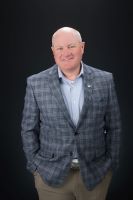
John Scanga, PhD

John Scanga, PhD

Chief Scientific Officer for North American Meat Division

John received his B.S. degree in Animal Sciences, his M.S. degree in Meat Science in 1997, and his Ph.D. in Animal Sciences in 1999, all from Colorado State University in Fort Collins, CO.

He developed a connection to agriculture at an early age; through work on his family’s ranching operation in central Colorado. He enrolled at Colorado State University in the fall of 1992 majoring in Animal Sciences; he competed on the CSU Meat Judging Team in 1994 and worked as an employee in the meat laboratory where his interest in meat processing and the meat industry began to grow.

Following the completion of his M.S (1997) and Ph.D. (1999), John joined the faculty at Colorado State University as an Assistant Professor and Extension Meat Specialist. He managed the day-to-day operations of the Meat Science Teaching and Research Laboratory and was promoted to Associate Professor in 2005.  He then left the university and joined IEH Laboratories and Consulting Group in January of 2008 as Vice President of Technical Services, where he continued to merge scientific concepts with industrial applications for managing and improving the safety of meat and non-meat foods, and improving food processing plant operational efficiencies.  In addition, he provided clients with regulatory, crisis event, and HACCP training and support.

John joined Elanco Animal Health in November of 2009 as an Associate Senior Technical Consultant where he brought a consumer focus and an emphasis on balancing animal productivity and performance with consumer acceptability. His work there focused on red meat safety, red meat quality and international trade.

John has been an author or co-author on over 70 refereed scientific publications on red meat quality and safety and has presented the findings of his work through numerous invited in presentations both the U.S and internationally.  

John also has a passion for service.  He currently is the chair of the Colorado Beef Council and has served as President of the Weld RE-9 school board, Weld County Fair Board and is a member of the Highland High School FFA Advisory Committee. 

John and his wife Chauna live on a diversified farming operation in Ault, Colorado.  Their family time is consumed with agriculture, farming, riding reigning horses and traveling.  His hobbies include backcountry snowmobiling and bird hunting. He  also works as a visiting professor in the Department of Animal Sciences at Colorado State University, where he first started his academic career. 

Below are resources from Dr. Scanga:


As probiotic consumption rates continue to grow, stakeholders are demanding more information about the quantity, quality, and identity of organisms in probiotic products. Increasingly, flow cytometry is being used to address manufacturers’ and consumers’ demands, and has shown promise in rapidly providing precise quantitative and qualitative probiotic information.


For microbiology both quantity and quality matter, and microbiological testing methods are classified as being either quantitative or qualitative. Which category they fall into is based on what type of data is actually collected and reported.
Keywords: Blog Microbiology


Salmonella depends on an effective food safety program supported by robust Salmonella detection methods. Our objective is to explore recovery of Salmonella from a background of probiotic cultures and demonstrate and validate as effective, sensitive method for detecting Salmonella in probiotic cultures to protect public health.


The success of such programs hinges not only on consistent implementation and testing, but also on the effective swabbing of your plant. Below are the top 5 mistakes our experts see plants make when sampling and submitting swabs and sponges for testing.


This series is focused on getting new pet food, pet treat, and pet supplement businesses headed down the right path.


Although many genera of bacteria produce lactic acid as a primary or secondary end-product of fermentation, the term Lactic Acid Bacteria (LAB) is conventionally reserved for genera in the order Lactobacillales. LAB have many applications in food production and spoilage, all of which apply when considering when and how to test for lactic acid bacteria in food.


In this webinar, Doug Marshall, Chief Science Officer at Eurofins Microbiology discusses an approach to zone 1 testing that recommends non-direct-contact surfaces simultaneously for pathogens and indicators, then building a correlation between quantitative indicator count and Salmonella or Listeria prevalence. Dr. Marshall will share insights on how companies are employing this approach, including exploration of the various philosophical and scientific rationales for zone 1 pathogen testing.


Eurofins Microbiology works closely with members of the pork industry to ensure safe food production from farm to fork. Download our guide for Pork Carcass Sampling.


Step inside Eurofins Food Microbiology laboratory for a tour! Learn more about the innovations in service and technology that our labs are using to make testing easier for our customers.


In this digital conference Eurofins experts, industry partners and food safety thought leaders guide attendees through a discussion of the latest solutions and controls for persistent pet food manufacturing issues.


<< < 1 2 3 4 5 6 7 8 9 10 11 12 13 14 15 > >>

https://www.eurofinsus.com/food-testing