JavaScript is disabled. Please enable to continue!

Mobile search icon
More Resources >> Our People >> John Scanga

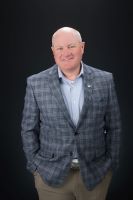
John Scanga

Sidebar Image
John Scanga, PhD

John Scanga, PhD

Chief Scientific Officer for North American Meat Division

John received his B.S. degree in Animal Sciences, his M.S. degree in Meat Science in 1997, and his Ph.D. in Animal Sciences in 1999, all from Colorado State University in Fort Collins, CO.

He developed a connection to agriculture at an early age; through work on his family’s ranching operation in central Colorado. He enrolled at Colorado State University in the fall of 1992 majoring in Animal Sciences; he competed on the CSU Meat Judging Team in 1994 and worked as an employee in the meat laboratory where his interest in meat processing and the meat industry began to grow.

Following the completion of his M.S (1997) and Ph.D. (1999), John joined the faculty at Colorado State University as an Assistant Professor and Extension Meat Specialist. He managed the day-to-day operations of the Meat Science Teaching and Research Laboratory and was promoted to Associate Professor in 2005.  He then left the university and joined IEH Laboratories and Consulting Group in January of 2008 as Vice President of Technical Services, where he continued to merge scientific concepts with industrial applications for managing and improving the safety of meat and non-meat foods, and improving food processing plant operational efficiencies.  In addition, he provided clients with regulatory, crisis event, and HACCP training and support.

John joined Elanco Animal Health in November of 2009 as an Associate Senior Technical Consultant where he brought a consumer focus and an emphasis on balancing animal productivity and performance with consumer acceptability. His work there focused on red meat safety, red meat quality and international trade.

John has been an author or co-author on over 70 refereed scientific publications on red meat quality and safety and has presented the findings of his work through numerous invited in presentations both the U.S and internationally.  

John also has a passion for service.  He currently is the chair of the Colorado Beef Council and has served as President of the Weld RE-9 school board, Weld County Fair Board and is a member of the Highland High School FFA Advisory Committee. 

John and his wife Chauna live on a diversified farming operation in Ault, Colorado.  Their family time is consumed with agriculture, farming, riding reigning horses and traveling.  His hobbies include backcountry snowmobiling and bird hunting. He  also works as a visiting professor in the Department of Animal Sciences at Colorado State University, where he first started his academic career. 

Below are resources from Dr. Scanga:


Learn how data-driven E. coli testing improves process control and food safety in beef plants. Explore sampling strategies, harvest monitoring, and microbial analytics to reduce contamination risks and enhance regulatory compliance.


Low water activity foods (LWAFs) have historically been considered low-risk for microbiological hazards because their limited “free” (unbound) water in the formulation prevents bacterial growth. However, foodborne illness outbreaks revealed that pathogens can survive for extended periods in LWAFs, even in the absence of growth. Watch now to learn what is required to validate control measures to reduce microbial risks in LWAFs. Originally Aired on June 18, 2025.


Are microbial stability challenges affecting the formulation or shelf life of your nutritional bar or natural product? Food safety is essential in product development, ensuring consumers enjoy innovative flavors with confidence. Join Dr. Malcond Valladares and Ed Collins in this webinar as they explore food safety concerns specific to nutritional bars natural products and share formulation strategies to enhance microbial stability. Originally Recorded on June 19, 2025


The Eurofins team of process authorities routinely provides expert guidance to food manufacturers to prepare microbiologically safe products. In this service, we encounter many questions that span across a variety of food products and manufacturing processes. Here we list and will continue to compile the most common questions and answers asked of a process authority and the responses. Use this information as a guide in your scheduled process or as you work through the formulation and development of your new food product. You may also use this as a tool to submit your own questions for a process authority!


When it comes to food safety and regulatory compliance, acidified foods stand out as a unique category that demands careful attention. These shelf-stable products, ranging from pickled vegetables to tangy condiments, rely on precise pH control and proper processing to ensure they remain safe and stable for consumers. In this webinar, we’ll simplify the complexities of acid and acidified foods, breaking down key factors regarding microbiological safety, stability, and regulatory compliance. 


Join experts from two leading Eurofins labs in this in-depth webinar as they break down the latest preservative testing methodologies, covering both natural and synthetic preservatives.


Food safety risks in fruit and vegetable processing environments can come from many different sources. Agricultural items are inherently dirty products, which can introduce risk- including microbial pathogens- to a facility from the outside environment. If your Environmental Monitoring Program (EMP) and sanitation programs are not sufficient to control these risks, these products could be potentially cross contaminating other products that are subsequently processed in the facility. It is therefore imperative that we think about risks from both our incoming products and our processes when designing environmental monitoring programs.


Non-culturable presumptive (NCP)- samples that yield positive pathogen detection results by PCR screening methods but do not confirm by cultural methods- can be frustrating and disruptive to clients. These situations are not unique to a testing company or the methods that are run, but it is possible to understand the root causes of NCPs, and to identify additional procedures to reduce the frequency with which they occur and minimize the likelihood of these situations impacting your data.


When you submit a sample to the laboratory for microbiology testing, what happens? Follow a Listeria spp. sample through the lab workflow in this infographic.


The demand for low- and non-alcoholic beverages is booming, driven by evolving consumer preferences for healthier, more mindful drinking options. But behind this innovation lies a complex challenge: without alcohol’s natural antimicrobial properties, these beverages face a higher risk of spoilage and contamination. Ensuring product safety, shelf stability, and regulatory compliance requires more than careful brewing—it calls for the expertise of a qualified process authority. Here is a look at the key risks, essential testing protocols, and proven strategies to keep your low- and no-alcohol products safe, high-quality, and market-ready.


<< < 1 2 3 4 5 6 7 8 9 10 11 12 13 14 15 > >>

https://www.eurofinsus.com/food-testing