JavaScript is disabled. Please enable to continue!

Mobile search icon
More Resources >> Our People >> John Scanga

John Scanga

Sidebar Image
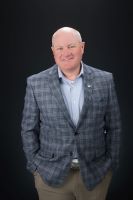
John Scanga, PhD

John Scanga, PhD

Chief Scientific Officer for North American Meat Division

John received his B.S. degree in Animal Sciences, his M.S. degree in Meat Science in 1997, and his Ph.D. in Animal Sciences in 1999, all from Colorado State University in Fort Collins, CO.

He developed a connection to agriculture at an early age; through work on his family’s ranching operation in central Colorado. He enrolled at Colorado State University in the fall of 1992 majoring in Animal Sciences; he competed on the CSU Meat Judging Team in 1994 and worked as an employee in the meat laboratory where his interest in meat processing and the meat industry began to grow.

Following the completion of his M.S (1997) and Ph.D. (1999), John joined the faculty at Colorado State University as an Assistant Professor and Extension Meat Specialist. He managed the day-to-day operations of the Meat Science Teaching and Research Laboratory and was promoted to Associate Professor in 2005.  He then left the university and joined IEH Laboratories and Consulting Group in January of 2008 as Vice President of Technical Services, where he continued to merge scientific concepts with industrial applications for managing and improving the safety of meat and non-meat foods, and improving food processing plant operational efficiencies.  In addition, he provided clients with regulatory, crisis event, and HACCP training and support.

John joined Elanco Animal Health in November of 2009 as an Associate Senior Technical Consultant where he brought a consumer focus and an emphasis on balancing animal productivity and performance with consumer acceptability. His work there focused on red meat safety, red meat quality and international trade.

John has been an author or co-author on over 70 refereed scientific publications on red meat quality and safety and has presented the findings of his work through numerous invited in presentations both the U.S and internationally.  

John also has a passion for service.  He currently is the chair of the Colorado Beef Council and has served as President of the Weld RE-9 school board, Weld County Fair Board and is a member of the Highland High School FFA Advisory Committee. 

John and his wife Chauna live on a diversified farming operation in Ault, Colorado.  Their family time is consumed with agriculture, farming, riding reigning horses and traveling.  His hobbies include backcountry snowmobiling and bird hunting. He  also works as a visiting professor in the Department of Animal Sciences at Colorado State University, where he first started his academic career. 

Below are resources from Dr. Scanga:



From ancient remedies to modern lab techniques, the science of vitamins has come a long way. Vitamin analysis plays a key role in making sure we get the right nutrients, whether through supplements, food, or baby formula. Keep reading to find out how testing is becoming more precise and efficient.


Infant formula is often the sole source of nutrition for many infants, so it must be perfect. Testing standards can ensure that the nutrients in infant formula products are exactly at the level they are supposed to be and have become the guideline for measuring the quality of infant formulas. Learn what defines today’s testing standards—check it out now.


Modern infant formula is a remarkable achievement in nutritional science, meticulously designed to meet or exceed all essential dietary needs for infants. Read this editorial by Eurofins Food Chemistry Testing CSO, Darryl Sullivan to learn about the rigorous analytical testing and regulatory requirements that companies must meet to bring infant formula to market.


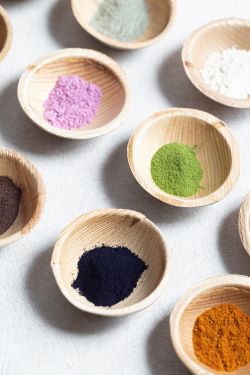
Whether you're formulating a botanical powder, validating a nutrient claim, or verifying supplier specifications, reporting on a dry matter basis ensures that decisions are grounded in reliable, standardized data. Click to read a simple explanation of dry matter basis reporting, when it matters, and why.


Fortifying foods and dietary supplements with vitamins, minerals, and bioactives has become a key strategy for innovation and value. Understanding and planning around the LOQ is vital to protecting both your product integrity and your brand credibility. Continue reading to learn how to proactively evaluate your nutrient levels against assay capabilities.


Bringing a new food or beverage product to life takes more than a good idea—it takes execution. And for early-stage brands, that executional gap between your kitchen and your consumer can feel massive. The problem isn’t passion or creativity. It’s infrastructure. Enter: The Pilot Plant.


You’ve launched before. You know the drill. But in today’s landscape—where trends evolve fast and pressure to innovate is nonstop—even the best R&D teams need an edge. Enter: the pilot plant. It’s your sandbox for rapid iteration, precise testing, and format exploration—without tying up commercial line time or internal resources.


You believe in your ingredient. You’ve seen the research, tested the science, and refined the story. But for buyers, belief isn’t enough—it needs to be experienced. That’s where a pilot plant makes all the difference. Read our blog to learn about the value of a pilot plant for ingredient suppliers.


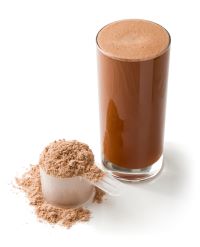
How is protein quality determined and how is protein content assessed for food labeling? What is an Amino Acid Score? These questions are all answered in our blog about how PDCAAS shapes nutritional claims.


The Scoop Podcast returns with season 2! In this first episode of the new season, host Keren Breiterman, explores the essential role of vitamins in infant formula and their impact on early development with Staff Scientist Dan Hengst.


<< < 1 2 3 4 5 6 7 8 9 10 11 12 13 14 15 16 > >>

https://www.eurofinsus.com/food-testing