
JavaScript is disabled. Please enable to continue!

Mobile search icon
More Resources >> Our People >> John Scanga

John Scanga

Sidebar Image
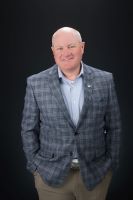
John Scanga, PhD

John Scanga, PhD

Chief Scientific Officer for North American Meat Division

John received his B.S. degree in Animal Sciences, his M.S. degree in Meat Science in 1997, and his Ph.D. in Animal Sciences in 1999, all from Colorado State University in Fort Collins, CO.

He developed a connection to agriculture at an early age; through work on his family’s ranching operation in central Colorado. He enrolled at Colorado State University in the fall of 1992 majoring in Animal Sciences; he competed on the CSU Meat Judging Team in 1994 and worked as an employee in the meat laboratory where his interest in meat processing and the meat industry began to grow.

Following the completion of his M.S (1997) and Ph.D. (1999), John joined the faculty at Colorado State University as an Assistant Professor and Extension Meat Specialist. He managed the day-to-day operations of the Meat Science Teaching and Research Laboratory and was promoted to Associate Professor in 2005.  He then left the university and joined IEH Laboratories and Consulting Group in January of 2008 as Vice President of Technical Services, where he continued to merge scientific concepts with industrial applications for managing and improving the safety of meat and non-meat foods, and improving food processing plant operational efficiencies.  In addition, he provided clients with regulatory, crisis event, and HACCP training and support.

John joined Elanco Animal Health in November of 2009 as an Associate Senior Technical Consultant where he brought a consumer focus and an emphasis on balancing animal productivity and performance with consumer acceptability. His work there focused on red meat safety, red meat quality and international trade.

John has been an author or co-author on over 70 refereed scientific publications on red meat quality and safety and has presented the findings of his work through numerous invited in presentations both the U.S and internationally.  

John also has a passion for service.  He currently is the chair of the Colorado Beef Council and has served as President of the Weld RE-9 school board, Weld County Fair Board and is a member of the Highland High School FFA Advisory Committee. 

John and his wife Chauna live on a diversified farming operation in Ault, Colorado.  Their family time is consumed with agriculture, farming, riding reigning horses and traveling.  His hobbies include backcountry snowmobiling and bird hunting. He  also works as a visiting professor in the Department of Animal Sciences at Colorado State University, where he first started his academic career. 

Below are resources from Dr. Scanga:


In pets, as in humans, glucosamine (GlcN) has been used with chondroitin sulfate in nutraceuticals to support joint health and mobility. Historically, GlcN testing has been limited to pure materials and supplements. However, Eurofins Nutrition Analysis Center has recently developed a method for testing GlcN in a wide variety of matrices. Click to learn more.


For most US Foods, protein claims are based on a protein quality measurement, called PDCAAS. PDCAAS stands for Protein Digestibility Corrected Amino Acid Score. Check out our infographic to learn more about protein quality measurement.


The goal of the FDA's proposed rule for Front-of-Package (FOP) nutrition labeling is to require easily noticeable and obvious nutrition information. Check out our infographic about the FDA's proposed rule for front-of-package (FOP) nutrition labeling.


February 17, 2025 – In response to increasing global demand for high-phenolic olive oils, Eurofins Craft Technologies Inc. has developed an innovative method for quantifying Valuable Olive Polyphenols (VOPs) in olive oil, olive leaf extracts, and other olive-derived products. Read more about the new method and applications for olive oil products.


As part of an effort to promote public health, the FDA has updated the requirements that food must meet in order to use the “healthy” claim on their labels. Our infographic gives background on the update and a high-level view of the criteria.


In this on-demand webinar, Mollie Van Alst provides a straight-forward explanation of the FDA's proposed changes to the definition of "healthy" on food labels. Original Air Date November 7, 2024.


Is your Astaxanthin natural or synthetic? Review this infographic to learn more about astaxanthin.


As a food manufacturer, you have several options for adding sweetness to your product, including sugars, sugar alcohols, and artificial sweeteners. But how do they compare, and how do they impact the caloric content of your final product?
Keywords: Blog Nutritional


Navigating the testing options and regulatory requirements for pet foods and treats gets confusing, even for long standing companies. This infographic provides an overview of the key components of a testing plan for pet foods, including nutritional analysis, microbial testing, and product formulation.


Beginning Nov 9, 2023, Eurofins Food Chemistry Testing Madison will include Allulose testing as an optional component of its primary sugar profile analysis, at no additional charge to its valued customers.


<< < 1 2 3 4 5 6 7 8 9 10 11 12 13 14 15 16 > >>

https://www.eurofinsus.com/food-testing