
JavaScript is disabled. Please enable to continue!

Mobile search icon
More Resources >> Our People >> John Scanga

John Scanga

Sidebar Image
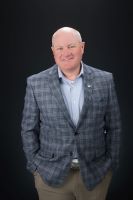
John Scanga, PhD

John Scanga, PhD

Chief Scientific Officer for North American Meat Division

John received his B.S. degree in Animal Sciences, his M.S. degree in Meat Science in 1997, and his Ph.D. in Animal Sciences in 1999, all from Colorado State University in Fort Collins, CO.

He developed a connection to agriculture at an early age; through work on his family’s ranching operation in central Colorado. He enrolled at Colorado State University in the fall of 1992 majoring in Animal Sciences; he competed on the CSU Meat Judging Team in 1994 and worked as an employee in the meat laboratory where his interest in meat processing and the meat industry began to grow.

Following the completion of his M.S (1997) and Ph.D. (1999), John joined the faculty at Colorado State University as an Assistant Professor and Extension Meat Specialist. He managed the day-to-day operations of the Meat Science Teaching and Research Laboratory and was promoted to Associate Professor in 2005.  He then left the university and joined IEH Laboratories and Consulting Group in January of 2008 as Vice President of Technical Services, where he continued to merge scientific concepts with industrial applications for managing and improving the safety of meat and non-meat foods, and improving food processing plant operational efficiencies.  In addition, he provided clients with regulatory, crisis event, and HACCP training and support.

John joined Elanco Animal Health in November of 2009 as an Associate Senior Technical Consultant where he brought a consumer focus and an emphasis on balancing animal productivity and performance with consumer acceptability. His work there focused on red meat safety, red meat quality and international trade.

John has been an author or co-author on over 70 refereed scientific publications on red meat quality and safety and has presented the findings of his work through numerous invited in presentations both the U.S and internationally.  

John also has a passion for service.  He currently is the chair of the Colorado Beef Council and has served as President of the Weld RE-9 school board, Weld County Fair Board and is a member of the Highland High School FFA Advisory Committee. 

John and his wife Chauna live on a diversified farming operation in Ault, Colorado.  Their family time is consumed with agriculture, farming, riding reigning horses and traveling.  His hobbies include backcountry snowmobiling and bird hunting. He  also works as a visiting professor in the Department of Animal Sciences at Colorado State University, where he first started his academic career. 

Below are resources from Dr. Scanga:



Low water activity foods (LWAFs) have historically been considered low-risk for microbiological hazards because their limited “free” (unbound) water in the formulation prevents bacterial growth. However, foodborne illness outbreaks revealed that pathogens can survive for extended periods in LWAFs, even in the absence of growth. Watch now to learn what is required to validate control measures to reduce microbial risks in LWAFs. Originally Aired on June 18, 2025.


Iodine is an essential trace element found in many food sources as well as the environment. AAFCO recognizes iodine as an essential nutrient for both dogs and cats at differing, species specific levels. This infographic explains explores considerations for iodine in pet food and reasons to test for it.


Hydrolyzed proteins play a crucial role in the pet food, animal nutrition, and feed industries, offering significant benefits in digestibility, allergen reduction, and bioavailability. This white paper explores the advantages of hydrolyzed proteins and their impact on product formulation.


The Pet Food Label Modernization (PFLM) initiative is reshaping industry standards, making dietary fiber a required metric. Learn how this change impacts pet food formulations, testing methods, and nutritional transparency.


Historically, testing for chondroitin sulfate and glucosamine has been done via HPLC-UV analysis via methods from AOAC or USP-NF monographs, which are not suitable for complex matrices such as pet food. Check out our infographic about an innovative solution developed specifically for pet foods and supplements.


Watch this webinar for a discussion on the background behind AAFCO’s recommended method and other commonly used methods, with a focus on which dietary fiber component each method quantifies, and scenarios where it is appropriate to use an alternate method. Original Air Date: April 16, 2025


April 17, 2025 - The Eurofins Nutrition Analysis Center in Des Moines, IA has successfully developed and implemented advanced methods specifically tailored for pet foods and pet supplements. Click to read about the new glucosamine and chondroitin sulfate method offerings.
Keywords: News Pet


In pets, as in humans, glucosamine (GlcN) has been used with chondroitin sulfate in nutraceuticals to support joint health and mobility. Historically, GlcN testing has been limited to pure materials and supplements. However, Eurofins Nutrition Analysis Center has recently developed a method for testing GlcN in a wide variety of matrices. Click to learn more.


Pet owners might turn to nutraceuticals that may support relief in some Osteoarthritis (OA) symptoms. One such nutraceutical is chondroitin sulfate. Explore new scientific developments happening at Eurofins in Des Moines, IA for quantifying chondroitin sulfate in complex matrices like pet food and treats.


Here we highlight the best practices in process validation that pet food manufacturers may use to scientifically demonstrate that a given process, or “kill step,” in the manufacture of pet food and pet food products can deliver the required microbial reductions to ensure the safety of their product. 


<< < 1 2 3 4 > >>

https://www.eurofinsus.com/food-testing