
JavaScript is disabled. Please enable to continue!

Mobile search icon
More Resources >> Our People >> John Scanga

John Scanga

Sidebar Image
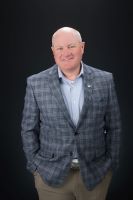
John Scanga, PhD

John Scanga, PhD

Chief Scientific Officer for North American Meat Division

John received his B.S. degree in Animal Sciences, his M.S. degree in Meat Science in 1997, and his Ph.D. in Animal Sciences in 1999, all from Colorado State University in Fort Collins, CO.

He developed a connection to agriculture at an early age; through work on his family’s ranching operation in central Colorado. He enrolled at Colorado State University in the fall of 1992 majoring in Animal Sciences; he competed on the CSU Meat Judging Team in 1994 and worked as an employee in the meat laboratory where his interest in meat processing and the meat industry began to grow.

Following the completion of his M.S (1997) and Ph.D. (1999), John joined the faculty at Colorado State University as an Assistant Professor and Extension Meat Specialist. He managed the day-to-day operations of the Meat Science Teaching and Research Laboratory and was promoted to Associate Professor in 2005.  He then left the university and joined IEH Laboratories and Consulting Group in January of 2008 as Vice President of Technical Services, where he continued to merge scientific concepts with industrial applications for managing and improving the safety of meat and non-meat foods, and improving food processing plant operational efficiencies.  In addition, he provided clients with regulatory, crisis event, and HACCP training and support.

John joined Elanco Animal Health in November of 2009 as an Associate Senior Technical Consultant where he brought a consumer focus and an emphasis on balancing animal productivity and performance with consumer acceptability. His work there focused on red meat safety, red meat quality and international trade.

John has been an author or co-author on over 70 refereed scientific publications on red meat quality and safety and has presented the findings of his work through numerous invited in presentations both the U.S and internationally.  

John also has a passion for service.  He currently is the chair of the Colorado Beef Council and has served as President of the Weld RE-9 school board, Weld County Fair Board and is a member of the Highland High School FFA Advisory Committee. 

John and his wife Chauna live on a diversified farming operation in Ault, Colorado.  Their family time is consumed with agriculture, farming, riding reigning horses and traveling.  His hobbies include backcountry snowmobiling and bird hunting. He  also works as a visiting professor in the Department of Animal Sciences at Colorado State University, where he first started his academic career. 

Below are resources from Dr. Scanga:


Developing a new animal veterinary product is a complex, time-consuming process. What should you expect from the development process? What does the typical timeline look like? Get the answers to these questions and more in Part 2 of our Ask an Expert series on developing new veterinary products.


Developing a new animal veterinary product is a complex, time-consuming process. What should be your key considerations? What about guidelines and regulatory bodies? Get the answers to these questions and more in Part 1 of our Ask an Expert series on developing new veterinary products.


Watch this on-demand webinar to learn about the significant organic food industry growth. The webinar provides an overview of the impact of SOE on certified entities, and a discussion on how to build risk management systems to meet regulatory and consumer expectations for your products' organic integrity. Original airdate April 19, 2023.


Do you work with animal veterinary products? Join Kari Nichols and Leo Schilling as they help you navigate the process for animal veterinary product development. Original airdate March 29, 2023.


Pathogenic organisms, like Salmonella and E. coli, can grow in low water activity foods, leading to foodborne illness outbreaks. Thermal processes inhibit microbial growth and ensure only safe ingredients and products reach the shelves. Thermal processes must be validated to make sure they fully prevent pathogen growth. This blog outlines what foods may need an LWAF thermal process, what a validation study looks like, and the results the experts at Eurofins provide.


Ethylene oxide is gaining attention in the food regulatory space. EtO was banned as a food fumigant in 1991 in the EU. While ethylene oxide is not banned for use in foods in the United States, it is important to understand the allowed tolerances in the US and EU, especially as regulations continue to evolve and online sales contribute to increasing overseas exports. This article outlines the uses and toxicity of EtO, US and EU regulations, and EtO analysis at Eurofins.


Human milk oligosaccharides are a key component of infant formula. Recent trends, including combining multiple HMOs in a single formula, have complicated analytical testing. Eurofins has an AOAC first action method for testing up to seven HMOs at a time. This blog outlines the benefits and trends of HMOs in infant formula, and Eurofins methods for testing.


This method tests for all of the specific illegal adulterants that Amazon requires of its sellers of Sports Nutrition (Body Building) supplements.


This article outlines what ISO 17025:2017 is, and why it is important to choose an accredited lab for testing. An FAQ section details the process and technicalities of ISO accreditations and emphasizes the role of accreditations in providing reliable results.


The Stakeholder Program on Infant Formula and Adult Nutrition is an AOAC group dedicated to approving methods for testing the formulation and purity of infant formulas and nutritional products. Eurofins has always played a large role in SPIFAN, and continues to contribute new methods and expertise. Infant formula manufacturers can turn to Eurofins for all SPIFAN testing needs.


<< < 1 2 3 4 5 6 7 8 9 > >>

https://www.eurofinsus.com/food-testing