JavaScript is disabled. Please enable to continue!

Mobile search icon
More Resources >> Our People >> John Scanga

John Scanga

Sidebar Image
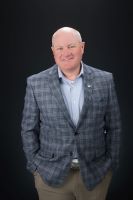
John Scanga, PhD

John Scanga, PhD

Chief Scientific Officer for North American Meat Division

John received his B.S. degree in Animal Sciences, his M.S. degree in Meat Science in 1997, and his Ph.D. in Animal Sciences in 1999, all from Colorado State University in Fort Collins, CO.

He developed a connection to agriculture at an early age; through work on his family’s ranching operation in central Colorado. He enrolled at Colorado State University in the fall of 1992 majoring in Animal Sciences; he competed on the CSU Meat Judging Team in 1994 and worked as an employee in the meat laboratory where his interest in meat processing and the meat industry began to grow.

Following the completion of his M.S (1997) and Ph.D. (1999), John joined the faculty at Colorado State University as an Assistant Professor and Extension Meat Specialist. He managed the day-to-day operations of the Meat Science Teaching and Research Laboratory and was promoted to Associate Professor in 2005.  He then left the university and joined IEH Laboratories and Consulting Group in January of 2008 as Vice President of Technical Services, where he continued to merge scientific concepts with industrial applications for managing and improving the safety of meat and non-meat foods, and improving food processing plant operational efficiencies.  In addition, he provided clients with regulatory, crisis event, and HACCP training and support.

John joined Elanco Animal Health in November of 2009 as an Associate Senior Technical Consultant where he brought a consumer focus and an emphasis on balancing animal productivity and performance with consumer acceptability. His work there focused on red meat safety, red meat quality and international trade.

John has been an author or co-author on over 70 refereed scientific publications on red meat quality and safety and has presented the findings of his work through numerous invited in presentations both the U.S and internationally.  

John also has a passion for service.  He currently is the chair of the Colorado Beef Council and has served as President of the Weld RE-9 school board, Weld County Fair Board and is a member of the Highland High School FFA Advisory Committee. 

John and his wife Chauna live on a diversified farming operation in Ault, Colorado.  Their family time is consumed with agriculture, farming, riding reigning horses and traveling.  His hobbies include backcountry snowmobiling and bird hunting. He  also works as a visiting professor in the Department of Animal Sciences at Colorado State University, where he first started his academic career. 

Below are resources from Dr. Scanga:


Over the past decade, non-alcoholic and alcohol-free beverages have experienced a steady rise in popularity. As this trend continues to gain momentum, it is essential for both producers and consumers to understand the relevant analytical requirements and labeling terminology. Read more for a simple explanation of labeling terms and the agencies that oversee alcoholic and non-alcoholic beverage labeling.


When it comes to refrigerated and frozen foods, shelf-life testing isn’t just about timelines, it’s about protecting your brand, your label claims, and your consumer’s experience. In this Ask the Expert feature, Sam Wiesenfeld shares insights into the most common questions clients face when designing shelf-life testing protocols for refrigerated and frozen foods.


Photostability testing is crucial for ensuring the safety, efficacy, and quality of products. While there are not specific requirements, the FDA makes it clear it is recommended for all products susceptible to light. Check out our infographic about the importance of photostability testing in OTC products.


As consumer demand for cleaner labels and naturally derived ingredients continues to rise, many manufacturers of OTC and dietary supplement products are reformulating to remove artificial colors and dyes. While this shift aligns with market trends, it introduces significant challenges—especially when it comes to product stability.


Creating shelf-stable nutritional bars and other natural food products is about understanding the science behind food preservation, taste and appearance. One of the most critical factors in the formulation of long-lasting, safe and appealing products is water activity. Water activity plays a major role in maintaining texture, reducing the rate of fats oxidation preventing spoilage and ensuring safety from microbial growth. Keep reading to learn what is being done to create a longer shelf life.


The Food and Drug Administration (FDA) monitors drug manufacturers' compliance with its current Good Manufacturing Practice (cGMP) regulations in order to ensure the quality of drug products. These regulations are designed to assure products are safe for use and contain the ingredients, strengths, and efficacies of claims made by the product. Learn what tests your OTC products need to be compliant.


This webinar covers food safety product categories and the impact of ingredients required to improve microbial stability on product acceptance. Original airdate May 21, 2024.


This webinar focuses on the principles and theory of food spoilage, within the context of how these concepts can help you better understand what to do when things go wrong (spoil) and design a product in a way to prevent spoilage in the first place. Original airdate May 8, 2024.


This case study details how Eurofins The National Food Lab was able to assist a start-up company in developing a shelf-stable Ready to Drink product with a high active concentration.


The research and development team of Eurofins Microbiology Laboratories, Inc. set out to better understand STEC growth on lettuce by designing an experiment to observe the limits of detection by real-time PCR using bacteria that were cold-stressed against those grown under non-stressed conditions. This white paper explains further.


<< < 1 2 3 > >>

https://www.eurofinsus.com/food-testing