
JavaScript is disabled. Please enable to continue!

Mobile search icon
More Resources >> Our People >> John Scanga

John Scanga

Sidebar Image
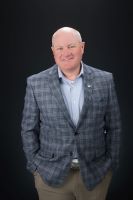
John Scanga, PhD

John Scanga, PhD

Chief Scientific Officer for North American Meat Division

John received his B.S. degree in Animal Sciences, his M.S. degree in Meat Science in 1997, and his Ph.D. in Animal Sciences in 1999, all from Colorado State University in Fort Collins, CO.

He developed a connection to agriculture at an early age; through work on his family’s ranching operation in central Colorado. He enrolled at Colorado State University in the fall of 1992 majoring in Animal Sciences; he competed on the CSU Meat Judging Team in 1994 and worked as an employee in the meat laboratory where his interest in meat processing and the meat industry began to grow.

Following the completion of his M.S (1997) and Ph.D. (1999), John joined the faculty at Colorado State University as an Assistant Professor and Extension Meat Specialist. He managed the day-to-day operations of the Meat Science Teaching and Research Laboratory and was promoted to Associate Professor in 2005.  He then left the university and joined IEH Laboratories and Consulting Group in January of 2008 as Vice President of Technical Services, where he continued to merge scientific concepts with industrial applications for managing and improving the safety of meat and non-meat foods, and improving food processing plant operational efficiencies.  In addition, he provided clients with regulatory, crisis event, and HACCP training and support.

John joined Elanco Animal Health in November of 2009 as an Associate Senior Technical Consultant where he brought a consumer focus and an emphasis on balancing animal productivity and performance with consumer acceptability. His work there focused on red meat safety, red meat quality and international trade.

John has been an author or co-author on over 70 refereed scientific publications on red meat quality and safety and has presented the findings of his work through numerous invited in presentations both the U.S and internationally.  

John also has a passion for service.  He currently is the chair of the Colorado Beef Council and has served as President of the Weld RE-9 school board, Weld County Fair Board and is a member of the Highland High School FFA Advisory Committee. 

John and his wife Chauna live on a diversified farming operation in Ault, Colorado.  Their family time is consumed with agriculture, farming, riding reigning horses and traveling.  His hobbies include backcountry snowmobiling and bird hunting. He  also works as a visiting professor in the Department of Animal Sciences at Colorado State University, where he first started his academic career. 

Below are resources from Dr. Scanga:


The botanical supplement and cosmetic industries are rapidly changing, and the increase in consumer demand calls for upscaling raw material sourcing. This means there is higher pressure for scientifically-valid contaminant testing, including screens for pesticides and heavy metals, while maintaining a fast turn-around time. Watch this webinar to learn modern approaches to contaminant detection, with an emphasis on market trends, broad dietary supplement applications, and OTC cosmetics.


The U.S. Department of Agriculture (USDA) implemented the National Bioengineered Food Disclosure Standard (NBFDS) in 2022. This regulation mandates clear labeling for retail food products containing bioengineered (BE) or 'GMO' ingredients, giving consumers more insight into what they are eating. In this guide, we will explore what qualifies as a bioengineered food, which products are subject to labeling, and how businesses can comply with the regulations outlined in NBFDS.


Where do you start when you're looking for a laboratory to for your testing needs? Check out our checklist of steps to choosing the right lab partner for your company.


PFAS have valuable uses and extreme chemical stability, but can lead to adverse health outcomes. Learn why PFAS testing in foods is now becoming an essential need for your food and supplement products in the market.


Validated methods are essential to reliable botanical testing. Method validation and development ensures analytical approaches are applicable to specific ingredients and provide accurate results. The process of method development and validation are outlined.


Botanical reference materials play a critical role in herbal product testing. Learn about the importance of botanical reference materials, and how choosing a lab with a large reference material library impacts analytical outputs.


What goes into producing a quality dietary supplement? Check out our infographic to learn about the six major characteristics that contribute to the quality of a dietary supplements product.


A strong relationship with a high-quality lab that you can trust is a major asset for meeting your company’s goals. Read our checklist for eight qualities of a good third-party testing laboratory.


Analytical method development and validation is a complex topic; in this webinar, Josh Rhein and Leo Schilling attempt to break it down for you and discuss some best practices.


Carotenoids (like beta-carotene, lutein, zeaxanthin, lycopene, and astaxanthin) are of great interest in the food, animal feed, and dietary supplement industries for a variety of reasons. However, due to many factors, their stability in product formulations can be challenging. Find out more!


<< < 1 2 3 4 5 6 7 8 9 10 11 12 13 14 15 16 17 18 > >>

https://www.eurofinsus.com/food-testing