
JavaScript is disabled. Please enable to continue!

Mobile search icon
More Resources >> Our People >> John Scanga

John Scanga

Sidebar Image
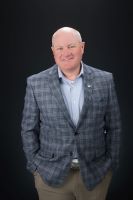
John Scanga, PhD

John Scanga, PhD

Chief Scientific Officer for North American Meat Division

John received his B.S. degree in Animal Sciences, his M.S. degree in Meat Science in 1997, and his Ph.D. in Animal Sciences in 1999, all from Colorado State University in Fort Collins, CO.

He developed a connection to agriculture at an early age; through work on his family’s ranching operation in central Colorado. He enrolled at Colorado State University in the fall of 1992 majoring in Animal Sciences; he competed on the CSU Meat Judging Team in 1994 and worked as an employee in the meat laboratory where his interest in meat processing and the meat industry began to grow.

Following the completion of his M.S (1997) and Ph.D. (1999), John joined the faculty at Colorado State University as an Assistant Professor and Extension Meat Specialist. He managed the day-to-day operations of the Meat Science Teaching and Research Laboratory and was promoted to Associate Professor in 2005.  He then left the university and joined IEH Laboratories and Consulting Group in January of 2008 as Vice President of Technical Services, where he continued to merge scientific concepts with industrial applications for managing and improving the safety of meat and non-meat foods, and improving food processing plant operational efficiencies.  In addition, he provided clients with regulatory, crisis event, and HACCP training and support.

John joined Elanco Animal Health in November of 2009 as an Associate Senior Technical Consultant where he brought a consumer focus and an emphasis on balancing animal productivity and performance with consumer acceptability. His work there focused on red meat safety, red meat quality and international trade.

John has been an author or co-author on over 70 refereed scientific publications on red meat quality and safety and has presented the findings of his work through numerous invited in presentations both the U.S and internationally.  

John also has a passion for service.  He currently is the chair of the Colorado Beef Council and has served as President of the Weld RE-9 school board, Weld County Fair Board and is a member of the Highland High School FFA Advisory Committee. 

John and his wife Chauna live on a diversified farming operation in Ault, Colorado.  Their family time is consumed with agriculture, farming, riding reigning horses and traveling.  His hobbies include backcountry snowmobiling and bird hunting. He  also works as a visiting professor in the Department of Animal Sciences at Colorado State University, where he first started his academic career. 

Below are resources from Dr. Scanga:


Both Good Laboratory Practices (GLP) and Good Manufacturing Practices (GMP) can apply to testing needed for your raw materials and products. Learn how they apply during different phases of the product development process.


What really is dietary fiber according to the most recent FDA regulations? This blog will help break down the FDA’s most recent definition of fiber as well as provide examples of ingredients used in the industry today.


Your goal is to manufacture a safe product that meets the claims on your label.  How are you ensuring that your finished product will do this?  Proactively, or retroactively?  Putting a proactive plan in place to assess ingredient safety and quality is key to producing finished products that meet all of your quality standards.  Having a partnership with an accredited, independent (third-party) laboratory just in case something goes wrong is a must.


Dietary supplement using immune-based ingredients have significantly increased over the last few years. Learn more on which trendy ingredients are being used and how to comply with the FDA guidelines on dietary supplements and functional food products.


While many vitamins are traditionally sourced from animal products, plant-based vitamin sources are a growing trend. Learn more about this new trend and what this means in regard to testing your products.


Method validation, method verification and fitness for purpose all seem similar, but each requires a distinct level of evaluation and different considerations. Learn more about their similarities and differences in this article.


Candies can now give you more than a sugar rush. Functional chocolates also have vitamins, minerals, and botanicals and with that means the need for suitable validated methods to verify claims. Eurofins is your partner is all challenging vitamin, mineral, and botanical testing in finished products and raw materials.


Food and supplement testing has been a necessary part of the safe supply chain which means so have the chemicals that go along with this and until today, there have been very few options that positively affect the environment. Supercritical Fluid Extraction with Supercritical Fluid Chromatography now offers an environmentally safer method that is also faster, as sensitive and as selective as your current methods. We present an alternative way to extract and measure vitamins.


Learn about the most common food pathogens and their impact in food handling and production. Testing your products can help manage risk of contamination from pathogens. Partner with Eurofins for all of your food safety testing needs.


In this blog article Jeff Stassi discusses the importance of designing a meaningful, comprehensive testing program for dietary supplements.


<< < 1 2 3 4 5 6 7 8 9 10 11 12 13 14 15 16 17 18 > >>

https://www.eurofinsus.com/food-testing