JavaScript is disabled. Please enable to continue!

Mobile search icon
More Resources >> Our People >> John Scanga

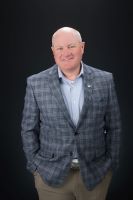
John Scanga

Sidebar Image
John Scanga, PhD

John Scanga, PhD

Chief Scientific Officer for North American Meat Division

John received his B.S. degree in Animal Sciences, his M.S. degree in Meat Science in 1997, and his Ph.D. in Animal Sciences in 1999, all from Colorado State University in Fort Collins, CO.

He developed a connection to agriculture at an early age; through work on his family’s ranching operation in central Colorado. He enrolled at Colorado State University in the fall of 1992 majoring in Animal Sciences; he competed on the CSU Meat Judging Team in 1994 and worked as an employee in the meat laboratory where his interest in meat processing and the meat industry began to grow.

Following the completion of his M.S (1997) and Ph.D. (1999), John joined the faculty at Colorado State University as an Assistant Professor and Extension Meat Specialist. He managed the day-to-day operations of the Meat Science Teaching and Research Laboratory and was promoted to Associate Professor in 2005.  He then left the university and joined IEH Laboratories and Consulting Group in January of 2008 as Vice President of Technical Services, where he continued to merge scientific concepts with industrial applications for managing and improving the safety of meat and non-meat foods, and improving food processing plant operational efficiencies.  In addition, he provided clients with regulatory, crisis event, and HACCP training and support.

John joined Elanco Animal Health in November of 2009 as an Associate Senior Technical Consultant where he brought a consumer focus and an emphasis on balancing animal productivity and performance with consumer acceptability. His work there focused on red meat safety, red meat quality and international trade.

John has been an author or co-author on over 70 refereed scientific publications on red meat quality and safety and has presented the findings of his work through numerous invited in presentations both the U.S and internationally.  

John also has a passion for service.  He currently is the chair of the Colorado Beef Council and has served as President of the Weld RE-9 school board, Weld County Fair Board and is a member of the Highland High School FFA Advisory Committee. 

John and his wife Chauna live on a diversified farming operation in Ault, Colorado.  Their family time is consumed with agriculture, farming, riding reigning horses and traveling.  His hobbies include backcountry snowmobiling and bird hunting. He  also works as a visiting professor in the Department of Animal Sciences at Colorado State University, where he first started his academic career. 

Below are resources from Dr. Scanga:


As the category of sports nutrition matures, so does the science behind it, and few ingredients illustrate that shift better than creatine. Once viewed as a niche performance supplement, creatine has entered the mainstream, driven by a growing body of research, broader consumer education, and innovation in product formats.


In the dietary supplement and ingredient industry, protecting consumer health and meeting regulatory expectations are nonnegotiable. One critical aspect of quality control is residual solvent testing. Residual solvents, volatile chemicals used during manufacturing, can remain in products if not properly removed.


Postbiotics, defined as non-viable microbial cells, their components, or metabolites that confer health benefits to the host, represent a rapidly expanding frontier in microbiome research and functional ingredient development. Watch this webinar for a comprehensive look at the rapidly evolving field of postbiotics, combining cutting-edge science, global regulatory insights, and practical testing methodologies. Originally Aired on December 11, 2025.


In this blog, Dan Brouman traces MAHA’s path since December 2024, when the MAHA Caucus launched in Congress. Brouman also discusses MAHA’s future and its effects on food policy.


Selecting the right microbiological testing method isn’t just about speed or cost. It’s about risk management, product integrity, and regulatory compliance. Click to read about the strengths and limitations of different methodologies essential to avoid false negatives, regulatory citations, or costly recalls.


In the world of dietary supplements and food testing, unexpected results like failed specifications, out-of-spec (OOS) results, or surprising contaminant detections can be unsettling, but they’re not uncommon. Here’s how to navigate the process when results don’t align with expectations.


When it comes to dietary supplement testing, one seemingly small detail can have outsized consequences: specifying the correct vitamin form. Understanding and communicating the exact vitamin form in your product is not just a technical necessity, it’s a strategic imperative in ensuring accurate results, timely reporting, and regulatory compliance.


A supplement manufacturer added methylcobalamin (Vitamin B12) to a product, expecting to meet label claims. However, testing revealed only ~50% of the claimed amount, triggering an out-of-spec (OOS) result. Read to learn how Eurofins Supplement Testing resolved the unexpected results.


Switching oil sources, or developing a new product with an alternative oil, requires more than a label change. It demands a holistic view of how the oil behaves in your product, how it interacts with other ingredients, and how it holds up over time. Click to learn about the key considerations.


Protein analysis is typically based on a Nitrogen analysis and assumed factors to calculate protein. Since proteins are not the only source of Nitrogen, Protein analysis can be falsely inflated by a variety of ingredients and other food components. Check out this infographic to learn more about non-protein nitrogen.


<< < 1 2 3 4 5 6 7 8 9 10 11 12 13 14 15 16 17 18 > >>

https://www.eurofinsus.com/food-testing