JavaScript is disabled. Please enable to continue!

Mobile search icon
More Resources >> Our People >> John Scanga

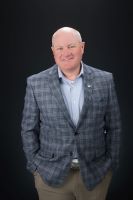
John Scanga

Sidebar Image
John Scanga, PhD

John Scanga, PhD

Chief Scientific Officer for North American Meat Division

John received his B.S. degree in Animal Sciences, his M.S. degree in Meat Science in 1997, and his Ph.D. in Animal Sciences in 1999, all from Colorado State University in Fort Collins, CO.

He developed a connection to agriculture at an early age; through work on his family’s ranching operation in central Colorado. He enrolled at Colorado State University in the fall of 1992 majoring in Animal Sciences; he competed on the CSU Meat Judging Team in 1994 and worked as an employee in the meat laboratory where his interest in meat processing and the meat industry began to grow.

Following the completion of his M.S (1997) and Ph.D. (1999), John joined the faculty at Colorado State University as an Assistant Professor and Extension Meat Specialist. He managed the day-to-day operations of the Meat Science Teaching and Research Laboratory and was promoted to Associate Professor in 2005.  He then left the university and joined IEH Laboratories and Consulting Group in January of 2008 as Vice President of Technical Services, where he continued to merge scientific concepts with industrial applications for managing and improving the safety of meat and non-meat foods, and improving food processing plant operational efficiencies.  In addition, he provided clients with regulatory, crisis event, and HACCP training and support.

John joined Elanco Animal Health in November of 2009 as an Associate Senior Technical Consultant where he brought a consumer focus and an emphasis on balancing animal productivity and performance with consumer acceptability. His work there focused on red meat safety, red meat quality and international trade.

John has been an author or co-author on over 70 refereed scientific publications on red meat quality and safety and has presented the findings of his work through numerous invited in presentations both the U.S and internationally.  

John also has a passion for service.  He currently is the chair of the Colorado Beef Council and has served as President of the Weld RE-9 school board, Weld County Fair Board and is a member of the Highland High School FFA Advisory Committee. 

John and his wife Chauna live on a diversified farming operation in Ault, Colorado.  Their family time is consumed with agriculture, farming, riding reigning horses and traveling.  His hobbies include backcountry snowmobiling and bird hunting. He  also works as a visiting professor in the Department of Animal Sciences at Colorado State University, where he first started his academic career. 

Below are resources from Dr. Scanga:



Explore a real-world OOS case study where collaborative investigation revealed formulation challenges as the root cause. Learn how targeted troubleshooting helped a client improve product consistency and manufacturing protocols.


Learn how a lab resolved inconsistent OOS results in a vitamin chew by identifying a wax-related dissolution issue. Discover how method adjustments and tailored procedural notes improved accuracy for unique formulations.


As consumer demand for cleaner labels and naturally derived ingredients continues to rise, many manufacturers of OTC and dietary supplement products are reformulating to remove artificial colors and dyes. While this shift aligns with market trends, it introduces significant challenges—especially when it comes to product stability.


Get key insights from the MAHA Commission’s second report, released September 9, outlining strategic steps for implementation and updates to its original findings.


Discover why analytical testing is essential for dietary supplement and confectionery brands reformulating with natural colors—ensuring compliance, quality, and consumer trust.


Discover how SDS-PAGE, a powerful protein analysis method, supports ingredient quality, transparency, and innovation in the food industry—from meat and dairy to plant-based products.


With growing scrutiny from lawmakers and public health advocates, the once-standard GRAS (Generally Recognized as Safe) process may be on the verge of a major overhaul. In this blog, we break down what GRAS really means, why the self-affirmed process has sparked concern, and how the proposed legislation could redefine the future of ingredient approval in the U.S. food system.


Eurofins Food Chemistry Testing, Madison and Eurofins Assurance are pleased to announce the launch of product certification designed to safeguard the quality of dietary supplements, ingredients and food. Brands, retailers, and facilities in the dietary supplements industry can leverage these new schemes to demonstrate their commitment to regulatory compliance and quality. Click to learn more about this new certification.


Product certification plays a vital role in minimizing the potential risks of adulteration, contamination, and other quality issues in your product. This infographic outlines the steps to earning the Eurofins Assurance Mark for your dietary supplement, ingredient, or food product.


In May, the Trump Administration released the Make Our Children Healthy Again report—commonly referred to as the MAHA Report. As a new conversation unfolds, let Eurofins help you dive into its implications for the food industry through a series of weekly posts. While the report spans a broad range of topics, our lens will remain focused on the food, beverage, and consumer goods sectors—where we continue to support companies navigating change and driving innovation. Keep reading to find out more on MAHA Report.


<< < 1 2 3 4 5 6 7 8 9 10 11 12 13 14 15 16 17 18 > >>

https://www.eurofinsus.com/food-testing