JavaScript is disabled. Please enable to continue!

Mobile search icon
More Resources >> Our People >> John Scanga

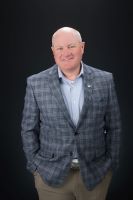
John Scanga

Sidebar Image
John Scanga, PhD

John Scanga, PhD

Chief Scientific Officer for North American Meat Division

John received his B.S. degree in Animal Sciences, his M.S. degree in Meat Science in 1997, and his Ph.D. in Animal Sciences in 1999, all from Colorado State University in Fort Collins, CO.

He developed a connection to agriculture at an early age; through work on his family’s ranching operation in central Colorado. He enrolled at Colorado State University in the fall of 1992 majoring in Animal Sciences; he competed on the CSU Meat Judging Team in 1994 and worked as an employee in the meat laboratory where his interest in meat processing and the meat industry began to grow.

Following the completion of his M.S (1997) and Ph.D. (1999), John joined the faculty at Colorado State University as an Assistant Professor and Extension Meat Specialist. He managed the day-to-day operations of the Meat Science Teaching and Research Laboratory and was promoted to Associate Professor in 2005.  He then left the university and joined IEH Laboratories and Consulting Group in January of 2008 as Vice President of Technical Services, where he continued to merge scientific concepts with industrial applications for managing and improving the safety of meat and non-meat foods, and improving food processing plant operational efficiencies.  In addition, he provided clients with regulatory, crisis event, and HACCP training and support.

John joined Elanco Animal Health in November of 2009 as an Associate Senior Technical Consultant where he brought a consumer focus and an emphasis on balancing animal productivity and performance with consumer acceptability. His work there focused on red meat safety, red meat quality and international trade.

John has been an author or co-author on over 70 refereed scientific publications on red meat quality and safety and has presented the findings of his work through numerous invited in presentations both the U.S and internationally.  

John also has a passion for service.  He currently is the chair of the Colorado Beef Council and has served as President of the Weld RE-9 school board, Weld County Fair Board and is a member of the Highland High School FFA Advisory Committee. 

John and his wife Chauna live on a diversified farming operation in Ault, Colorado.  Their family time is consumed with agriculture, farming, riding reigning horses and traveling.  His hobbies include backcountry snowmobiling and bird hunting. He  also works as a visiting professor in the Department of Animal Sciences at Colorado State University, where he first started his academic career. 

Below are resources from Dr. Scanga:


Effective risk assessment is essential for ensuring dietary supplement safety, regulatory compliance, and brand integrity. Learn how to protect quality and consumer trust.


Discover the crucial role of botanical reference materials (BRMs) in supplement quality and regulatory compliance. Learn how BRMs help ensure product integrity and support industry standards.


Creatine is one of the most extensively studied and widely used ingredients in sports nutrition, prized for its well-documented ability to enhance strength, increase lean muscle mass, and improve performance during high-intensity, short-duration exercise. Learn about its benefits, biological role, and the importance of rigorous testing for quality and compliance.


With rising demand for A2-type dairy, precise A1/A2 testing is essential. Eurofins' advanced LCMS technology ensures product integrity and consumer confidence in a transparent food supply chain. Learn about the structure of A1/A2 and the importance of testing.


The Food and Drug Administration (FDA) monitors drug manufacturers' compliance with its current Good Manufacturing Practice (cGMP) regulations in order to ensure the quality of drug products. These regulations are designed to assure products are safe for use and contain the ingredients, strengths, and efficacies of claims made by the product. Learn what tests your OTC products need to be compliant.


Discover how to reduce sodium without sacrificing taste or functionality in food and beverage products. This white paper explores formulation strategies, technical insights, and best practices for achieving sodium reduction while maintaining consumer appeal.


The Pet Food Label Modernization (PFLM) initiative is reshaping industry standards, making dietary fiber a required metric. Learn how this change impacts pet food formulations, testing methods, and nutritional transparency.


The Eurofins team of process authorities routinely provides expert guidance to food manufacturers to prepare microbiologically safe products. In this service, we encounter many questions that span across a variety of food products and manufacturing processes. Here we list and will continue to compile the most common questions and answers asked of a process authority and the responses. Use this information as a guide in your scheduled process or as you work through the formulation and development of your new food product. You may also use this as a tool to submit your own questions for a process authority!


In the dietary supplement and ingredient industry, guaranteeing the safety and quality of products is essential. One important part of quality control is the testing for residual solvents—volatile chemicals used during manufacturing that can pose health risks if not adequately removed. Click to read our blog on considerations in testing for residual solvents.


The botanical industry’s unprecedented surge in popularity brings exciting possibilities, but it also invites a serious challenge: adulteration. This blog explains how to identify adulterated botanicals and the role of third-party testing in protecting consumer health and trust.


<< < 1 2 3 4 5 6 7 8 9 10 11 12 13 14 15 16 17 18 19 20 21 22 23 24 25 26 > >>

https://www.eurofinsus.com/food-testing