
JavaScript is disabled. Please enable to continue!

Mobile search icon
More Resources >> Our People >> John Scanga

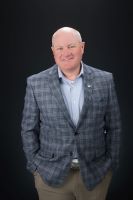
John Scanga

Sidebar Image
John Scanga, PhD

John Scanga, PhD

Chief Scientific Officer for North American Meat Division

John received his B.S. degree in Animal Sciences, his M.S. degree in Meat Science in 1997, and his Ph.D. in Animal Sciences in 1999, all from Colorado State University in Fort Collins, CO.

He developed a connection to agriculture at an early age; through work on his family’s ranching operation in central Colorado. He enrolled at Colorado State University in the fall of 1992 majoring in Animal Sciences; he competed on the CSU Meat Judging Team in 1994 and worked as an employee in the meat laboratory where his interest in meat processing and the meat industry began to grow.

Following the completion of his M.S (1997) and Ph.D. (1999), John joined the faculty at Colorado State University as an Assistant Professor and Extension Meat Specialist. He managed the day-to-day operations of the Meat Science Teaching and Research Laboratory and was promoted to Associate Professor in 2005.  He then left the university and joined IEH Laboratories and Consulting Group in January of 2008 as Vice President of Technical Services, where he continued to merge scientific concepts with industrial applications for managing and improving the safety of meat and non-meat foods, and improving food processing plant operational efficiencies.  In addition, he provided clients with regulatory, crisis event, and HACCP training and support.

John joined Elanco Animal Health in November of 2009 as an Associate Senior Technical Consultant where he brought a consumer focus and an emphasis on balancing animal productivity and performance with consumer acceptability. His work there focused on red meat safety, red meat quality and international trade.

John has been an author or co-author on over 70 refereed scientific publications on red meat quality and safety and has presented the findings of his work through numerous invited in presentations both the U.S and internationally.  

John also has a passion for service.  He currently is the chair of the Colorado Beef Council and has served as President of the Weld RE-9 school board, Weld County Fair Board and is a member of the Highland High School FFA Advisory Committee. 

John and his wife Chauna live on a diversified farming operation in Ault, Colorado.  Their family time is consumed with agriculture, farming, riding reigning horses and traveling.  His hobbies include backcountry snowmobiling and bird hunting. He  also works as a visiting professor in the Department of Animal Sciences at Colorado State University, where he first started his academic career. 

Below are resources from Dr. Scanga:


Fresh produce undergoes several steps to reduce risk of pathogen contamination, but did you know that Nanobubble technology could be one of them? Nanobubbles are very small (70-120 nanometers) gas bubbles that exhibit interesting physical properties due to its size. It has been a relatively new field of research that could provide significant improvements to food production and water treatment.


What is spectroscopy? What is the difference between NIR vs. Mid IR? What are the benefits of NIR vs traditional wet chemistry? The team at Eurofins QTA answers these questions and more in this blog about infrared spectroscopy.


Gummy supplements continue to trend among consumers, but this matrix can be challenging to test. How does Eurofins address these challenges? Read about the answer from Jeff Stassi, Sr. Analytical Services Manager with Eurofins Food Chemistry Testing in Madison, WI.


Eurofins Craft Technologies recently became a gold member of the Algae Biomass Organization (ABO). Our team is excited to offer discounts and special rates to other ABO members. We answered some common questions about the ABO, membership benefits, and testing with Eurofins in this article.


Phytochemicals are chemicals derived from plants used to test the purity, composition, adulteration, and potency of botanical products. Discover how plant chemistry shapes and motivates botanical product authentication.


Alicyclobacillus is a non-pathogenic spoilage bacteria that silently sours fruit juice products. With the ability to survive commercial pasteurization, Alicyclobacillus causes unpleasant odors in food products that make the products undesirable to consumers. Is your product at risk?


MicroTally™ has created an easy, FSIS compliant tool for meat sampling. Learn how Eurofins support can make using this tool even easier.


Following the recent webinar titled "Validation of Thermal Processes Applied to Low-Water Activity Foods" experts Shirin Abd and Dr. Wilfredo Ocasio answered some frequently asked questions.


Pathogenic organisms, like Salmonella and E. coli, can grow in low water activity foods, leading to foodborne illness outbreaks. Thermal processes inhibit microbial growth and ensure only safe ingredients and products reach the shelves. Thermal processes must be validated to make sure they fully prevent pathogen growth. This blog outlines what foods may need an LWAF thermal process, what a validation study looks like, and the results the experts at Eurofins provide.


Ethylene oxide is gaining attention in the food regulatory space. EtO was banned as a food fumigant in 1991 in the EU. While ethylene oxide is not banned for use in foods in the United States, it is important to understand the allowed tolerances in the US and EU, especially as regulations continue to evolve and online sales contribute to increasing overseas exports. This article outlines the uses and toxicity of EtO, US and EU regulations, and EtO analysis at Eurofins.


<< < 1 2 3 4 5 6 7 8 9 10 11 12 13 14 15 16 17 18 19 20 21 22 23 24 25 26 > >>

https://www.eurofinsus.com/food-testing