
JavaScript is disabled. Please enable to continue!

Mobile search icon
More Resources >> Our People >> John Scanga

John Scanga

Sidebar Image
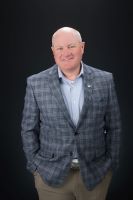
John Scanga, PhD

John Scanga, PhD

Chief Scientific Officer for North American Meat Division

John received his B.S. degree in Animal Sciences, his M.S. degree in Meat Science in 1997, and his Ph.D. in Animal Sciences in 1999, all from Colorado State University in Fort Collins, CO.

He developed a connection to agriculture at an early age; through work on his family’s ranching operation in central Colorado. He enrolled at Colorado State University in the fall of 1992 majoring in Animal Sciences; he competed on the CSU Meat Judging Team in 1994 and worked as an employee in the meat laboratory where his interest in meat processing and the meat industry began to grow.

Following the completion of his M.S (1997) and Ph.D. (1999), John joined the faculty at Colorado State University as an Assistant Professor and Extension Meat Specialist. He managed the day-to-day operations of the Meat Science Teaching and Research Laboratory and was promoted to Associate Professor in 2005.  He then left the university and joined IEH Laboratories and Consulting Group in January of 2008 as Vice President of Technical Services, where he continued to merge scientific concepts with industrial applications for managing and improving the safety of meat and non-meat foods, and improving food processing plant operational efficiencies.  In addition, he provided clients with regulatory, crisis event, and HACCP training and support.

John joined Elanco Animal Health in November of 2009 as an Associate Senior Technical Consultant where he brought a consumer focus and an emphasis on balancing animal productivity and performance with consumer acceptability. His work there focused on red meat safety, red meat quality and international trade.

John has been an author or co-author on over 70 refereed scientific publications on red meat quality and safety and has presented the findings of his work through numerous invited in presentations both the U.S and internationally.  

John also has a passion for service.  He currently is the chair of the Colorado Beef Council and has served as President of the Weld RE-9 school board, Weld County Fair Board and is a member of the Highland High School FFA Advisory Committee. 

John and his wife Chauna live on a diversified farming operation in Ault, Colorado.  Their family time is consumed with agriculture, farming, riding reigning horses and traveling.  His hobbies include backcountry snowmobiling and bird hunting. He  also works as a visiting professor in the Department of Animal Sciences at Colorado State University, where he first started his academic career. 

Below are resources from Dr. Scanga:


The dietary supplement industry has become an increasingly regulated industry since the introduction of the dietary supplement GMPs in 2007. There is still to this day an industry confusion as to the requirements needed to comply with the dietary supplement GMP requirement to use a scientifically valid method. So does this mean the method must be validated?


As NIR instrumentation ages or manufacturers discontinue the support for older platforms, it is necessary to look for a replacement. With so many brands and models in the market and manufacturers’ claims of impressive capabilities, how does one narrow down the selection and find the correct choice?


In this article read about how Eurofins QTA has developed a new method using NIR to test the THC levels of hemp and cannabis that are being utilized by state police to rapidly determine the THC levels of confiscated cannabis.


This article discusses aflatoxins in food and how to mitigate risks for food safety. Aflatoxins are a serious concern for food producers, but Eurofins can help with ISO 17025 accredited laboratories for testing as well as On-Site Grain Inspection services.


Have a product needing a Facts Panel and not sure which one to use? This article explains the differences between food and dietary supplement labeling and what food and supplement manufacturers must include on their labels.


This blog will focus on clarifying a less familiar cousin of the well-established sugar – the sugar alcohol.


Read about the function of probiotics in the body, the different varieties and benefits, and how they’re consumed in the diet, from common to new sources. See what to consider when choosing a third party lab for testing and how Eurofins is one of the most trusted labs in the industry.


Instrument calibration management is the key to mass balance optimization in dairy plants. Eurofins DQCI is the dairy industry’s leading analytical laboratory, adhering to the highest standards supporting infrared and near-infrared technology worldwide.


In this informative conversation between Vanessa Snyder and Grace Bandong they discuss contaminant testing in hemp and CBD products and why it is important. Grace tells companies the importance of testing for contaminants and gives advice for when and what to test.


What species of microorganisms are present in your dairy products? Learn why you need microbiome monitoring for your dairy products.


<< < 1 2 3 4 5 6 7 8 9 10 11 12 13 14 15 16 17 18 19 20 21 22 23 24 25 26 > >>

https://www.eurofinsus.com/food-testing