JavaScript is disabled. Please enable to continue!

Mobile search icon
More Resources >> Our People >> John Scanga

John Scanga

Sidebar Image
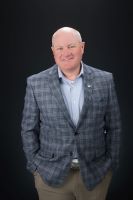
John Scanga, PhD

John Scanga, PhD

Chief Scientific Officer for North American Meat Division

John received his B.S. degree in Animal Sciences, his M.S. degree in Meat Science in 1997, and his Ph.D. in Animal Sciences in 1999, all from Colorado State University in Fort Collins, CO.

He developed a connection to agriculture at an early age; through work on his family’s ranching operation in central Colorado. He enrolled at Colorado State University in the fall of 1992 majoring in Animal Sciences; he competed on the CSU Meat Judging Team in 1994 and worked as an employee in the meat laboratory where his interest in meat processing and the meat industry began to grow.

Following the completion of his M.S (1997) and Ph.D. (1999), John joined the faculty at Colorado State University as an Assistant Professor and Extension Meat Specialist. He managed the day-to-day operations of the Meat Science Teaching and Research Laboratory and was promoted to Associate Professor in 2005.  He then left the university and joined IEH Laboratories and Consulting Group in January of 2008 as Vice President of Technical Services, where he continued to merge scientific concepts with industrial applications for managing and improving the safety of meat and non-meat foods, and improving food processing plant operational efficiencies.  In addition, he provided clients with regulatory, crisis event, and HACCP training and support.

John joined Elanco Animal Health in November of 2009 as an Associate Senior Technical Consultant where he brought a consumer focus and an emphasis on balancing animal productivity and performance with consumer acceptability. His work there focused on red meat safety, red meat quality and international trade.

John has been an author or co-author on over 70 refereed scientific publications on red meat quality and safety and has presented the findings of his work through numerous invited in presentations both the U.S and internationally.  

John also has a passion for service.  He currently is the chair of the Colorado Beef Council and has served as President of the Weld RE-9 school board, Weld County Fair Board and is a member of the Highland High School FFA Advisory Committee. 

John and his wife Chauna live on a diversified farming operation in Ault, Colorado.  Their family time is consumed with agriculture, farming, riding reigning horses and traveling.  His hobbies include backcountry snowmobiling and bird hunting. He  also works as a visiting professor in the Department of Animal Sciences at Colorado State University, where he first started his academic career. 

Below are resources from Dr. Scanga:


The use of real HMOs in infant formula is accelerating, driven by science, innovation, and a commitment to nourishing infants in the healthiest way possible. Enhanced testing methods are unlocking new capabilities—bringing us closer than ever to replicating the complexity and power of human milk. Click the link to learn more about HMOs.


In today’s competitive marketplace, success hinges on more than just product formulation. You must create a product experience that consistently delights consumers. Continue reading to learn how Eurofins Nutrition Analysis Center can help you understand how your product is perceived in the real world.


As the global appetite for high-protein and plant-based protein products continues to grow, food developers face a critical challenge: choosing the right protein ingredients that meet nutritional needs and perform well in real-world applications. Protein functionality testing is the backbone of successful innovation in this evolving space. Read more about protein testing by clicking the link.


Chlorates and perchlorates are chlorine-based oxyanions that have emerged as contaminants of concern in the food and dietary supplement industries. These compounds are highly soluble in water and persistent in the environment, making them difficult to eliminate once introduced into the supply chain. Continue reading to learn what you can do to test for these contaminants.


Learn how to navigate global GMO export testing requirements with confidence. Discover how Eurofins GeneScan supports compliance with country-specific GMO regulations through expert screening, quantification, and certification.
Keywords: Blog GMO


Ensure compliance and product safety with Eurofins' USP Microbiology Services. Learn how USP Testing and Suitability Testing help validate methods for dietary supplements, probiotics, and botanicals while avoiding false negatives and regulatory pitfalls.


Learn how to prevent, manage, and respond to a USDA NR (noncompliance record) in USDA-regulated facilities. This guide offers practical tips for minimizing USDA noncompliance records through strong food safety systems, communication, and expert support.


Certain seasonal botanicals may play a vital role in supporting women's health and overall wellness. Shatavari, dong quai, and milky oats are known for their deeply nurturing qualities, fostering balance, resilience, and gentle strength within the body. Click the link to continue exploring the benefits of these plants and their contributions to health and well-being.


Learn how data-driven E. coli testing improves process control and food safety in beef plants. Explore sampling strategies, harvest monitoring, and microbial analytics to reduce contamination risks and enhance regulatory compliance.


From ancient remedies to modern lab techniques, the science of vitamins has come a long way. Vitamin analysis plays a key role in making sure we get the right nutrients, whether through supplements, food, or baby formula. Keep reading to find out how testing is becoming more precise and efficient.


https://www.eurofinsus.com/food-testing