
JavaScript is disabled. Please enable to continue!

Mobile search icon
More Resources >> Our People >> John Scanga

John Scanga

Sidebar Image
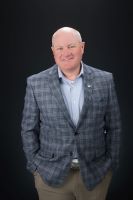
John Scanga, PhD

John Scanga, PhD

Chief Scientific Officer for North American Meat Division

John received his B.S. degree in Animal Sciences, his M.S. degree in Meat Science in 1997, and his Ph.D. in Animal Sciences in 1999, all from Colorado State University in Fort Collins, CO.

He developed a connection to agriculture at an early age; through work on his family’s ranching operation in central Colorado. He enrolled at Colorado State University in the fall of 1992 majoring in Animal Sciences; he competed on the CSU Meat Judging Team in 1994 and worked as an employee in the meat laboratory where his interest in meat processing and the meat industry began to grow.

Following the completion of his M.S (1997) and Ph.D. (1999), John joined the faculty at Colorado State University as an Assistant Professor and Extension Meat Specialist. He managed the day-to-day operations of the Meat Science Teaching and Research Laboratory and was promoted to Associate Professor in 2005.  He then left the university and joined IEH Laboratories and Consulting Group in January of 2008 as Vice President of Technical Services, where he continued to merge scientific concepts with industrial applications for managing and improving the safety of meat and non-meat foods, and improving food processing plant operational efficiencies.  In addition, he provided clients with regulatory, crisis event, and HACCP training and support.

John joined Elanco Animal Health in November of 2009 as an Associate Senior Technical Consultant where he brought a consumer focus and an emphasis on balancing animal productivity and performance with consumer acceptability. His work there focused on red meat safety, red meat quality and international trade.

John has been an author or co-author on over 70 refereed scientific publications on red meat quality and safety and has presented the findings of his work through numerous invited in presentations both the U.S and internationally.  

John also has a passion for service.  He currently is the chair of the Colorado Beef Council and has served as President of the Weld RE-9 school board, Weld County Fair Board and is a member of the Highland High School FFA Advisory Committee. 

John and his wife Chauna live on a diversified farming operation in Ault, Colorado.  Their family time is consumed with agriculture, farming, riding reigning horses and traveling.  His hobbies include backcountry snowmobiling and bird hunting. He  also works as a visiting professor in the Department of Animal Sciences at Colorado State University, where he first started his academic career. 

Below are resources from Dr. Scanga:


In the product development process, scaling dairy-based systems takes more than a good formula—it takes a deep understanding of how everything works together.


This case study details how Eurofins The National Food Lab was able to assist a start-up company in developing a shelf-stable Ready to Drink product with a high active concentration.


This case study details how Eurofins The National Food Lab was able to assist an ingredient supplier in understanding their new product's key performance differentiators to demonstrate their value proposition to potential clients.


This case study details how Eurofins The National Food Lab was able to assist a Consumer Packaged Goods company in evaluating the options for plant protein alternatives as a new ingredient option.


This case study details how Eurofins The National Food Lab was able to assist a Fortune 100 CPG company in migrating all of its ingredient and formulation data to a new PLM platform.
Keywords: Case Study Food


This case study details how Eurofins The National Food Lab was able to assist a Consumer Packaged Goods company in setting up a new product lifecycle management system.
Keywords: Case Study Food


Postbiotics are increasing in popularity, but are difficult to enumerate with traditional plating methods. Flow cytometry provides an avenue for measuring the dead or inactive cells in postbiotic products. This case study demonstrates how flow cytometry can assist with postbiotic enumeration when plate methods result in low cell counts.


Eurofins accepted a request to perform testing compliant with 21 CFR Parts 210/211 on an excipient material for over-the-counter pharmaceutical products and develop specific test methods to support the risk assessment of the manufacturing process and batch release. Read about what happened in response to the OOS test results.


Foreign materials in products can be dangerous to consumers and damage a brand's reputation. At Eurofins, we have the expertise and experience to handle all kinds of foreign material investigations, including issues in food and beverage packaging. This case study outlines how we used analytical chemistry approaches, including LC-MS. GC-MS, and FTIR to identify a contaminant causing a bitter taste in Jello Shots


Foreign materials in products can be dangerous to consumers and damage a brand's reputation. At Eurofins, we have the expertise and experience to handle all kinds of foreign material investigations, including issues in pharmaceuticals and dietary supplements. This case study outlines how we used microbial culture methods and 16S PCR to identify a bacterial contaminant and prevent future issues.


<< < 1 2 3 4 5 6 > >>

https://www.eurofinsus.com/food-testing