
JavaScript is disabled. Please enable to continue!

Mobile search icon
More Resources >> Our People >> John Scanga

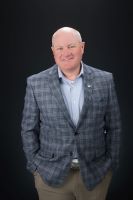
John Scanga

Sidebar Image
John Scanga, PhD

John Scanga, PhD

Chief Scientific Officer for North American Meat Division

John received his B.S. degree in Animal Sciences, his M.S. degree in Meat Science in 1997, and his Ph.D. in Animal Sciences in 1999, all from Colorado State University in Fort Collins, CO.

He developed a connection to agriculture at an early age; through work on his family’s ranching operation in central Colorado. He enrolled at Colorado State University in the fall of 1992 majoring in Animal Sciences; he competed on the CSU Meat Judging Team in 1994 and worked as an employee in the meat laboratory where his interest in meat processing and the meat industry began to grow.

Following the completion of his M.S (1997) and Ph.D. (1999), John joined the faculty at Colorado State University as an Assistant Professor and Extension Meat Specialist. He managed the day-to-day operations of the Meat Science Teaching and Research Laboratory and was promoted to Associate Professor in 2005.  He then left the university and joined IEH Laboratories and Consulting Group in January of 2008 as Vice President of Technical Services, where he continued to merge scientific concepts with industrial applications for managing and improving the safety of meat and non-meat foods, and improving food processing plant operational efficiencies.  In addition, he provided clients with regulatory, crisis event, and HACCP training and support.

John joined Elanco Animal Health in November of 2009 as an Associate Senior Technical Consultant where he brought a consumer focus and an emphasis on balancing animal productivity and performance with consumer acceptability. His work there focused on red meat safety, red meat quality and international trade.

John has been an author or co-author on over 70 refereed scientific publications on red meat quality and safety and has presented the findings of his work through numerous invited in presentations both the U.S and internationally.  

John also has a passion for service.  He currently is the chair of the Colorado Beef Council and has served as President of the Weld RE-9 school board, Weld County Fair Board and is a member of the Highland High School FFA Advisory Committee. 

John and his wife Chauna live on a diversified farming operation in Ault, Colorado.  Their family time is consumed with agriculture, farming, riding reigning horses and traveling.  His hobbies include backcountry snowmobiling and bird hunting. He  also works as a visiting professor in the Department of Animal Sciences at Colorado State University, where he first started his academic career. 

Below are resources from Dr. Scanga:


Contaminated peanut butter recalls have wreaked havoc on the food industry. By understanding how to prevent and mitigate risk of Salmonella contamination, we can prevent economic loss and illness. Learn more in this article about why it keeps happening.


Developing a product requires careful consideration of storage, transport, and retail conditions. Spoilage organism testing helps determine the risk of bacterial spoilage under different conditions. Additionally, spoilage testing can be added to routine microbiology testing to ensure continued product quality and safety.


Indicator organisms are groups of microbes that are correlated with other groups. In other words, the presence of one indicates the presence of another. So, indicator testing detects a small group of pathogens instead of running over 30 tests to look for all potential harmful groups. This reduces testing times and costs.


Manufacturing microwave food or Ready-to-Heat (RTH) products have compelling benefits and challenges. Learn more about the chemistry of how microwave technology works, applications in the food industry, and how testing is an important piece when manufacturing or selling these products.


High-Pressure Processing is a food processing technology that enables food safety while maintaining food quality. Learn how this high-pressure technology contributes to food science and testing to help support HPP processing and HPP food safety.


What's the role of microbiology in the food industry? Learn how microorganisms can positively or negatively affect food production and storage. Partner with our ISO 17025 accredited laboratory for all your food safety microbiology testing needs.
Keywords: Blog Microbiology


Fermented foods have gained popularity in recent years. Learn about the fermentation process, how they contribute to food sustainability and safety, and how partnering with a reputable ISO 17025 laboratory like Eurofins is essential for the success of your product.


If you are a manufacturer or sell probiotic supplements, testing for counts of probiotic strains is not always straight forward. Here are five tips you should know when it comes to testing your product and verifying your label claims.


Testing or enumeration Bacillus coagulans in gummies is not as straight forward as it seems. Sometimes product matrices are challenging and require a new custom method. Learn how our testing experts know exactly how to problem solve testing in tough matrices like gummy candies.


If you have been using an established probtioic enumeration method with good results, introducing new probiotic strains into your formulas may mean changes need to be made. Read this case study to learn how Eurofins finds a solution to challenging product with multiple strains from multiple manufacturers.


<< < 1 2 3 4 5 6 7 8 9 10 11 12 13 14 15 > >>

https://www.eurofinsus.com/food-testing