
JavaScript is disabled. Please enable to continue!

Mobile search icon
More Resources >> Our People >> John Scanga

John Scanga

Sidebar Image
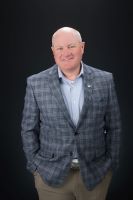
John Scanga, PhD

John Scanga, PhD

Chief Scientific Officer for North American Meat Division

John received his B.S. degree in Animal Sciences, his M.S. degree in Meat Science in 1997, and his Ph.D. in Animal Sciences in 1999, all from Colorado State University in Fort Collins, CO.

He developed a connection to agriculture at an early age; through work on his family’s ranching operation in central Colorado. He enrolled at Colorado State University in the fall of 1992 majoring in Animal Sciences; he competed on the CSU Meat Judging Team in 1994 and worked as an employee in the meat laboratory where his interest in meat processing and the meat industry began to grow.

Following the completion of his M.S (1997) and Ph.D. (1999), John joined the faculty at Colorado State University as an Assistant Professor and Extension Meat Specialist. He managed the day-to-day operations of the Meat Science Teaching and Research Laboratory and was promoted to Associate Professor in 2005.  He then left the university and joined IEH Laboratories and Consulting Group in January of 2008 as Vice President of Technical Services, where he continued to merge scientific concepts with industrial applications for managing and improving the safety of meat and non-meat foods, and improving food processing plant operational efficiencies.  In addition, he provided clients with regulatory, crisis event, and HACCP training and support.

John joined Elanco Animal Health in November of 2009 as an Associate Senior Technical Consultant where he brought a consumer focus and an emphasis on balancing animal productivity and performance with consumer acceptability. His work there focused on red meat safety, red meat quality and international trade.

John has been an author or co-author on over 70 refereed scientific publications on red meat quality and safety and has presented the findings of his work through numerous invited in presentations both the U.S and internationally.  

John also has a passion for service.  He currently is the chair of the Colorado Beef Council and has served as President of the Weld RE-9 school board, Weld County Fair Board and is a member of the Highland High School FFA Advisory Committee. 

John and his wife Chauna live on a diversified farming operation in Ault, Colorado.  Their family time is consumed with agriculture, farming, riding reigning horses and traveling.  His hobbies include backcountry snowmobiling and bird hunting. He  also works as a visiting professor in the Department of Animal Sciences at Colorado State University, where he first started his academic career. 

Below are resources from Dr. Scanga:


There are many ways to sell and distribute authorized food packaging materials on the US market. One pathway for introducing new food contact substances to the U.S. market is by submitting a Food Contact Notification (FCN) to the FDA for premarket approval. Watch our webinar exploring the FDA’s authorization process for new food contact substances, focusing on migration testing and safety evaluation. Originally Aired on June 4, 2025


Food safety risks in fruit and vegetable processing environments can come from many different sources. Agricultural items are inherently dirty products, which can introduce risk- including microbial pathogens- to a facility from the outside environment. If your Environmental Monitoring Program (EMP) and sanitation programs are not sufficient to control these risks, these products could be potentially cross contaminating other products that are subsequently processed in the facility. It is therefore imperative that we think about risks from both our incoming products and our processes when designing environmental monitoring programs.


Nestled in the heart of California’s San Joaquin Valley, Fresno is a thriving agricultural hub renowned for its diverse produce, dairy farms, and food manufacturing operations. Strategically positioned within this bustling industry, Eurofins operates three specialized laboratories in Fresno, each dedicated to providing cutting-edge testing and support tailored to the region’s needs.
Keywords: News Produce


The southwest leafy green industry has once again completed its migration south and Eurofins Microbiology Laboratories Yuma is ready. This year the lab has upgraded to better support the industry.
Keywords: News Produce


This poster discusses research with the purpose to validate enrichment concentration as a method for shortening enrichment times to 12 hours for Listeria testing in leafy greens.


This poster discusses research with the purpose to develop a molecular method that detects indicators of enteric pathogen contamination and requires less than six hours of enrichment.


Eurofins Microbiology Laboratories in Salinas has met this industry demand for quality, and as a result has expanded the Eurofins presence within the produce market.
Keywords: News Produce


This poster discusses research focused on the co-enrichment detection of Salmonella and STEC on produce matrices.


This poster discusses research with the purpose to demonstrate proof of concept of the EPRI tool with real-world samples by comparing against a validated pathogen method and culture.


Eurofins offers rapid pesticide testing, tailored to the produce industry, with custom service to the west coast growing regions.


<< < 1 2 3 4 > >>

https://www.eurofinsus.com/food-testing