
JavaScript is disabled. Please enable to continue!

Mobile search icon
More Resources >> Our People >> John Scanga

John Scanga

Sidebar Image
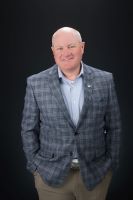
John Scanga, PhD

John Scanga, PhD

Chief Scientific Officer for North American Meat Division

John received his B.S. degree in Animal Sciences, his M.S. degree in Meat Science in 1997, and his Ph.D. in Animal Sciences in 1999, all from Colorado State University in Fort Collins, CO.

He developed a connection to agriculture at an early age; through work on his family’s ranching operation in central Colorado. He enrolled at Colorado State University in the fall of 1992 majoring in Animal Sciences; he competed on the CSU Meat Judging Team in 1994 and worked as an employee in the meat laboratory where his interest in meat processing and the meat industry began to grow.

Following the completion of his M.S (1997) and Ph.D. (1999), John joined the faculty at Colorado State University as an Assistant Professor and Extension Meat Specialist. He managed the day-to-day operations of the Meat Science Teaching and Research Laboratory and was promoted to Associate Professor in 2005.  He then left the university and joined IEH Laboratories and Consulting Group in January of 2008 as Vice President of Technical Services, where he continued to merge scientific concepts with industrial applications for managing and improving the safety of meat and non-meat foods, and improving food processing plant operational efficiencies.  In addition, he provided clients with regulatory, crisis event, and HACCP training and support.

John joined Elanco Animal Health in November of 2009 as an Associate Senior Technical Consultant where he brought a consumer focus and an emphasis on balancing animal productivity and performance with consumer acceptability. His work there focused on red meat safety, red meat quality and international trade.

John has been an author or co-author on over 70 refereed scientific publications on red meat quality and safety and has presented the findings of his work through numerous invited in presentations both the U.S and internationally.  

John also has a passion for service.  He currently is the chair of the Colorado Beef Council and has served as President of the Weld RE-9 school board, Weld County Fair Board and is a member of the Highland High School FFA Advisory Committee. 

John and his wife Chauna live on a diversified farming operation in Ault, Colorado.  Their family time is consumed with agriculture, farming, riding reigning horses and traveling.  His hobbies include backcountry snowmobiling and bird hunting. He  also works as a visiting professor in the Department of Animal Sciences at Colorado State University, where he first started his academic career. 

Below are resources from Dr. Scanga:


Do you work with animal veterinary products? Join Kari Nichols and Leo Schilling as they help you navigate the process for animal veterinary product development. Original airdate March 29, 2023.


Are you incorporating novel or upcycled protein materials in your products? If so join Mollie Van Alst for this webinar to learn more about the determination of protein and carbohydrates from that material. Original airdate March 30, 2023


This webinar outlines the concept, design and execution of appropriate validation strategies and procedures intended to mitigate microbiological hazards in Low-Water Activity Foods. In the context of FDA regulations, low-water activity foods (LWAF) are those products with a water activity (aw) of less than 0.85. For many decades, these products were believed to present a low microbiological hazard risk. Various food related illness outbreaks, starting with a massive outbreak of salmonellosis due to peanut butter consumption in 2008-2009, raised awareness of the risk resulting from extended survival of pathogens in these products even in the absence of active growth. Original airdate August 23, 2022.


Learn about frequent causes of off-flavor, off-odor, and flavor scalping in packaged foods, beverages, and pet food products, including analytical techniques ranging from GCMS to ICP to LCMSMS for troubleshooting and detection, with a focus on SPME-GC-MS analysis. Learn how improper product packaging, production, or transportation issues can cause your product to be recalled. Factors that can negatively impact flavor and aroma. The analytical techniques range from GCMS to ICP to LCMSMS for troubleshooting and detection.


The botanical supplement and cosmetic industries are rapidly changing, and the increase in consumer demand calls for upscaling raw material sourcing. This means there is higher pressure for scientifically-valid contaminant testing, including screens for pesticides and heavy metals, while maintaining a fast turn-around time. Watch this webinar to learn modern approaches to contaminant detection, with an emphasis on market trends, broad dietary supplement applications, and OTC cosmetics.


Watch this webinar to learn more about Human Milk Oligosaccharides and Proteins, what they are, and how they can be analyzed. The webinar will provide some background on HMOs and cover an analytical method that is capable of quantifying up to six different HMOs within infant formula and adult nutritionals and will focus on the most prevalent human milk proteins targeted for infant formula, and how modern proteomics tools are used to address the challenges of targeted protein analysis in protein rich matrices such as infant formula.


Watch this webinar to gain an understanding of the difference between the USDA and FDA labeling regulations.  Also, learn which products fall into which regulation.


Analytical method development and validation is a complex topic; in this webinar, Josh Rhein and Leo Schilling attempt to break it down for you and discuss some best practices.


This webinar focuses on best practices for testing dietary supplements with a focus on using scientifically valid test methods. Original air date: April 25, 2022


This webinar discusses current analytical trends, focusing on low level cannabinoids testing and meeting stringent limits for pesticide residue testing. We briefly review navigating API and OTC testing to meet GMP requirements. Finally, we share updates related to hemp and feed, as well as the certification process of the USHA.


<< < 1 2 3 4 5 6 7 8 9 10 11 12 > >>

https://www.eurofinsus.com/food-testing