
JavaScript is disabled. Please enable to continue!

Mobile search icon
More Resources >> Our People >> John Scanga

John Scanga

Sidebar Image
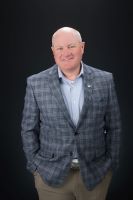
John Scanga, PhD

John Scanga, PhD

Chief Scientific Officer for North American Meat Division

John received his B.S. degree in Animal Sciences, his M.S. degree in Meat Science in 1997, and his Ph.D. in Animal Sciences in 1999, all from Colorado State University in Fort Collins, CO.

He developed a connection to agriculture at an early age; through work on his family’s ranching operation in central Colorado. He enrolled at Colorado State University in the fall of 1992 majoring in Animal Sciences; he competed on the CSU Meat Judging Team in 1994 and worked as an employee in the meat laboratory where his interest in meat processing and the meat industry began to grow.

Following the completion of his M.S (1997) and Ph.D. (1999), John joined the faculty at Colorado State University as an Assistant Professor and Extension Meat Specialist. He managed the day-to-day operations of the Meat Science Teaching and Research Laboratory and was promoted to Associate Professor in 2005.  He then left the university and joined IEH Laboratories and Consulting Group in January of 2008 as Vice President of Technical Services, where he continued to merge scientific concepts with industrial applications for managing and improving the safety of meat and non-meat foods, and improving food processing plant operational efficiencies.  In addition, he provided clients with regulatory, crisis event, and HACCP training and support.

John joined Elanco Animal Health in November of 2009 as an Associate Senior Technical Consultant where he brought a consumer focus and an emphasis on balancing animal productivity and performance with consumer acceptability. His work there focused on red meat safety, red meat quality and international trade.

John has been an author or co-author on over 70 refereed scientific publications on red meat quality and safety and has presented the findings of his work through numerous invited in presentations both the U.S and internationally.  

John also has a passion for service.  He currently is the chair of the Colorado Beef Council and has served as President of the Weld RE-9 school board, Weld County Fair Board and is a member of the Highland High School FFA Advisory Committee. 

John and his wife Chauna live on a diversified farming operation in Ault, Colorado.  Their family time is consumed with agriculture, farming, riding reigning horses and traveling.  His hobbies include backcountry snowmobiling and bird hunting. He  also works as a visiting professor in the Department of Animal Sciences at Colorado State University, where he first started his academic career. 

Below are resources from Dr. Scanga:


The reclassification of the genus Lactobacillus into 25 different genera has direct implications for the probiotic industry. This webinar describes the rationale behind the name change, what it means for the industry, how the taxonomy update will be implemented, and why it is a good thing for the consumer.
Keywords: Webinar Probiotic


Do your products need a nutritional label?  Do you ever find yourself facing confusion around nutritional labeling requirements?  Let us help with those questions!  Listen to our informational webinar presented by Mollie Hammerschmidt, Analytical Services Manager, Eurofins Nutrition Analysis Center. She answers the most common questions and pain points we receive, from customers just like you, with nutrition labeling requests.


Are you stuck on the proverbial micro testing loop? Do you submit a sample to the lab, get a non-compliant result, fill out some paperwork, visit a field and then just start right back over at step one? If so watch this webinar on how to fix those issues.


You walk the field, you pick some product, and you drop it off at the lab for testing. Not long after, you hear back your sample is presumptive. Now what?


In this presentation, USP and Eurofins Microbiology provided an overview of USP microbiology methods tests for microbial contamination in dietary supplements, CBD/hemp products, and probiotics. The session included an in-depth discussion regarding the importance of suitability testing, and a comparison of USP methodology to AOAC/FDA BAM methodology. USP also provided an update on new USP chapters and shared insight on what is on the horizon for USP methods.


This presentation is focused on potential hemp regulations and their related dietary supplement regulations.   Some topics during this discussion include section 321(ff)(3)(B) of the FD&C Act and its impact on hemp ingredients, new dietary ingredient requirements and preparation to meet federal regulations for dietary supplements, including dietary supplement Good Manufacturing Practices, should FDA or Congress recognize hemp extracts as lawful dietary ingredients.


This online presentation announces the establishment of a groundbreaking partnership. Backed by a grant from the US Department of Commerce, the United Natural Products Alliance (UNPA) and National Animal Supplement Council (NASC) have partnered with the China Society for Inspection and Testing (CSIT) and Eurofins to establish a qualification program focused on high-quality botanical and nutritional ingredients from China, and to provide new direct access to the Chinese consumer market for US dietary supplements for humans and pets.


Off-flavor and off-odor issues can damage your brand reputation and even result in recall. Watch our webinar to learn how Eurofins uses gas chromatography with mass spectral detection (GC-MS) to provide solutions for off-flavors, off-odors, and flavor scalping caused by improper product packaging, or production or transportation issues. This webinar was originally recorded on October 01, 2020.


Our webinar hosted by Dr. Neal Craft, Chief Scientific Officer of Eurofins, explores the world of natural pigments, testing methods, and unique matrix challenges.


Equip yourself with the tools and information you need to implement effective environmental monitoring and control programs for viruses. Watch our webinar on best practices for virus environmental monitoring and remediation!


<< < 1 2 3 4 5 6 7 8 9 10 11 12 > >>

https://www.eurofinsus.com/food-testing