JavaScript is disabled. Please enable to continue!

Mobile search icon
More Resources >> Our People >> John Scanga

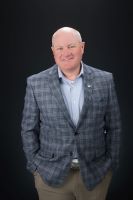
John Scanga

Sidebar Image
John Scanga, PhD

John Scanga, PhD

Chief Scientific Officer for North American Meat Division

John received his B.S. degree in Animal Sciences, his M.S. degree in Meat Science in 1997, and his Ph.D. in Animal Sciences in 1999, all from Colorado State University in Fort Collins, CO.

He developed a connection to agriculture at an early age; through work on his family’s ranching operation in central Colorado. He enrolled at Colorado State University in the fall of 1992 majoring in Animal Sciences; he competed on the CSU Meat Judging Team in 1994 and worked as an employee in the meat laboratory where his interest in meat processing and the meat industry began to grow.

Following the completion of his M.S (1997) and Ph.D. (1999), John joined the faculty at Colorado State University as an Assistant Professor and Extension Meat Specialist. He managed the day-to-day operations of the Meat Science Teaching and Research Laboratory and was promoted to Associate Professor in 2005.  He then left the university and joined IEH Laboratories and Consulting Group in January of 2008 as Vice President of Technical Services, where he continued to merge scientific concepts with industrial applications for managing and improving the safety of meat and non-meat foods, and improving food processing plant operational efficiencies.  In addition, he provided clients with regulatory, crisis event, and HACCP training and support.

John joined Elanco Animal Health in November of 2009 as an Associate Senior Technical Consultant where he brought a consumer focus and an emphasis on balancing animal productivity and performance with consumer acceptability. His work there focused on red meat safety, red meat quality and international trade.

John has been an author or co-author on over 70 refereed scientific publications on red meat quality and safety and has presented the findings of his work through numerous invited in presentations both the U.S and internationally.  

John also has a passion for service.  He currently is the chair of the Colorado Beef Council and has served as President of the Weld RE-9 school board, Weld County Fair Board and is a member of the Highland High School FFA Advisory Committee. 

John and his wife Chauna live on a diversified farming operation in Ault, Colorado.  Their family time is consumed with agriculture, farming, riding reigning horses and traveling.  His hobbies include backcountry snowmobiling and bird hunting. He  also works as a visiting professor in the Department of Animal Sciences at Colorado State University, where he first started his academic career. 

Below are resources from Dr. Scanga:


Eurofins Analytical Laboratories has been recertified by the International Olive Council (IOC), reaffirming its position as the largest and only independent U.S. contract laboratory accredited for olive oil quality and authenticity testing. Learn how this recognition supports product integrity and industry standards.
Keywords: News Authenticity


In the world of dietary supplements, ingredient authenticity is directly linked to quality, compliance, safety, and consumer trust. With the complexity of botanical materials and the limitations of individual testing techniques, relying on a single method for identity verification can be risky. That’s where orthogonal methods come in. Read to learn more.


Ensuring the safety, quality, and authenticity of dietary supplements has become increasingly complex in today’s global marketplace. To protect consumers and brands alike, robust quality systems, third-party certifications, and traceability measures are essential. This webinar highlights key integrity challenges facing the dietary supplement industry, from misleading claims to adulteration concerns, and advanced analytical solutions that address them.


In the world of dietary supplements, where natural ingredients are marketed for health and wellness, the quality and identity of botanicals are non-negotiable. Consumers rely on accurate labeling, consistent formulation, and, most importantly, safe and authentic ingredients. Continue reading to learn more about ensuring safety in botanical supplement products.


HPTLC is more than just a laboratory technique; it’s a cornerstone of quality assurance in botanical testing. This article delves into the information that should accompany your sample, explaining its scientific significance and role in meeting regulatory standards, in order to ensure accurate analysis.


High-value edible oils like olive oil and avocado oil command premium prices for their flavor and health benefits. However, their value also makes them targets for degradation and food fraud. Read our blog about two complimentary testing approaches essential to protecting your customers and brand: quality testing and authenticity testing.


The Food and Drug Administration (FDA) monitors drug manufacturers' compliance with its current Good Manufacturing Practice (cGMP) regulations in order to ensure the quality of drug products. These regulations are designed to assure products are safe for use and contain the ingredients, strengths, and efficacies of claims made by the product. Learn what tests your OTC products need to be compliant.


When the analysis performed on a client's green tea extract sample was deemed inconclusive, the client was left unable to confirm the extract’s quality and consistency. Learn how the team of botanical experts at the Eurofins Botanical Laboratory solved this challenge.


The botanical industry’s unprecedented surge in popularity brings exciting possibilities, but it also invites a serious challenge: adulteration. This blog explains how to identify adulterated botanicals and the role of third-party testing in protecting consumer health and trust.


Olive growers need to accurately measure polyphenol concentrations in their raw products for downstream processing. Watch our case study video below to learn how Eurofins effectively analyzed both the complex matrix of raw olives and the simpler matrix of olive-based refined products.


<< < 1 2 3 4 > >>

https://www.eurofinsus.com/food-testing