JavaScript is disabled. Please enable to continue!

Mobile search icon
More Resources >> Our People >> John Scanga

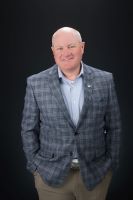
John Scanga

Sidebar Image
John Scanga, PhD

John Scanga, PhD

Chief Scientific Officer for North American Meat Division

John received his B.S. degree in Animal Sciences, his M.S. degree in Meat Science in 1997, and his Ph.D. in Animal Sciences in 1999, all from Colorado State University in Fort Collins, CO.

He developed a connection to agriculture at an early age; through work on his family’s ranching operation in central Colorado. He enrolled at Colorado State University in the fall of 1992 majoring in Animal Sciences; he competed on the CSU Meat Judging Team in 1994 and worked as an employee in the meat laboratory where his interest in meat processing and the meat industry began to grow.

Following the completion of his M.S (1997) and Ph.D. (1999), John joined the faculty at Colorado State University as an Assistant Professor and Extension Meat Specialist. He managed the day-to-day operations of the Meat Science Teaching and Research Laboratory and was promoted to Associate Professor in 2005.  He then left the university and joined IEH Laboratories and Consulting Group in January of 2008 as Vice President of Technical Services, where he continued to merge scientific concepts with industrial applications for managing and improving the safety of meat and non-meat foods, and improving food processing plant operational efficiencies.  In addition, he provided clients with regulatory, crisis event, and HACCP training and support.

John joined Elanco Animal Health in November of 2009 as an Associate Senior Technical Consultant where he brought a consumer focus and an emphasis on balancing animal productivity and performance with consumer acceptability. His work there focused on red meat safety, red meat quality and international trade.

John has been an author or co-author on over 70 refereed scientific publications on red meat quality and safety and has presented the findings of his work through numerous invited in presentations both the U.S and internationally.  

John also has a passion for service.  He currently is the chair of the Colorado Beef Council and has served as President of the Weld RE-9 school board, Weld County Fair Board and is a member of the Highland High School FFA Advisory Committee. 

John and his wife Chauna live on a diversified farming operation in Ault, Colorado.  Their family time is consumed with agriculture, farming, riding reigning horses and traveling.  His hobbies include backcountry snowmobiling and bird hunting. He  also works as a visiting professor in the Department of Animal Sciences at Colorado State University, where he first started his academic career. 

Below are resources from Dr. Scanga:


In today’s food and dietary supplement marketplace, trust is no longer assumed. Third-party testing and certification have become essential tools for demonstrating product safety, quality, and compliance in a credible way.


Infrared spectroscopy is a powerful analytical tool for rapid, nondestructive measurement. But despite its advantages, IR often develops a reputation for being unreliable or not accurate as primary methods. Keep reading to learn more about how to build and validate a reliable model.


When it comes to dietary supplement testing, one seemingly small detail can have outsized consequences: specifying the correct vitamin form. Understanding and communicating the exact vitamin form in your product is not just a technical necessity, it’s a strategic imperative in ensuring accurate results, timely reporting, and regulatory compliance.


From the growing regions to the production and processing, mycotoxins pose a unique threat to the safety, quality, and marketability of coffee and spices. In this webinar, we expand upon the emerging mycotoxin risks, climate-driven contamination patterns, and the latest testing technologies to ensure compliance and protect your products. Originally Aired on November 12, 2025


A client submitted a batch of Turmeric Powder (Curcuma longa rhizome) for routine identity and quality verification. The samples were were expected to match the fingerprint of authentic turmeric reference materials. Learn how Eurofins detected detected adulteration in the client's submitted sample.


As a widely used culinary and medicinal herb, oregano is expected to meet strict botanical specifications. Read our case study to learn how Eurofins analysts used HPTLC and microscopy to uncover botanical adulteration in an oregano sample submitted for identity verification and quality assessment.


Have questions about the Eurofins ANSI 173 Finished Dietary Supplement and Ingredient Certification or Eurofins Protocol 101? Check out our guide for the answers to frequently asked questions regarding Eurofins Certification.


Discover expert insights into navigating Out-of-Specification (OOS) results and CAPA investigations. Learn key steps and strategies our technical team uses to resolve unexpected analytical outcomes effectively.


Explore a real-world OOS case study where collaborative investigation revealed formulation challenges as the root cause. Learn how targeted troubleshooting helped a client improve product consistency and manufacturing protocols.


Discover how advanced ELISA and PCR testing helped identify peanut contamination in cumin, triggering a major recall and reshaping allergen control practices across the spice industry. Learn how Eurofins GeneScan supported targeted recalls and supplier investigations to protect consumers and restore brand trust.


<< < 1 2 3 4 5 6 7 8 9 10 > >>

https://www.eurofinsus.com/food-testing