JavaScript is disabled. Please enable to continue!

Mobile search icon
More Resources >> Our People >> John Scanga

John Scanga

Sidebar Image
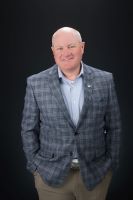
John Scanga, PhD

John Scanga, PhD

Chief Scientific Officer for North American Meat Division

John received his B.S. degree in Animal Sciences, his M.S. degree in Meat Science in 1997, and his Ph.D. in Animal Sciences in 1999, all from Colorado State University in Fort Collins, CO.

He developed a connection to agriculture at an early age; through work on his family’s ranching operation in central Colorado. He enrolled at Colorado State University in the fall of 1992 majoring in Animal Sciences; he competed on the CSU Meat Judging Team in 1994 and worked as an employee in the meat laboratory where his interest in meat processing and the meat industry began to grow.

Following the completion of his M.S (1997) and Ph.D. (1999), John joined the faculty at Colorado State University as an Assistant Professor and Extension Meat Specialist. He managed the day-to-day operations of the Meat Science Teaching and Research Laboratory and was promoted to Associate Professor in 2005.  He then left the university and joined IEH Laboratories and Consulting Group in January of 2008 as Vice President of Technical Services, where he continued to merge scientific concepts with industrial applications for managing and improving the safety of meat and non-meat foods, and improving food processing plant operational efficiencies.  In addition, he provided clients with regulatory, crisis event, and HACCP training and support.

John joined Elanco Animal Health in November of 2009 as an Associate Senior Technical Consultant where he brought a consumer focus and an emphasis on balancing animal productivity and performance with consumer acceptability. His work there focused on red meat safety, red meat quality and international trade.

John has been an author or co-author on over 70 refereed scientific publications on red meat quality and safety and has presented the findings of his work through numerous invited in presentations both the U.S and internationally.  

John also has a passion for service.  He currently is the chair of the Colorado Beef Council and has served as President of the Weld RE-9 school board, Weld County Fair Board and is a member of the Highland High School FFA Advisory Committee. 

John and his wife Chauna live on a diversified farming operation in Ault, Colorado.  Their family time is consumed with agriculture, farming, riding reigning horses and traveling.  His hobbies include backcountry snowmobiling and bird hunting. He  also works as a visiting professor in the Department of Animal Sciences at Colorado State University, where he first started his academic career. 

Below are resources from Dr. Scanga:



Consumers rely on sunscreen to provide dependable protection against UV radiation, one of the leading causes of skin damage, premature aging, and skin cancer. Because of this, sunscreen manufacturers face a unique responsibility: to ensure every product consistently delivers the level of protection stated on the label. Read more to why sunscreen testing matters.


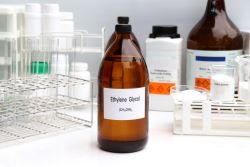
Ethylene glycol (EG) and diethylene glycol (DEG) are toxic industrial chemicals that have no place in consumer health products. Unfortunately, products ranging from cough syrups to dietary supplements have been found to contain these contaminants, often with tragic consequences.


Photostability testing is crucial for ensuring the safety, efficacy, and quality of products. While there are not specific requirements, the FDA makes it clear it is recommended for all products susceptible to light. Check out our infographic about the importance of photostability testing in OTC products.


As consumer demand for cleaner labels and naturally derived ingredients continues to rise, many manufacturers of OTC and dietary supplement products are reformulating to remove artificial colors and dyes. While this shift aligns with market trends, it introduces significant challenges—especially when it comes to product stability.


In this video, Business Unit Manager Ian Laessig shares how the Eurofins team collaborates with OTC and GMP clients to ensure compliant testing and a seamless experience.
Keywords: Video OTC


In this video, Business Unit Manager Ian Laessig explores how Eurofins Food Chemistry Testing supports the OTC and GMP industries with comprehensive testing solutions for APIs in finished products, ingredients, and excipients.
Keywords: Video OTC


Homeopathic formulations can be complex and challenging to test. A client approached Eurofins Supplement & OTC Testing in Madison, WI needing specialized testing of homeopathic tinctures. Read our case study to learn how the client was able to confidently release their product while maintaining compliance and efficiency.


The Food and Drug Administration (FDA) monitors drug manufacturers' compliance with its current Good Manufacturing Practice (cGMP) regulations in order to ensure the quality of drug products. These regulations are designed to assure products are safe for use and contain the ingredients, strengths, and efficacies of claims made by the product. Learn what tests your OTC products need to be compliant.


The world of wellness is experiencing a “gummification” wave, which includes using gummies to deliver APIs as a replacement for traditional forms like pills and syrups. But this matrix doesn't come without challenges. Click to read how you can ensure the effectiveness of alternative forms like gummies, chews, drink mixes, and lozenges.


This webinar explores approaches to method and monograph development while maintaining safety and quality standards specific to the OTC and Dietary Supplement industries. The speakers share industry insights regarding current state and potential changes with a changing administration. Original Air Date: February 24, 2025.


<< < 1 2 > >>

https://www.eurofinsus.com/food-testing