
JavaScript is disabled. Please enable to continue!

Mobile search icon
More Resources >> Our People >> John Scanga

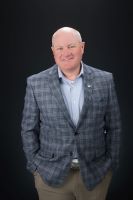
John Scanga

Sidebar Image
John Scanga, PhD

John Scanga, PhD

Chief Scientific Officer for North American Meat Division

John received his B.S. degree in Animal Sciences, his M.S. degree in Meat Science in 1997, and his Ph.D. in Animal Sciences in 1999, all from Colorado State University in Fort Collins, CO.

He developed a connection to agriculture at an early age; through work on his family’s ranching operation in central Colorado. He enrolled at Colorado State University in the fall of 1992 majoring in Animal Sciences; he competed on the CSU Meat Judging Team in 1994 and worked as an employee in the meat laboratory where his interest in meat processing and the meat industry began to grow.

Following the completion of his M.S (1997) and Ph.D. (1999), John joined the faculty at Colorado State University as an Assistant Professor and Extension Meat Specialist. He managed the day-to-day operations of the Meat Science Teaching and Research Laboratory and was promoted to Associate Professor in 2005.  He then left the university and joined IEH Laboratories and Consulting Group in January of 2008 as Vice President of Technical Services, where he continued to merge scientific concepts with industrial applications for managing and improving the safety of meat and non-meat foods, and improving food processing plant operational efficiencies.  In addition, he provided clients with regulatory, crisis event, and HACCP training and support.

John joined Elanco Animal Health in November of 2009 as an Associate Senior Technical Consultant where he brought a consumer focus and an emphasis on balancing animal productivity and performance with consumer acceptability. His work there focused on red meat safety, red meat quality and international trade.

John has been an author or co-author on over 70 refereed scientific publications on red meat quality and safety and has presented the findings of his work through numerous invited in presentations both the U.S and internationally.  

John also has a passion for service.  He currently is the chair of the Colorado Beef Council and has served as President of the Weld RE-9 school board, Weld County Fair Board and is a member of the Highland High School FFA Advisory Committee. 

John and his wife Chauna live on a diversified farming operation in Ault, Colorado.  Their family time is consumed with agriculture, farming, riding reigning horses and traveling.  His hobbies include backcountry snowmobiling and bird hunting. He  also works as a visiting professor in the Department of Animal Sciences at Colorado State University, where he first started his academic career. 

Below are resources from Dr. Scanga:


What is required on a pet supplement label? It depends on your product type and claims. This infographic guides you through key questions to ask when determining what is required for your pet supplement label.


As the industry looks ahead, the International Production & Processing Expo (IPPE) offers a pivotal launch point for 2026 and a chance for producers and processors to explore new solutions that strengthen operations. This webinar is designed to help you get a head start. Join us for a preview of the key issues, trends, and testing strategies we’re watching for the year ahead. Originally Aired on December 10, 2025


As the pet supplement market continues to expand, particularly in preventative care, accurate quantification of MSM has become essential. Manufacturers require robust analytical methods to ensure that label claims are substantiated and that formulations meet quality standards while complying with AAFCO ingredient definitions and state feed regulations.


In the competitive and highly regulated pet food industry, ingredient authenticity is more than a quality metric; it's a cornerstone of consumer trust and brand integrity. As demand for functional ingredients grows, so does the risk of adulteration. Manufacturers must be equipped with advanced testing strategies to safeguard their supply chains and ensure label claims are accurate.


The Eurofins Nutrition Analysis Center in Des Moines, Iowa, is pleased to announce the launch of a specialized analytical method for Methylsulfonylmethane (MSM) in pet chew supplements. This new capability supports the growing demand for validated testing in the pet supplement market, particularly in preventative joint health.


How automated and rapid is your testing process? Review our checklist to see if your operation’s processes make you a good fit for automation through managed NIR.


Ensure pet food label accuracy with pet food safety testing, GMO screening, and ingredient authentication. Learn how to verify pet food label claims and meet global regulations.
Keywords: Blog Pet


At Eurofins Nutrition Analysis Center, we highlight the critical role of texture analysis in pet food quality. This video explains how texture analysis quantifies product consistency and provides valuable insights into performance across the supply chain from R&D to addressing customer complaints.


At Eurofins Nutrition Analysis Center, we break down the latest AAFCO changes to dietary fiber labeling in pet foods. In this video, our experts guide you through selecting the right testing method based on product type, offering a comprehensive overview of available analytical approaches.


In this video, Eurofins Nutrition Analysis Center experts delve into the importance of using specialized test methods for chondroitin and glucosamine in complex pet food and treat matrices. We showcase the proprietary method developed by our scientists to overcome analytical challenges and ensure accurate results.


<< < 1 2 3 4 > >>

https://www.eurofinsus.com/food-testing