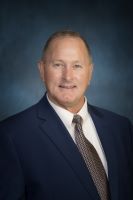
Keith Belk, PhD
Dr. Keith Belk is the Director of Eurofins’ Advanced Learning Institute and Professor and Holder of the Monfort Endowed Chair, Center for Meat Safety & Quality, Colorado State University (CSU), and as an Adjunct Professor in the Colorado School of Public Health. Previously, he served as Professor and Head of the Department of Animal Sciences at CSU. He earned B.S. and M.S. degrees from CSU, and a Ph.D. from Texas A&M University. He currently serves in a consulting role as the Director of Education for Eurofins Rapid Microbiology Laboratories, LLC. Dr. Belk is also a member of the International Committee for the National Western Stock Show, the Board of Directors for the International Stockmen’s Educational Foundation, on the Academic Advisory Committee for the Meat Institute Protein PACT, and on the technical advisory committees for Sustainable Beef, JBS, Colorado Premium Foods, and Hawkins.
Below are resources from Dr. Keith Belk:
Is Front-of-Package Labeling right for you? Learn how Front-of-Package Labeling affects nutritional value and market sales, and how Eurofins can help with testing your products and generating nutritional and dietary supplement facts panels.
Food and supplement testing has been a necessary part of the safe supply chain which means so have the chemicals that go along with this and until today, there have been very few options that positively affect the environment. Supercritical Fluid Extraction with Supercritical Fluid Chromatography now offers an environmentally safer method that is also faster, as sensitive and as selective as your current methods. We present an alternative way to extract and measure vitamins.
Join our team of presenters at Eurofins Microbiology Laboratories for an in-depth webinar all about rapid microbiological methods. They presented on the range of methods available, as well as the technologies behind them, while also exploring factors that affect their performance. Learn what to consider when selecting a rapid method such as sensitivity, validation status, and speed. Practical considerations around the method applications will be addressed.
Learn about the most common food pathogens and their impact in food handling and production. Testing your products can help manage risk of contamination from pathogens. Partner with Eurofins for all of your food safety testing needs.
Whole-Genome Sequencing aids in tracking foodborne illnesses and drug resistance in food pathogens. Read on to learn how WGS ensures food safety and quality.
Do your products need a nutritional label? Do you ever find yourself facing confusion around nutritional labeling requirements?
Let us help with those questions! Listen to our informational webinar presented by Mollie Hammerschmidt, Analytical Services Manager, Eurofins Nutrition Analysis Center. She answers the most common questions and pain points we receive, from customers just like you, with nutrition labeling requests.
Eurofins QTA offers a unique service by testing using infrared lights. Learn about what infrared is, how it works, how QTA differentiates from other providers, How to convert to infrared testing, and how to get started with QTA.
How can FT-IR be used for identifying foreign material in my product? David Riggs, President of Eurofins SF Analytical discusses this topic in this short video. Eurofins publishes our Ask an Expert Series weekly on our social media platforms.
Shiga toxin-producing E. coli (STEC), in particular, is a group of E. coli strains most associated with foodborne outbreaks. As food producers, you have the responsibility to ensure your consumers don't become a statistic. Read on to learn more about STEC and other food pathogens and how to eliminate them from your products.
We are proud to share the publication of a new scientific article from our team overseas. This article details the optimization of the NMR method, and the validation of the enhancements made. This unique analysis can differentiate agave inulin/syrup/alcohol from cane or corn adulterants.