Keith Belk, PhD
Dr. Keith Belk is the Director of Eurofins’ Advanced Learning Institute and Professor and Holder of the Monfort Endowed Chair, Center for Meat Safety & Quality, Colorado State University (CSU), and as an Adjunct Professor in the Colorado School of Public Health. Previously, he served as Professor and Head of the Department of Animal Sciences at CSU. He earned B.S. and M.S. degrees from CSU, and a Ph.D. from Texas A&M University. He currently serves in a consulting role as the Director of Education for Eurofins Rapid Microbiology Laboratories, LLC. Dr. Belk is also a member of the International Committee for the National Western Stock Show, the Board of Directors for the International Stockmen’s Educational Foundation, on the Academic Advisory Committee for the Meat Institute Protein PACT, and on the technical advisory committees for Sustainable Beef, JBS, Colorado Premium Foods, and Hawkins.
Below are resources from Dr. Keith Belk:
Understanding and effectively formulating lipids has become essential for today’s product developers. Whether replacing synthetic preservatives, selecting alternative oils, delivering specific health benefits, or exploring novel lipid technologies, each decision has impacts. Learn how Eurofins testing can help.
As consumer demand for women-focused health solutions accelerates, successful product development requires more than trend alignment, it demands clinically grounded, format-ready ingredient strategies. Learn more about the insights of developing functional food, beverage, and supplements products that address key women’s health needs.
Innovation in the nutraceutical and functional food space is accelerating, but commercialization is struggling to keep pace. The conversation is shifting from “What can we formulate?” to a much harder question:
“What will actually work in a factory, at scale, for 12+ months?” Here are the biggest takeaways from Vitafoods Europe 2026.
For brands involved in pet food product development, 2025 has been a year of acceleration. Looking ahead to 2026, formulation complexity and commercialization risk will only increase. New trends are shaping the future of pet nutrition. Keep reading to learn more about what they mean for R&D, manufacturing, and regulatory strategy.
Per- and polyfluoroalkyl substances (PFAS) have become a growing focus for regulators, manufacturers, and consumers alike especially when it comes to foods intended for vulnerable populations such as infants. Learn about the importance of proactive PFAS testing and how Eurofins can help here.
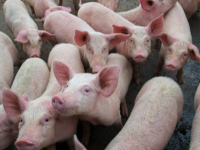
With pork being a large component of critical human food supply chain and also contributing to many other industries, efficient production is more important than ever. Improved animal husbandry through advancements in nutrition, genetic testing, animal drugs, and other factors leads to better feed conversion, healthier animals, and a multitude of other benefits. However, without process verification from start to finish, production facilities may be at risk.
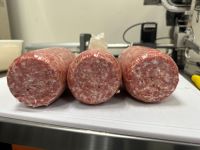
Explore Eurofins Rapid Microbiology Laboratory's BSL‑2 pilot plant for dried and fermented meat validation studies, from fermentation chambers to HPP and final product results.
Explore how rapid testing—from culture methods to PCR and droplet digital PCR—is transforming STEC detection and speeding food safety decisions.
As the U.S. moves toward record biofuel integration, producers face growing pressure to validate biobased fuel quality, strengthen their testing programs, and stay ahead of new regulatory expectations. Learn how Eurofins QTA is adjusting to new requirements.
Have questions about the Eurofins’ Infant Formula Contaminant Certification or Eurofins Protocol 102? Check out our guide for the answers to frequently asked questions regarding this type of certification.